The Normcore WDT Tool is the best WDT tool for espresso because its fine 0.3 millimeter replaceable needles, weighted handle, and included stand make clump-free distribution a five-second habit rather than a chore. Weiss Distribution Technique stirring is the single cheapest upgrade to shot consistency, since it breaks up grinder clumps and levels the bed before tamping, which reduces channeling. This guide compares four tools that do it well and explains what actually matters in needle diameter and build.
The Normcore WDT Tool is the best distribution tool for espresso, with fine replaceable needles and a weighted body that makes daily use effortless. The IKAPE WDT Tool delivers nearly the same result for less if you can live without the magnetic stand.
- Best overall: Normcore WDT Tool
- Best value: IKAPE Espresso WDT Tool
- Best budget: MATOW WDT Distribution Tool
- Avoid: Tools with thick 0.6 mm or larger needles, they dig furrows instead of de-clumping
Affiliate Disclosure: As an Amazon Associate, we earn from qualifying purchases. This does not affect our product rankings or recommendations.
Quick Picks
- Best overall: Normcore WDT Tool, Fine 0.3 mm replaceable needles, a weighted handle, and a stand that keeps it on the bench where you will use it.. Check price on Amazon
- Best value: IKAPE Espresso WDT Tool, Nearly identical needle performance in a simpler package..
- Best budget: MATOW WDT Distribution Tool, Bare-bones but effective needle stirrer for anyone starting out..
Comparison Table
| WDT tool | Needle diameter | Best for | Extras | Buy |
|---|---|---|---|---|
| Normcore WDT Tool | 0.3 mm, replaceable | Daily home baristas who want the habit to stick | Magnetic stand, spare needles | Check Price |
| IKAPE Espresso WDT Tool | 0.35 mm, replaceable | Value buyers who just want even shots | Base stand | Check Price |
| MATOW WDT Distribution Tool | 0.4 mm | First espresso setups | Spare needles | Check Price |
| MHW-3BOMBER WDT Tool | 0.35 mm, replaceable | Style-focused benches and gift setups | Metal stand, spare needles | Check Price |
How We Chose These WDT Tools Picks
We compared distribution tools on needle diameter, needle count, replaceability, handle weight, and stand design, then checked owner feedback for bent needles, loose grub screws, and rust. Tools with needles at or under 0.4 millimeters and replaceable pins ranked highest, since fine needles de-clump without carving channels.
Key Takeaway: Needle diameter matters more than brand. Anything at or below 0.4 millimeters de-clumps without disturbing the bed, and replaceable needles mean one bent pin does not retire the tool.
Best Overall: Normcore WDT Tool
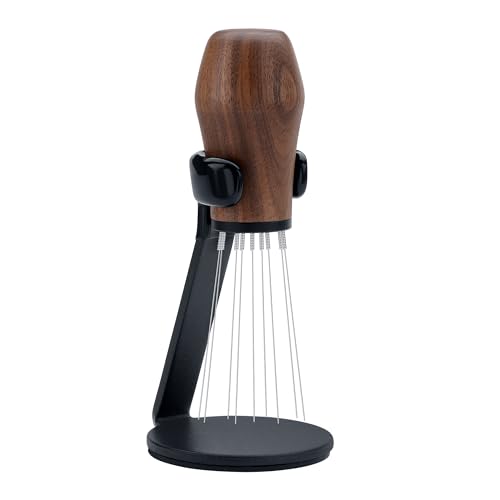
Best for: Home espresso drinkers who pull shots daily and want a distribution tool that is pleasant enough to use every single time. Why it made the list: The combination of genuinely fine 0.3 millimeter needles, a machined weighted handle that spins smoothly through the puck, and a stand that lives next to the grinder removes every excuse to skip the step, and skipping is what kills consistency.
- Key specs: Seven 0.3 mm stainless needles, replaceable via the threaded head, machined aluminum handle, magnetic storage stand, spare needles included.
- What we like: Needles fine enough to rake through the whole puck depth without furrowing, comfortable weight, and painless needle swaps.
- What we do not like: It costs several times what a basic needle tool does, and the grub-style needle mounting can loosen over months of use if you never check it.
- Who should buy it: Anyone with a single-dose grinder that clumps, or anyone chasing shot-to-shot consistency before spending money on bigger gear.
- Who should avoid it: Superautomatic machine owners, the machine handles the puck internally so a WDT tool does nothing for you.
- Common complaints: A few owners report needles loosening or bending after drops, and the stand magnet is weaker than expected on some units.
- Size note: The needles reach the bottom of standard 58 mm baskets, and it works fine in 51 and 54 mm baskets too.
- Cleaning note: Wipe the needles dry after each session, coffee oils plus moisture will spot even stainless pins over time.
- Alternative: The MHW-3BOMBER tool performs the same job with flashier looks if bench aesthetics matter to you.
Espresso WDT Tool Buying Guide
Why needle diameter is the whole game
Thick needles push grounds around and carve trenches, which recreates the channeling you are trying to prevent. Needles at 0.3 to 0.4 millimeters slip between particles and separate clumps without compacting anything. If a tool does not list needle diameter, assume it is too thick.
Replaceable needles extend tool life
Needles bend when dropped or caught on a basket edge. Tools with threaded or grub-screw needle mounts let you swap a bent pin in seconds, while glued needles mean buying a whole new tool. Spare needles in the box are a genuine plus, not marketing filler.
Stands and handles decide whether you use it
WDT only works if you do it every shot, so friction matters. A weighted handle spins through the puck with less effort, and a stand next to your grinder keeps the tool in reach instead of buried in a drawer. This is why the extras justify a modest step up in spend.
Safety Notes
- Store the tool in its stand or cap, exposed needles at bench height find fingers.
- Check that all needles are tight before stirring, a dropped pin in the puck can reach your cup.
- Keep needle tools away from small children, they are effectively slim skewers.
- Replace rusted needles rather than sanding them, rust particles do not belong in espresso.
What to Avoid
- Tools with needles thicker than 0.5 mm, they furrow the bed instead of de-clumping.
- Glued, non-replaceable needle heads, one bent pin ends the tool.
- Plastic handles with seams, they crack where the needles mount.
- Stirring with a single toothpick or pin, one needle takes forever and stirs unevenly.
FAQ
Does WDT actually improve espresso?
Yes, measurably. Stirring the grounds with fine needles breaks up clumps and evens density across the basket, which reduces channeling and improves shot-to-shot consistency. It is widely considered the best cheap upgrade in home espresso.
How do you use a WDT tool properly?
Rake the needles gently through the full depth of the grounds in overlapping circles for five to ten seconds, then a shallower pass to level the surface, then tamp. Deep stirring is the point, surface-only swirling does much less.
Do I need a WDT tool with a good grinder?
Even excellent grinders produce some clumping and uneven basket distribution, especially single-dose setups. High-end grinders benefit less, but nearly every setup shows more consistent shots with WDT.
Final Verdict
The Normcore WDT Tool is the best WDT tool for espresso, with fine replaceable needles and a design you will actually use daily, while the IKAPE Espresso WDT Tool delivers the same core performance for less and the MATOW WDT Distribution Tool gets beginners de-clumping for pocket change.
Related Guides
- Best Espresso Machines in 2026: Home Picks for Every Level
- Espresso Machine vs Coffee Maker: What Is the Difference?
- Best Espresso Machines for Beginners in 2026: Easy Picks
- What Grind Size for Espresso? A Simple Dial-In Guide
- Manual vs Automatic Espresso Machine: Which to Buy?
- All Coffee Makers guides
