Updated 18 July 2026 · Specifications and Amazon availability checked 18 July 2026 · Written by MKB Team
A stand mixer earns its counter space if you bake often: it creams butter, whips cream and kneads dough hands-free while you do something else. The choices that matter are motor strength, bowl size, and whether you want a tilt-head that is easy to load or a bowl-lift that handles heavy dough. We compared five mixers from the classic KitchenAid to budget and large-batch options, and matched each to how much you bake. We did not run a torque test, so our recommendations draw on manufacturer specifications and owner feedback.
For most home bakers the KitchenAid Artisan is still the one to buy: powerful enough, endlessly expandable with attachments, and built to last. Knead a lot of heavy dough? The bowl-lift KitchenAid Pro 600. Want the same job for less? The Cuisinart Precision Master is the value pick.
- Best overall: KitchenAid Artisan 5-Quart · Check price
- Best heavy-duty: KitchenAid Professional 600 6-Quart · Check price
- Best value: Cuisinart Precision Master 5.5-Quart · Check price
- Best budget: Hamilton Beach 4-Quart · Check price
- Best for large batches: 8.4-Quart Commercial Mixer · Check price
Affiliate Disclosure: As an Amazon Associate we earn from qualifying purchases. This never changes our rankings, and the specifications below come from each manufacturer’s current listing.
Side-by-Side Comparison
| Mixer | Style | Bowl | Motor | Best for | Buy |
|---|---|---|---|---|---|
| KitchenAid Artisan | Tilt-head | 5 qt | 325 W | Most home baking | Check price |
| KitchenAid Pro 600 | Bowl-lift | 6 qt | 575 W | Heavy dough | Check price |
| Cuisinart Precision | Tilt-head | 5.5 qt | 500 W | Value | Check price |
| Hamilton Beach | Tilt-head | 4 qt | 300 W | Budget | Check price |
| Commercial 8.4 qt | Bowl-lift | 8.4 qt | 800 W | Big batches | Check price |
How We Evaluated These Picks
We are a research desk, not a lab, so we did not dynamometer the motors. We compared motor power and bowl size, tilt-head versus bowl-lift design, the ecosystem of attachments, and how each holds up under regular baking according to owners.
Tilt-Head vs Bowl-Lift, and How Much Power You Need
Tilt-head mixers, like the KitchenAid Artisan and Cuisinart, let you tip the head back to add ingredients and swap the beater easily; they suit most home baking and fit under cabinets. Bowl-lift mixers, like the KitchenAid Pro 600, raise the bowl to a fixed head and use a sturdier frame, so they handle heavy bread dough and big batches better, but they are taller and need more clearance.
Power matters most for bread. Light cake batter and whipped cream barely tax any mixer, but stiff bread dough will strain a weak motor over time. If you mostly bake cakes and cookies, a 300 to 350-watt tilt-head is plenty; if you make bread or double batches regularly, step up to a bowl-lift with 500 watts or more. The attachment hub is the other hidden value: a KitchenAid becomes a pasta roller, grinder or spiraliser, which the budget mixers cannot match.
Best Overall: KitchenAid Artisan 5-Quart

Best for: Most home bakers who want a durable, expandable mixer that does everything well
Specifications
| Style | Tilt-head |
| Bowl | 5 quart |
| Motor | 325 W |
| Speeds | 10 |
| Attachments | Full hub |
| Best for | Home baking |
The KitchenAid Artisan is the mixer most kitchens should own. The 325-watt tilt-head handles cakes, cookies, whipped cream and moderate bread dough with ease, the 5-quart bowl suits family baking, and ten speeds give fine control. Its real edge is the attachment hub: the same machine becomes a pasta roller, meat grinder, spiraliser and more, so it grows with you. It is beautifully built and lasts for years.
It is not the cheapest, and for heavy daily bread dough a bowl-lift is better. But for all-round home baking and longevity it is the standard. Who should skip it: heavy bread bakers or anyone on a tight budget. Pros: durable, huge attachment ecosystem, great all-round power, fits under cabinets. Cons: premium price, strains on very heavy dough.
Model reviewed: KitchenAid Artisan Series 5-Quart Tilt-Head Stand Mixer, ASIN B0769ZQWH7
Best Heavy-Duty: KitchenAid Professional 600 6-Quart

Best for: Bread bakers and big-batch cooks who need serious dough power
Specifications
| Style | Bowl-lift |
| Bowl | 6 quart |
| Motor | 575 W |
| Best for | Heavy dough |
| Frame | Robust |
| Attachments | Full hub |
When bread and big batches are the point, the KitchenAid Pro 600 steps up. Its bowl-lift design and 575-watt motor drive through stiff dough that would strain a tilt-head, the 6-quart bowl handles double batches, and the sturdier frame is built for frequent, heavy use. It takes the same attachments as the Artisan, so the whole ecosystem is still yours.
It is taller and heavier, needs more cabinet clearance, and costs more than the Artisan. But for serious dough it is worth the step up. Who should skip it: occasional bakers who mostly make cakes and would find it overkill. Pros: powerful for dough, large bowl, robust bowl-lift build, full attachment support. Cons: tall, heavy, premium price.
Model reviewed: KitchenAid Professional 600 6-Quart Bowl-Lift Stand Mixer, ASIN B07TGFVJY1
Best Value: Cuisinart Precision Master 5.5-Quart
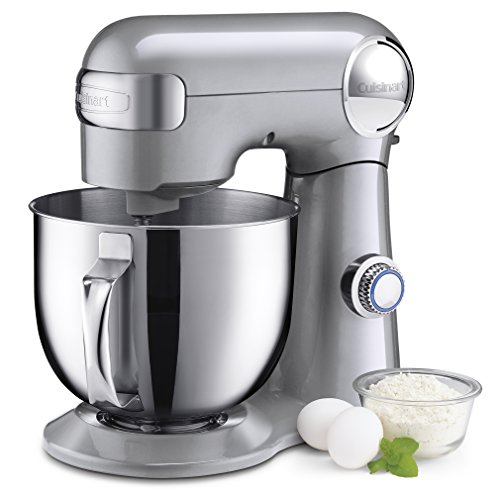
Best for: Bakers who want a big bowl and strong motor without the KitchenAid price
Specifications
| Style | Tilt-head |
| Bowl | 5.5 quart |
| Motor | 500 W |
| Speeds | 12 |
| Includes | Whisk, beater, hook |
| Best for | Value |
The Cuisinart Precision Master delivers a lot for less. Its 500-watt motor is punchy for the price, the 5.5-quart bowl is slightly larger than the Artisan, and twelve speeds plus a tilt-head make it easy to use. It comes with a whisk, flat beater and dough hook, so you are ready to bake out of the box.
The attachment ecosystem is far smaller than KitchenAid’s, so it will not become a pasta maker or grinder, and the build feels a step below the premium mixers. But as a capable, affordable everyday baker it is excellent value. Who should skip it: anyone who wants the KitchenAid attachment ecosystem or top-tier build. Pros: strong motor, large bowl, good price, full accessory set. Cons: few attachments, build below premium.
Model reviewed: Cuisinart Precision Master 5.5-Quart Stand Mixer, ASIN B01K2FQ4DE
Best Budget: Hamilton Beach 4-Quart

Best for: Occasional bakers who want a capable mixer for very little
Specifications
| Style | Tilt-head |
| Bowl | 4 quart |
| Motor | 300 W |
| Speeds | 7 |
| Best for | Budget |
| Build | Basic |
The Hamilton Beach 4-quart is the affordable way into stand mixing. The 300-watt tilt-head handles cake batter, cookies and whipped cream comfortably, seven speeds cover the basics, and it includes the three standard attachments. For someone who bakes now and then, it does the essential jobs cheaply.
The smaller bowl and lighter motor mean it is not for heavy bread dough or big batches, and the build is basic. But for light, occasional baking at this price it is genuinely useful. Who should skip it: frequent bakers or bread makers. Pros: very affordable, capable for light baking, tilt-head convenience. Cons: small bowl, weak for dough, basic build.
Model reviewed: Hamilton Beach 4-Quart Electric Stand Mixer, ASIN B0758BQPY8
Best for Large Batches: 8.4-Quart Commercial Mixer
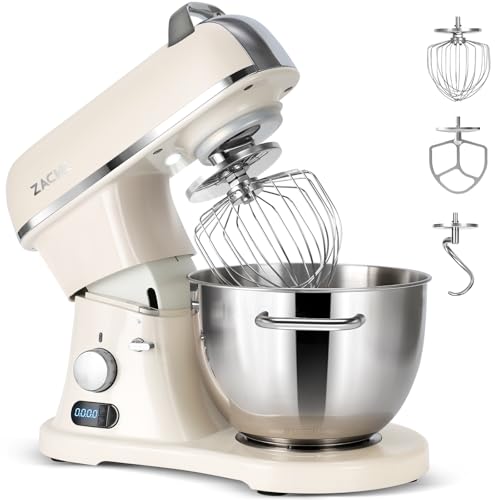
Best for: Big families, bakers and small food businesses that need serious capacity
Specifications
| Style | Bowl-lift |
| Bowl | 8.4 quart |
| Motor | 800 W |
| Best for | Big batches |
| Size | Large |
| Brand | Lesser-known |
When capacity is the priority, this 8.4-quart bowl-lift mixer holds far more than the home machines, and its 800-watt motor is built to power through big batches of dough. For a large family, a heavy home baker, or a small food operation, the extra volume means fewer batches and less time.
It is a large, heavy machine that dominates a counter, it is a lesser-known brand than KitchenAid so long-term support and attachments are limited, and the finish is workmanlike. But for sheer capacity per dollar it is compelling. Who should skip it: typical home bakers who do not need the volume or want a proven brand ecosystem. Pros: huge capacity, strong motor, big-batch value. Cons: large and heavy, limited attachments, lesser-known brand.
Model reviewed: 8.4-Quart Commercial Stand Mixer 800W, ASIN B09TPX4451
Which Stand Mixer Should You Buy?
Best for everyday baking
The KitchenAid Artisan, powerful enough for most jobs and endlessly expandable with attachments.
Best for bread and heavy dough
The bowl-lift KitchenAid Pro 600, whose stronger motor and frame handle stiff dough the tilt-heads struggle with.
Best on a budget
The Hamilton Beach for light baking, or the Cuisinart Precision Master if you want more power and a bigger bowl for a bit more.
Best for big batches
The 8.4-quart commercial mixer for sheer volume, or the KitchenAid Pro 600 if you want a proven brand with attachments.
Best long-term investment
The KitchenAid Artisan, whose attachment hub turns one machine into a pasta maker, grinder and more over the years.
Buying Guide
Match power to what you bake
Cakes and cookies need little power; bread dough needs a lot. For regular bread, choose a bowl-lift with 500 watts or more.
Tilt-head or bowl-lift
Tilt-heads are easier to load and fit under cabinets; bowl-lifts are sturdier for heavy dough and big batches. Pick for your baking and your clearance.
Bowl size for your batches
A 4 to 5-quart bowl suits most homes; step up to 6 quarts or more for double batches and bread. Do not oversize if you bake small.
The attachment hub is hidden value
A KitchenAid hub turns the mixer into a pasta roller, grinder or spiraliser. If you want that, buy into the ecosystem from the start.
Care and Use
- Wipe the motor housing with a damp cloth only; never submerge it.
- Hand wash or, if the maker allows, top-rack dishwash the bowl and attachments.
- Start on low to avoid flour clouds and splatter, then increase speed.
- Let the motor rest if it heats up during long, heavy dough kneading.
Frequently Asked Questions
What size stand mixer do I need?
A 4 to 5-quart bowl suits most home baking. Choose 6 quarts or more if you make bread, double batches or bake for a crowd. Bigger bowls are harder to store, so match the size to your real batches.
Tilt-head or bowl-lift stand mixer?
Tilt-heads are easier to load and fit under cabinets, ideal for general baking. Bowl-lifts are sturdier and better for heavy bread dough and large batches, but taller. Choose for what you bake and your counter clearance.
How much power do I need for bread dough?
Stiff bread dough strains weak motors, so choose 500 watts or more, ideally in a bowl-lift like the KitchenAid Pro 600. For cakes and cookies, 300 to 350 watts is plenty.
Are KitchenAid attachments worth it?
If you will use them, yes. The hub turns one mixer into a pasta roller, meat grinder, spiraliser and more, which budget mixers cannot match and which adds years of value.
Is an expensive stand mixer worth it?
If you bake often, a durable KitchenAid pays off in longevity and the attachment ecosystem. For occasional light baking, the Hamilton Beach or Cuisinart delivers most of the value for far less.
Sources and References
Specifications were checked against each manufacturer’s Amazon listing on 18 July 2026 (KitchenAid, Cuisinart, Hamilton Beach and the commercial mixer). Where a maker does not state a figure, we describe the design rather than invent a number.
Final Verdict
For most home bakers the KitchenAid Artisan remains the one to buy: capable, beautifully built, and endlessly expandable with attachments. Step up to the bowl-lift KitchenAid Pro 600 if you knead heavy bread dough, save with the Cuisinart Precision Master if you want power and a big bowl for less, choose the Hamilton Beach for light occasional baking, and consider the 8.4-quart commercial mixer only if you truly need big-batch volume. Match power to your baking and pick tilt-head or bowl-lift for your dough and your cabinet clearance.
