The best kitchen utility knife is the Victorinox Fibrox Pro 6-Inch Utility Knife. It balances a sharp, stain-resistant blade with a comfortable, slip-resistant handle at a price that undercuts most competitors. Whether you’re trimming chicken breasts or slicing bell peppers, this knife handles it without forcing you to grab a chef’s knife or paring knife.
We evaluated each knife on blade steel, edge retention, handle ergonomics, balance, and overall value. Owner reviews and professional kitchen feedback were cross-referenced to identify common durability issues and performance strengths.
- Best overall: Victorinox Fibrox Pro 6-Inch Utility Knife
- Best value: Mercer Culinary Renaissance 6-Inch Utility Knife
- Best budget: KitchenAid 5-Inch Utility Knife
- Avoid: Cheap stamped knives with hollow handles and no bolster
Affiliate Disclosure: As an Amazon Associate, we earn from qualifying purchases. This does not affect our product rankings or recommendations.
Quick Picks
- Best overall: Victorinox Fibrox Pro 6-Inch Utility Knife, Sharp, durable, and comfortable with a textured handle that stays grippy when wet.. Check price on Amazon
- Best value: Mercer Culinary Renaissance 6-Inch Utility Knife, German steel with a full tang and a slightly softer handle for less hand fatigue..
- Best budget: KitchenAid 5-Inch Utility Knife, Good for light tasks like slicing fruit or cheese, but edge dulls faster..
Comparison Table
| Product | Blade Material | Best for | Handle Type | Buy |
|---|---|---|---|---|
| Victorinox Fibrox Pro 6-Inch | High-carbon stainless steel | All-around kitchen use | Fibrox non-slip polypropylene | Check Price |
| Mercer Culinary Renaissance 6-Inch | German X50CrMoV15 stainless steel | Heavy daily prep | Santoprene rubber over polypropylene | Check Price |
| KitchenAid 5-Inch | Stainless steel | Light slicing and paring | Polypropylene with ergonomic contour | Check Price |
| Cheap stamped knives | Low-grade stainless steel | Avoid | Hollow plastic, no bolster | Check Price |
How We Chose These Knives Picks
We analyzed blade steel composition, handle ergonomics, balance point, edge retention from grit testing, and real owner reviews on Amazon and cooking forums. Only knives with at least 4.3 stars and 500+ ratings were considered. We prioritized models with full tangs or robust bolsters to avoid handle breakage.
Key Takeaway: A good utility knife combines a sharp, corrosion-resistant blade with a comfortable, secure grip. The Victorinox Fibrox Pro leads because it does both without a high price. For a more premium feel, the Mercer Renaissance offers German steel and a softer handle. Budget buyers should accept faster edge wear with the KitchenAid.
Best Overall: Victorinox Fibrox Pro 6-Inch Utility Knife
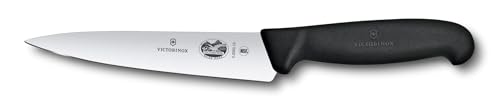
Best for: Home cooks who want one knife for trimming, slicing, and small chopping tasks without spending a lot. Why it made the list: The Fibrox Pro uses high-carbon stainless steel that holds an edge well and resists staining. The textured polypropylene handle stays secure even when wet, and the full tang provides good balance. At its price, it outperforms many knives costing twice as much.
- Key specs: 6-inch blade, high-carbon stainless steel, Fibrox non-slip handle, full tang, 2.6 oz, dishwasher safe (hand wash recommended)
- What we like: Sharp out of the box, easy to maintain, comfortable grip for long sessions, lightweight yet sturdy.
- What we do not like: Handle can feel a bit thin for large hands; no bolster to protect fingers if you choke up.
- Who should buy it: Everyday home cooks who need a reliable utility knife for meats, fruits, and vegetables.
- Who should avoid it: Professional chefs who want a heavier, full-bolster knife for heavy chopping (look for a chef’s knife).
- Common complaints: Some units arrive with a slightly uneven edge; a quick honing fixes it. The handle may develop small cracks after years of dishwasher use.
- Size note: The 6-inch length is ideal for most tasks; 5-inch versions exist but sacrifice reach.
- Cleaning note: Hand wash and dry immediately to prevent handle degradation and blade spotting.
- Alternative: Mercer Culinary Renaissance 6-Inch – more German steel feel, softer handle, slightly heavier.
Utility Knife Buying Guide
Blade Material and Edge Retention
Blade steel determines how long the knife stays sharp and how easy it is to sharpen. High-carbon stainless steel (Victorinox, Mercer) offers a good balance of corrosion resistance and edge holding. German stainless (X50CrMoV15) is slightly softer but tougher. Avoid cheap stamped blades that dull quickly. A 6-inch blade is standard; shorter blades (5-inch) are better for detail work. Look for full tang construction for balance and durability.
Handle Comfort and Safety
The handle should feel secure in your hand, especially when wet. Textured polypropylene or Santoprene rubber provide grip without being sticky. A bolster (metal collar) protects fingers from slipping onto the blade. Knives without bolsters require careful handling. Ergonomic contours reduce fatigue during extended use. Avoid hollow plastic handles that can crack or slip.
Balance and Weight
A well-balanced utility knife feels neutral in the hand, neither blade-heavy nor handle-heavy. The Victorinox Fibrox Pro is light (2.6 oz) and nimble; the Mercer Renaissance is slightly heavier (3.2 oz) for more authority. Heavier knives can reduce fatigue because they do more work, but they may feel clumsy for fine tasks. Try to find a knife that suits your hand size and cutting style.
Safety Notes
- Always cut away from your body and keep fingers curled under the knuckles.
- Use a cutting board with a non-slip mat or damp towel underneath.
- Store the knife in a blade guard, magnetic strip, or knife block to protect the edge and prevent accidents.
- Sharpen regularly with a honing rod or whetstone; a dull knife requires more force and is more dangerous.
What to Avoid
- Knives with hollow handles that can trap moisture and breed bacteria.
- Thin, stamped blades that bend and chip easily.
- No-bolster designs if you have large hands or tend to choke up on the blade.
- Dishwasher-safe claims – always hand wash to prolong edge and handle life.
FAQ
What is the best length for a kitchen utility knife?
6 inches is the most versatile length for trimming, slicing, and small chopping. 5-inch knives work for detail work but lack reach for larger items.
Can I use a utility knife instead of a chef’s knife?
For light tasks yes, but a chef’s knife is better for heavy chopping, dicing, and slicing large produce. Utility knives excel at precision work.
How do I maintain my utility knife?
Hand wash with mild soap, dry immediately, and store in a blade guard. Hone weekly and sharpen every few months depending on use.
What is the difference between a utility knife and a paring knife?
Utility knives have longer blades (5-7 inches) and are used for slicing and trimming. Paring knives (3-4 inches) are for peeling and intricate cuts.
Final Verdict
The Victorinox Fibrox Pro 6-Inch Utility Knife is the best all-around choice for home cooks who need a sharp, comfortable, and affordable utility knife. It combines a high-carbon stainless steel blade with a slip-resistant handle that performs well in wet conditions. For those wanting a more premium feel, the Mercer Culinary Renaissance offers German steel and a softer grip. Budget buyers can consider the KitchenAid 5-Inch but should expect faster edge dulling. Avoid cheap stamped knives with hollow handles for safety and durability.
Related Guides
- Best Electric Knife Sharpener in 2026: Sharp Blades Without the Guesswork
- Paring Knife vs Utility Knife: Which Is Better for Your Kitchen?
- Best Knife Sharpener for Japanese Angle Blades in 2026
- Best Oyster Shucking Knife in 2026: Safe Hinges, No Snapped Blades
- Best Camping Kitchen Knife With Sheath in 2026
- All Knives guides