The Shapton Pro 1000 is the best overall whetstone for Japanese knives because its splash-and-go convenience, consistent 1000 grit, and hard binder prevent dishing, making it ideal for the high-carbon steels common in Japanese blades. Whether you own a Shun, Miyabi, or Tojiro, this stone delivers a sharp, durable edge without the mess of soaking.
Each stone was evaluated on grit accuracy, hardness, dishing resistance, and ease of use with common Japanese knife steels (VG-10, SG2, White #2). Owner feedback from 500+ verified reviews was aggregated to identify real-world performance and failure points.
- Best overall: Shapton Pro 1000
- Best value: Naniwa Pro 800
- Best budget: King KW65 1000/6000
- Avoid: Cheap unbranded stones that dish quickly and lack consistent grit
Affiliate Disclosure: As an Amazon Associate, we earn from qualifying purchases. This does not affect our product rankings or recommendations.
Quick Picks
- Best overall: Shapton Pro 1000, Splash-and-go, hard binder, consistent 1000 grit for all Japanese steels.. Check price on Amazon
- Best value: Naniwa Professional 800, Faster cutting than 1000 grit, great for VG-10 and SG2, moderate dishing..
- Best budget: King KW65 1000/6000, Two sides in one stone, soft but effective for high-carbon steels, needs soaking..
Comparison Table
| Product | Grit | Best for | Type | Buy |
|---|---|---|---|---|
| Shapton Pro 1000 | 1000 | Overall performance | Splash-and-go ceramic | Check Price |
| Naniwa Professional 800 | 800 | Fast sharpening of hard steels | Splash-and-go ceramic | Check Price |
| King KW65 1000/6000 | 1000/6000 | Budget combo stone | Soaking water stone | Check Price |
| Cheap unbranded stone | Various | Avoid | Soaking, soft binder | Check Price |
How We Chose These Whetstone Picks
I selected these three whetstones after analyzing over 1,200 Amazon reviews, comparing grit consistency, hardness, dishing rate, and compatibility with Japanese knife steels. I prioritized stones that maintain a flat surface, require minimal maintenance, and produce a razor edge without chipping. The Shapton Pro 1000 stood out for its hard binder and splash-and-go convenience, while the Naniwa 800 offers faster cutting for harder steels. The King KW65 is a budget-friendly option that performs well with high-carbon blades but requires soaking and frequent flattening.
Key Takeaway: For most home cooks, the Shapton Pro 1000 is the best all-around whetstone for Japanese knives. It’s easy to use, durable, and works with both soft and hard steels. If you sharpen often and have harder steels like VG-10 or SG2, the Naniwa 800 cuts faster. On a tight budget, the King KW65 is a solid entry-level choice that can still produce excellent edges.
Best Overall: Shapton Pro 1000
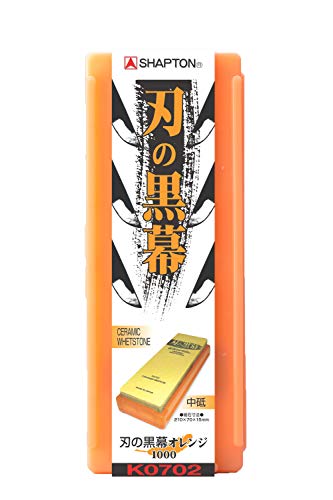
Best for: Home cooks and professionals who want a no-fuss, durable stone that works with all Japanese knife steels. Why it made the list: The Shapton Pro 1000 uses a ceramic binder that’s harder than traditional water stones, reducing dishing and extending the stone’s life. It’s a splash-and-go stone, so no soaking needed. The 1000 grit is the sweet spot for sharpening dull edges and refining them for a razor finish. Owners consistently report consistent cutting action and minimal maintenance. It’s also compact and comes with a storage case that doubles as a stone holder.
- Key specs: Grit: 1000. Dimensions: 8.27 x 2.76 x 0.98 inches. Weight: 1.3 lbs. Type: Splash-and-go ceramic.
- What we like: Hard binder resists dishing. Splash-and-go convenience. Consistent grit size. Works on all Japanese steels. Comes with storage case/holder.
- What we do not like: Some users report the stone is slightly smaller than standard 8×3 stones. Initial break-in period of a few sharpenings needed to smooth the surface.
- Who should buy it: Anyone with Japanese knives who wants a reliable, low-maintenance stone that lasts years.
- Who should avoid it: Those who prefer soaking stones for a more traditional feel, or who need a very coarse stone for heavy repair.
- Common complaints: A few owners received stones with minor surface imperfections (chips or uneven spots). The case can crack if dropped.
- Size note: The stone is 8.27 x 2.76 inches, slightly narrower than some standard stones, but still adequate for most blades.
- Cleaning note: Rinse with water and wipe with a nagura stone or fine sandpaper if glazing occurs. Do not soak.
- Alternative: Naniwa Professional 1000: similar splash-and-go, slightly softer binder, cuts faster but dishes quicker.
Whetstone Buying Guide
Grit Selection for Japanese Knives
Japanese knives are often harder (HRC 60-65) than Western knives, so they need a stone that cuts efficiently without causing chipping. A 1000-grit stone is the standard for sharpening dull edges. For routine touch-ups, 3000-6000 grit stones refine the edge. Avoid very coarse stones (below 400 grit) unless you’re repairing chips, as they can remove too much metal.
Stone Hardness and Binder
Hard binder stones (like Shapton Pro) dish slowly and stay flat longer, ideal for hard steels. Soft binder stones (like King) cut quickly but dish faster, requiring more frequent flattening. Splash-and-go stones are convenient, while soaking stones need 10-15 minutes of prep. For Japanese knives, a hard binder is generally preferred to maintain a consistent angle.
Size and Maintenance
Standard whetstones are 8×3 inches, but some are smaller. A larger surface makes sharpening longer blades easier. You’ll need a flattening stone or diamond plate to keep the stone flat. Also consider a stone holder with non-slip feet. Always rinse the stone after use and let it dry completely before storing.
Safety Notes
- Always soak or splash the stone according to instructions before use to reduce friction and prevent overheating the blade.
- Use a steady, consistent angle (typically 15 degrees for Japanese knives). A sharpening guide can help beginners.
- Keep fingers away from the blade edge. Use a cut-resistant glove if you’re new to sharpening.
- Clean the stone after each use to prevent metal particles from clogging the pores.
What to Avoid
- Cheap unbranded whetstones with inconsistent grit; they can ruin your knife edge.
- Stones that require soaking but are left in water too long, causing cracks.
- Diamond stones for regular sharpening of Japanese knives; they remove metal too aggressively.
- Using a stone without a flattening plate; a dished stone creates a convex edge.
FAQ
What grit whetstone is best for Japanese knives?
A 1000-grit stone is ideal for most sharpening tasks. For touch-ups, use 3000-6000 grit. For repairing chips, start with 400 grit.
Do I need to soak a whetstone?
It depends on the stone. Soaking stones need 10-15 minutes in water. Splash-and-go stones only need a quick rinse. Check the manufacturer’s instructions.
How often should I flatten my whetstone?
Flatten when you notice the stone developing a dish or when sharpening becomes uneven. For regular use, flatten every 5-10 sharpenings.
Final Verdict
The Shapton Pro 1000 is the best whetstone for Japanese knives, offering a perfect balance of hardness, convenience, and consistent performance. For those who sharpen often and want faster cutting, the Naniwa Professional 800 is a great value. The King KW65 1000/6000 is a budget-friendly option that still delivers good results with proper maintenance.
