The CopperBull Heavy Duty Copper Turkish Coffee Pot is the best Turkish coffee pot because its thick hand-hammered copper heats evenly and responds instantly when you pull it off the flame, which is exactly what building proper foam demands. A cezve is a simple tool, but wall thickness and the tin lining separate a pot that brews velvety Turkish coffee from one that scorches the grounds.
The CopperBull Heavy Duty Copper Turkish Coffee Pot is the best cezve for most people, with thick tin-lined copper that gives you the heat control Turkish coffee requires. The DEMMEX version offers similar traditional construction, while glass and stainless options trade some performance for easier care.
- Best overall: CopperBull Heavy Duty Copper Turkish Coffee Pot
- Best value: DEMMEX Copper Turkish Coffee Pot
- Best budget: Volarium Turkish Coffee Pot
- Avoid: Thin stamped copper pots with unlined interiors, copper should never contact acidic coffee directly
Affiliate Disclosure: As an Amazon Associate, we earn from qualifying purchases. This does not affect our product rankings or recommendations.
Quick Picks
- Best overall: CopperBull Heavy Duty Copper Turkish Coffee Pot, Thick hand-hammered copper with tin lining for precise foam control. Check price on Amazon
- Best value: DEMMEX Copper Turkish Coffee Pot, Traditional Turkish-made copper cezve with solid gauge at a friendlier cost.
- Best budget: Volarium Turkish Coffee Pot, Simple stainless steel cezve that works on any stovetop including induction.
Comparison Table
| Coffee pot | Material | Best for | Stovetop compatibility | Buy |
|---|---|---|---|---|
| CopperBull Heavy Duty | Thick tin-lined copper | Traditional brewing, best foam | Gas and electric, not induction | Check Price |
| DEMMEX Copper Pot | Hammered tin-lined copper | Traditional brewing on a budget | Gas and electric, not induction | Check Price |
| Volarium Turkish Coffee Pot | Stainless steel | Induction stoves, easy care | All stovetops | Check Price |
| Crystalia Glass Turkish Coffee Pot | Borosilicate glass | Watching the foam rise, easy cleaning | Gas with diffuser, electric | Check Price |
How We Chose These Turkish Coffee Pot Picks
We compared metal gauge, lining material, handle construction and capacity across the most widely owned cezves, then read aggregated owner feedback on foam quality, handle heat and lining wear. Pots with unlined copper interiors or handles that loosen were ranked down.
Key Takeaway: Buy thickness, not decoration. A heavy-gauge tin-lined copper cezve heats gently and evenly, and that control is most of what makes Turkish coffee foam properly.
Best Overall: CopperBull Heavy Duty Copper Turkish Coffee Pot
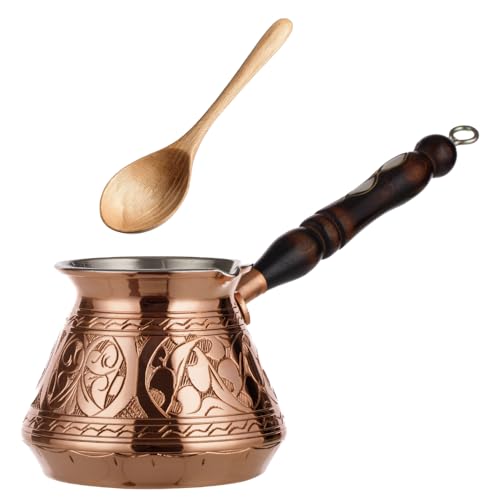
Best for: Anyone who wants to brew traditional Turkish coffee with proper foam on a gas or electric stove. Why it made the list: The thick hammered copper spreads low heat evenly and cools fast when lifted, giving you the fine control that raising foam two or three times requires, and the tin lining keeps the brew off bare copper.
- Key specs: Heavy gauge hand-hammered copper body, food-safe tin lining, riveted brass handle, spouted rim, common sizes brew two to four demitasse cups.
- What we like: Even, responsive heating that makes foam management easy, a comfortable stay-cooler brass handle, and construction solid enough to last decades with basic care.
- What we do not like: Copper does not work on induction stoves, the tin lining will wear over years and eventually need re-tinning, and it demands hand washing and occasional polishing.
- Who should buy it: Turkish and Greek coffee drinkers who brew regularly and care about foam quality and traditional method.
- Who should avoid it: Induction stove owners and anyone who wants a dishwasher-safe pot, the stainless Volarium fits both needs better.
- Common complaints: Owners mention water spots and tarnish if not dried promptly, and that the smallest sizes brew less than expected once foam headroom is accounted for.
- Size note: Size the pot to your servings, a cezve should be filled only about halfway so foam has room to rise, so a two-cup pot really brews two small cups.
- Cleaning note: Hand wash only with soft sponges, never scour the tin lining, and polish the copper exterior occasionally with lemon and salt or copper cleaner.
- Alternative: The Crystalia Glass Turkish Coffee Pot if you want to watch the foam develop and prefer glass cleanup.
Coffee Maker Buying Guide
Why copper still wins
Turkish coffee is brewed slowly over low heat and pulled off the moment foam rises, then returned, sometimes three times. Copper’s fast, even heat response makes that dance controllable. Stainless works and suits induction, but it holds heat longer and is easier to overshoot into a boil that kills the foam.
Lining and build quality
Traditional copper cezves must be lined, usually with tin, because acidic coffee should not sit on bare copper. Check that the lining is smooth and complete, and favor riveted handles over welded ones, they survive decades of use.
Getting the size right
Turkish coffee is brewed to the serving count, not in bulk, and the pot should start half empty. The narrow neck concentrates the foam, so an oversized pot brewing one cup makes worse coffee. Most households do best with a pot sized for two to four demitasse cups.
Safety Notes
- Never let a cezve boil unattended, Turkish coffee foams over in seconds and burning grounds smoke heavily.
- Assume the metal handle collar is hot even if the grip is not, lift with care on gas stoves.
- Do not brew in an unlined or worn-lined copper pot, replace or re-tin once bare copper shows inside.
- Use a heat diffuser under glass pots on gas flames to prevent thermal shock.
What to Avoid
- Unlined copper cezves sold as decorative but marketed for brewing.
- Very thin stamped copper pots, they develop hot spots that scorch the grounds.
- Pots with painted or lacquered interiors of unknown origin.
- Plastic-handled pots rated only for electric stoves if you cook on gas, the flame will reach the handle.
FAQ
What makes a Turkish coffee pot different from a small saucepan?
The cezve’s narrow neck and wide base are functional, the shape concentrates and supports the foam layer that defines Turkish coffee. A saucepan lets the foam spread thin and collapse. The long handle also matters, you lift the pot on and off heat repeatedly while brewing.
Can I use a Turkish coffee pot on an induction stove?
Copper and glass cezves will not activate induction burners. Choose a stainless steel pot like the Volarium, or use an induction-compatible interface disk under a copper pot, though the disk blunts the responsiveness that makes copper worth owning.
How do I clean a copper cezve?
Rinse with warm water and a soft sponge right after brewing, avoid abrasives on the tin lining, and dry immediately. Exterior tarnish polishes off with commercial copper cleaner or a lemon-and-salt scrub. Never put a tin-lined copper pot in the dishwasher.
Final Verdict
The CopperBull Heavy Duty Copper Turkish Coffee Pot is the best cezve for traditional brewing, with thick responsive copper that makes proper foam achievable, while the DEMMEX Copper Turkish Coffee Pot delivers the same tradition for less and the Volarium Turkish Coffee Pot is the practical stainless pick for induction stoves and easy care.
Related Guides
- Best Coffee Makers in 2026: Drip, Single-Serve and Grind-and-Brew Picks
- Best Drip Coffee Makers in 2026: Hot, Even-Brewing Picks
- Best Single-Serve Coffee Makers in 2026: One-Cup Picks
- Drip vs Single-Serve Coffee Maker: Which Should You Buy?
- How to Descale a Coffee Maker (Vinegar or Descaler)
- All Coffee Makers guides
