Updated 19 July 2026 · Specifications and Amazon availability checked 19 July 2026 · Written by MKB Team
A good rice cooker makes perfect rice hands-free, every time, and the best keep it warm for hours without drying out. The real choice is between a smart fuzzy-logic cooker that adjusts itself for different grains and a simple one-button model that just cooks and switches to warm. We compared five from a premium Zojirushi to budget and multi-use options, and matched each to how you cook. We did not run a grain-by-grain lab, so our recommendations draw on manufacturer specifications and owner feedback.
For the best rice with the least effort, the Zojirushi Neuro Fuzzy is the standard, adjusting itself for every grain. Want great value? The Aroma 8-Cup. Want one pot that also pressure cooks? The Instant Pot Duo Mini, or the simple, durable Tiger for classic one-button cooking.
- Best overall: Zojirushi Neuro Fuzzy · Check price
- Best value: Aroma Housewares 8-Cup · Check price
- Best mid-range: Cuckoo Micom 6-Cup · Check price
- Best multi-use: Instant Pot Duo Mini · Check price
- Best simple: Tiger 5.5-Cup · Check price
Affiliate Disclosure: As an Amazon Associate we earn from qualifying purchases. This never changes our rankings, and the specifications below come from each manufacturer’s current listing.
Side-by-Side Comparison
| Rice cooker | Type | Capacity | Keep warm | Best for | Buy |
|---|---|---|---|---|---|
| Zojirushi Neuro Fuzzy | Fuzzy logic | 5.5 cup | Extended | Perfect rice, any grain | Check price |
| Aroma 8-Cup | Simple + steamer | 8 cup cooked | Yes | Value | Check price |
| Cuckoo Micom | Micom (smart) | 6 cup | Yes | Mid-range | Check price |
| Instant Pot Duo Mini | Multi-cooker | 3 qt | Yes | Rice plus more | Check price |
| Tiger 5.5-Cup | Conventional | 5.5 cup | Yes | Simple, durable | Check price |
How We Evaluated These Picks
We are a research desk, not a lab, so we did not test every grain. We compared cooking quality and consistency, whether the cooker uses smart fuzzy logic or simple controls, capacity, keep-warm performance, and long-run owner feedback.
Fuzzy Logic vs Simple Cookers
Rice cookers split into two camps. Simple cookers, like the Aroma and Tiger, use a thermostat that switches from cook to warm when the water is gone. They are cheap, reliable and make good rice, especially white rice, but they treat every grain the same.
Fuzzy-logic cookers, like the Zojirushi and Cuckoo, use a microcomputer to adjust temperature and timing through the cook, with dedicated settings for white, brown, sushi, porridge and more. That gives noticeably better, more consistent results across grain types and forgiving performance even if your measuring is slightly off, at a higher price. If you eat a lot of rice or varied grains, fuzzy logic is worth it; for occasional white rice, a simple cooker is plenty.
Best Overall: Zojirushi Neuro Fuzzy
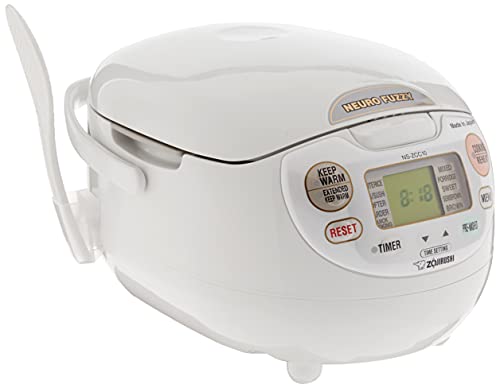
Best for: Anyone who eats rice often and wants perfect results across every grain
Specifications
| Type | Fuzzy logic |
| Capacity | 5.5 cup |
| Settings | White, brown, sushi, porridge |
| Keep-warm | Extended |
| Build | Premium |
| Brand | Zojirushi |
The Zojirushi Neuro Fuzzy is the rice cooker enthusiasts recommend first. Its fuzzy-logic microcomputer adjusts the temperature and timing throughout the cook, with dedicated menus for white, brown, sushi, porridge and more, so each grain comes out at its best. The keep-warm holds rice fresh for hours without drying, and the build quality is superb.
It is expensive and, at 5.5 cups, mid-sized rather than large. But for consistently excellent rice with no thought, nothing here matches it. Who should skip it: occasional rice eaters or anyone on a tight budget. Pros: perfect rice on any grain, extended keep-warm, superb build. Cons: premium price, mid capacity.
Model reviewed: Zojirushi Neuro Fuzzy Rice Cooker, ASIN B00007J5U7
Best Value: Aroma Housewares 8-Cup

Best for: Households that want good rice and a steamer basket for very little
Specifications
| Type | Simple |
| Capacity | 8 cup cooked |
| Extra | Steamer tray |
| Keep-warm | Yes |
| Best for | Value |
| Brand | Aroma |
The Aroma 8-Cup is the value champion. It cooks up to 8 cups of rice, includes a steamer tray so you can cook vegetables or fish above the rice at the same time, and keeps rice warm when done. Simple controls make it foolproof, and the price is a fraction of a fuzzy-logic cooker.
As a simple cooker it treats grains the same and lacks the fine adjustment of a Zojirushi, so brown rice is less perfect. But for everyday white rice and steaming, it is a lot of cooker for the money. Who should skip it: anyone who wants the best brown or specialty rice. Pros: big capacity, steamer included, simple, excellent value. Cons: no grain-specific smarts, plainer results on brown rice.
Model reviewed: Aroma Housewares 8-Cup Rice Cooker and Steamer, ASIN B007WQ9YNE
Best Mid-Range: Cuckoo Micom 6-Cup

Best for: Cooks who want smart cooking and quality closer to premium for less
Specifications
| Type | Micom smart |
| Capacity | 6 cup |
| Pot | Nonstick |
| Settings | Multiple grains |
| Best for | Mid-range |
| Brand | Cuckoo |
The Cuckoo Micom brings smart cooking to a mid-range price. Its micom microcomputer adjusts the cook for different grains with dedicated settings, a nonstick inner pot releases rice cleanly, and it keeps rice warm well. Cuckoo is a major Korean rice-cooker brand, and it shows in consistent results a step above simple cookers.
It is pricier than a basic cooker and its menus take a moment to learn. But it delivers much of the fuzzy-logic benefit for less than a Zojirushi. Who should skip it: anyone who only wants one-button simplicity or the absolute best. Pros: smart micom cooking, good brown and white rice, nonstick pot, fair price. Cons: costs more than basic cookers, small learning curve.
Model reviewed: CUCKOO Micom 6-Cup Rice Cooker, ASIN B08WFNV82W
Best Multi-Use: Instant Pot Duo Mini

Best for: Small kitchens that want rice plus pressure cooking and more in one pot
Specifications
| Type | Multi-cooker |
| Capacity | 3 quart |
| Functions | Rice, pressure, slow cook |
| Keep-warm | Yes |
| Best for | Versatility |
| Brand | Instant Pot |
The Instant Pot Duo Mini cooks rice well and does far more besides. As a 3-quart multi-cooker it pressure cooks, slow cooks, steams, sautes and makes yogurt, so it is ideal for a small kitchen that wants one versatile appliance. Its rice function turns out good white and brown rice at the push of a button.
It is not a dedicated rice cooker, so its keep-warm and grain menus are simpler than a Zojirushi’s, and the many functions mean a learning curve. But as a compact do-everything pot that also makes rice, it is excellent value. Who should skip it: rice purists who want the very best grain-by-grain results. Pros: rice plus many functions, compact, great value. Cons: simpler rice menus, learning curve.
Model reviewed: Instant Pot Duo Mini 3-Quart Multi-Cooker, ASIN B06Y1YD5W7
Best Simple: Tiger 5.5-Cup

Best for: Cooks who want a durable, no-fuss one-button rice cooker that lasts
Specifications
| Type | Conventional |
| Capacity | 5.5 cup |
| Controls | One-button |
| Keep-warm | Yes |
| Best for | Simple, durable |
| Brand | Tiger |
The Tiger 5.5-Cup is the classic conventional rice cooker done well. It uses a simple cook-and-warm mechanism with a single switch, makes reliably good white rice, and is famously durable, the kind of cooker that lasts many years. There are no menus to learn: add rice and water, press the lever, and it does the rest.
Being conventional, it lacks grain-specific settings and cooks brown rice less perfectly than a fuzzy-logic model. But for straightforward, dependable white rice it is a lovely simple machine. Who should skip it: anyone who cooks a lot of brown or specialty grains. Pros: durable, dead simple, reliable white rice, trusted brand. Cons: no smart settings, plainer on brown rice.
Model reviewed: Tiger JNP-S10U 5.5-Cup Rice Cooker, ASIN B0DRPQ6YWZ
Which Rice Cooker Should You Buy?
Best for perfect rice on any grain
The Zojirushi Neuro Fuzzy, whose fuzzy logic adjusts itself for white, brown, sushi and more.
Best on a budget
The Aroma 8-Cup, which cooks plenty of rice, steams food and costs very little.
Best for brown and specialty rice
A smart cooker, the Zojirushi or Cuckoo, which adjust the cook for tougher grains far better than simple models.
Best for a small, versatile kitchen
The Instant Pot Duo Mini, which makes rice and pressure cooks, slow cooks and steams too.
Best for simple white rice
The Tiger, a durable one-button cooker, or the Aroma if you also want a steamer.
Buying Guide
Fuzzy logic or simple
Fuzzy-logic cookers adjust for each grain and forgive imprecise measuring, giving better, more consistent results. Simple cookers are cheaper and fine for everyday white rice.
Check the cup rating
Rice cookers are rated in small rice-cooker cups, not standard cups, so a 5.5-cup cooker makes plenty for a family. Buy for how much rice you cook at once.
Nonstick inner pots clean easier
A removable nonstick pot releases rice and washes cleanly. Treat it gently with wood or plastic tools to protect the coating.
Keep-warm matters if you cook ahead
A good extended keep-warm holds rice fresh for hours without drying, which is a real convenience if you cook before you eat.
Care and Use
- Rinse rice before cooking for cleaner, less sticky results in most cookers.
- Use the cooker’s own measuring cup and fill lines, which are calibrated for it.
- Hand wash the inner pot gently and use non-metal tools to protect any nonstick coating.
- Wipe the lid and steam vent so starch does not build up over time.
Frequently Asked Questions
Is a fuzzy-logic rice cooker worth it?
If you eat rice often or cook varied grains, yes. Fuzzy logic adjusts temperature and timing for each grain and forgives imprecise measuring, giving noticeably better, more consistent results than a simple cooker.
How many cups does a rice cooker make?
Ratings use small rice-cooker cups, not standard cups, so a 5.5-cup cooker makes plenty for a family. Match the capacity to how much rice you usually cook at once.
Can a rice cooker cook brown rice?
Yes, but fuzzy-logic and micom cookers do it far better, with dedicated brown-rice settings that handle the longer, tougher cook. Simple cookers can do it but less perfectly.
Is an Instant Pot as good as a rice cooker?
It makes good rice and does much more, so it is great for a small versatile kitchen. A dedicated fuzzy-logic cooker still gives the best grain-by-grain rice and longer keep-warm.
Sources and References
Specifications were checked against each manufacturer’s Amazon listing on 18 July 2026 (Zojirushi, Aroma, Cuckoo, Instant Pot and Tiger). Where a maker does not state a figure, we describe the design rather than invent a number.
Final Verdict
For the best rice with no effort, the Zojirushi Neuro Fuzzy is the standard, adjusting itself for every grain and keeping rice fresh for hours. The Aroma 8-Cup is the value pick with a built-in steamer, the Cuckoo Micom delivers smart cooking for less, the Instant Pot Duo Mini adds pressure cooking and more in a compact pot, and the Tiger is the durable, simple one-button choice. Choose fuzzy logic for varied grains and the best results, or a simple cooker for everyday white rice on a budget.
