The Zojirushi NS-ZCC10 Neuro Fuzzy is the best micom rice cooker because its microcomputer adjusts temperature and timing on the fly, producing consistently excellent white, brown, and sushi rice that basic one-switch cookers simply cannot match. Micom, short for microcomputer, means the cooker uses fuzzy logic to compensate for measurement errors and different rice types instead of just boiling until dry. If you eat rice more than once a week, this is the category where the upgrade genuinely shows up in the bowl.
The Zojirushi NS-ZCC10 Neuro Fuzzy is the best micom rice cooker, with fuzzy logic that turns out consistently perfect rice across white, brown, sushi, and porridge settings. The Tiger JBV-A10U is the value pick with solid micom cooking and a synchronized steaming feature.
- Best overall: Zojirushi NS-ZCC10 Neuro Fuzzy
- Best value: Tiger JBV-A10U
- Best budget: Panasonic SR-DF101
- Avoid: Basic single-switch cookers sold at micom prices, check for the word fuzzy logic or micom in the specs
Affiliate Disclosure: As an Amazon Associate, we earn from qualifying purchases. This does not affect our product rankings or recommendations.
Quick Picks
- Best overall: Zojirushi NS-ZCC10 Neuro Fuzzy, Fuzzy logic perfection across white, brown, sushi, and porridge settings.. Check price on Amazon
- Best value: Tiger JBV-A10U, Reliable micom cooking plus a synchronized cooking plate for one-pot meals..
- Best budget: Panasonic SR-DF101, Simple fuzzy logic cooker that nails everyday white rice..
Comparison Table
| Rice cooker | Capacity | Best for | Notable modes | Buy |
|---|---|---|---|---|
| Zojirushi NS-ZCC10 Neuro Fuzzy | 5.5 cups uncooked | Daily rice eaters | White, sushi, porridge, brown, quick | Check Price |
| Tiger JBV-A10U | 5.5 cups uncooked | One-pot meals | Synchro-cooking, slow cook, steam | Check Price |
| Panasonic SR-DF101 | 5 cups uncooked | Simple everyday rice | White, brown, porridge, quick | Check Price |
| Cuckoo CR-0655F | 6 cups uncooked | Mixed grains and turbo cooking | Turbo, multi-grain, my mode | Check Price |
How We Chose These Micom Rice Cooker Picks
We compared heating systems, menu programs, inner pot construction, and keep-warm behavior across the major micom cookers from Zojirushi, Tiger, Panasonic, and Cuckoo, then weighed aggregated owner feedback on rice texture consistency, durability, and ease of cleaning. Cookers were judged on rice quality first, extra features second.
Key Takeaway: Micom means the cooker thinks, adjusting heat and time as it senses moisture. That is why the same cooker handles firm sushi rice and soft porridge, and why it forgives slightly sloppy water measuring.
Best Overall: Zojirushi NS-ZCC10 Neuro Fuzzy
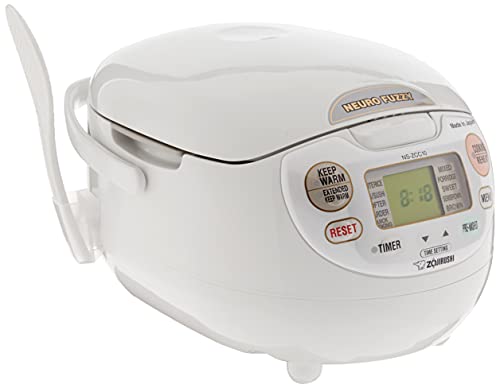
Best for: Households that cook rice several times a week and want restaurant-consistent texture across multiple rice types. Why it made the list: Its neuro fuzzy logic monitors and adjusts the cook in real time, the spherical pan and heating design cook evenly to the edges, and the extended keep-warm holds rice at serving quality for hours without drying the bottom layer into a crust.
- Key specs: 5.5 cup uncooked capacity, neuro fuzzy microcomputer, settings for white regular, softer, harder, sushi, porridge, sweet, brown, and quick, extended keep-warm, reheat cycle, retractable cord, delay timer.
- What we like: Rice texture is remarkably consistent batch to batch, brown rice comes out tender instead of chewy, and the keep-warm genuinely preserves quality overnight for next-day fried rice.
- What we do not like: Regular cycles take around 50 minutes, which surprises people upgrading from fast basic cookers, and the exterior design looks dated next to newer stainless models. It is also a premium purchase for what looks like a simple appliance.
- Who should buy it: Anyone who eats rice as a staple, cooks multiple varieties, or has been disappointed by scorched or gummy results from cheap cookers.
- Who should avoid it: Occasional rice eaters who make a pot once a month, a budget micom like the Panasonic covers that use case fine. Households needing 10 cup capacity should look at larger models.
- Common complaints: The cook time on standard cycles, a lid that collects starch and needs regular wiping, and the melody chime, which some owners find cheerful and others find grating.
- Size note: The 5.5 cup model yields roughly 10 cups of cooked rice, enough for most families of four to six. Measure with the included cup, which is smaller than a US measuring cup.
- Cleaning note: Wash the nonstick inner pot by hand with a soft sponge, and wipe the inner lid and steam vent after each use to prevent starch buildup and odors.
- Alternative: If you want micom quality plus the ability to steam a protein over the rice as it cooks, the Tiger JBV-A10U’s synchro-cooking plate does exactly that.
Rice Cooker Buying Guide
What micom actually gets you
A micom cooker uses a microcomputer and fuzzy logic to vary temperature and timing through soak, boil, steam, and rest phases, instead of the single boil-until-dry switch in basic cookers. The payoff is even texture, no scorched layer, forgiving water measurement, and real settings for brown rice and porridge that actually work.
Capacity and household size
Rice cooker capacity is listed in uncooked cups using the small 180 milliliter rice cup. A 3 cup model suits one or two people, 5.5 cups covers most families, and 10 cup models suit large households or meal preppers. Micom cookers perform best between about one third and full capacity, so avoid dramatically oversizing.
Micom versus induction and pressure
Above micom sit induction heating and pressure induction cookers, which heat more precisely and cook faster, at a substantially higher cost. For most home cooks, a good micom model like the NS-ZCC10 captures the majority of the quality gain, and the step up matters mostly for short-grain perfectionists and heavy brown rice eaters.
Safety Notes
- Keep your face and hands away from the steam vent during cooking, the steam can scald.
- Never submerge the cooker body, only the inner pot and lid parts are washable.
- Plug the cooker directly into a wall outlet, not a power strip, per most manufacturer manuals.
- Let the unit cool and unplug it before wiping the heating plate, and keep the plate free of rice grains that can cause hot spots.
What to Avoid
- Paying micom prices for a basic one-switch cooker, verify the listing says micom or fuzzy logic.
- Using the standard US measuring cup, capacity math assumes the smaller included rice cup.
- Scratching the nonstick pot with metal utensils, use the plastic paddle that comes with it.
- Leaving rice on keep-warm for days, even the best cookers hold quality for hours, not a weekend.
FAQ
What does micom mean on a rice cooker?
Micom is short for microcomputer. The cooker’s chip uses fuzzy logic to adjust heat and cook time in response to how the rice is absorbing water, moving through soak, cook, steam, and rest phases automatically. That is the main difference from basic cookers that simply boil until the water is gone.
Is a micom rice cooker worth it over a cheap cooker?
If you eat rice weekly or more, yes. The texture difference is obvious, brown rice and porridge settings actually work, and keep-warm holds rice fresh for hours. If you cook rice a few times a year, a basic cooker or a pot on the stove is fine.
Why does my micom rice cooker take so long?
Standard micom cycles run 45 to 60 minutes because the computer includes soaking and steaming phases that basic cookers skip. That extra time is where the texture comes from. Most models, including the NS-ZCC10, offer a quick setting when you need rice faster.
Final Verdict
The Zojirushi NS-ZCC10 Neuro Fuzzy is the best micom rice cooker, delivering the most consistent rice across every setting, while the Tiger JBV-A10U adds one-pot versatility for less and the Panasonic SR-DF101 brings fuzzy logic quality to a budget price class.
