The Bosch Universal Plus is the best quiet stand mixer because its belt-driven transmission runs at a smooth hum rather than the gear whine and clatter most mixers produce, even while kneading multiple loaves of bread dough. No stand mixer is silent, but the difference between a quiet drive and a loud one is the difference between mixing during a baby’s nap and not. Here are the four mixers that owners consistently describe as easy on the ears, with honest notes on what each trades away for the quiet.
The Bosch Universal Plus is the quietest heavy-duty stand mixer for its capacity, running at a smooth hum even under full bread loads. The Ankarsrum Original is even more serene for dedicated bread bakers, while the Cuisinart Precision Master offers quiet-enough mixing in a familiar format.
- Best overall: Bosch Universal Plus
- Best value: Cuisinart Precision Master SM-50
- Best budget: Hamilton Beach Electric Stand Mixer
- Avoid: Cheap high-RPM mixers whose plastic gearboxes whine at every speed
Affiliate Disclosure: As an Amazon Associate, we earn from qualifying purchases. This does not affect our product rankings or recommendations.
Quick Picks
- Best overall: Bosch Universal Plus, Belt-driven hum instead of gear whine, even under multi-loaf bread dough.. Check price on Amazon
- Best value: Cuisinart Precision Master SM-50, A conventional tilt-head format that runs noticeably smoother than most rivals..
- Best budget: Hamilton Beach Electric Stand Mixer, Acceptably quiet at low speeds for light baking on a small budget..
Comparison Table
| Mixer | Noise character | Best for | Capacity | Buy |
|---|---|---|---|---|
| Bosch Universal Plus | Smooth low hum under load | Big batches and frequent bread | 6.5 quart bowl | Check Price |
| Ankarsrum Original | Near-serene slow rotation | Dedicated bread bakers | 7 quart stainless bowl | Check Price |
| Cuisinart SM-50 | Moderate, smoother than most | Everyday baking in a classic form | 5.5 quart bowl | Check Price |
| Hamilton Beach | Quiet low, louder high speeds | Occasional light baking | 4 quart bowl | Check Price |
How We Chose These Quiet Stand Mixer Picks
We compared drive designs, since transmission type is what actually determines mixer noise, and weighed aggregated owner feedback that specifically mentions sound levels, resonance, and noise under heavy dough loads. Mixers widely described as whiny or clattery were excluded no matter how well they mix.
Key Takeaway: Mixer noise comes from the transmission, not the motor wattage. Belt-driven and slow-turning designs hum, cheap high-speed gearboxes whine, and no amount of wattage marketing changes that physics.
Best Overall: Bosch Universal Plus
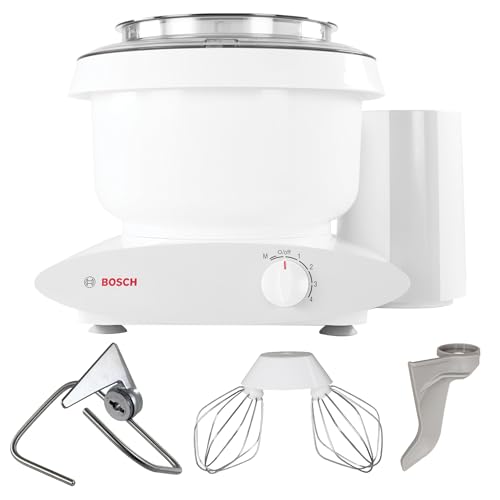
Best for: Bakers in apartments, households with sleeping kids, or anyone who mixes early and often and is tired of a machine that sounds like a drill press. Why it made the list: Its belt-driven, bottom-drive design turns a big 6.5 quart bowl with a smooth hum, and it keeps that composure under double and triple bread batches that make gear-driven mixers roar.
- Key specs: 800 watt motor with belt-driven bottom drive, 6.5 quart bowl with center column, suspended dough hook and whisk attachments, and a compact, lightweight body for its capacity.
- What we like: The sound is a steady, low hum that conversation easily carries over, and it barely rises under heavy dough. The open bowl design makes adding flour mid-knead easy, and the machine handles very large batches that overwhelm tilt-head mixers.
- What we do not like: The center-column bowl takes relearning, scraping and small batches are awkward, whipping tiny quantities underperforms, and the plastic-heavy aesthetic feels underwhelming next to die-cast rivals. Many attachments cost extra.
- Who should buy it: Frequent bread and batch bakers who care about noise, capacity, and dough performance more than countertop looks.
- Who should avoid it: Bakers who mostly make single batches of cookies or frosting, a conventional tilt-head like the Cuisinart SM-50 is more convenient for small jobs.
- Common complaints: The learning curve of the column bowl and the extra cost of accessories are the recurring themes, noise complaints are notably rare.
- Size note: It is lighter and shorter than most high-capacity mixers, fitting under standard upper cabinets, but the bowl and drive footprint still want a dedicated counter spot.
- Cleaning note: The bowl and attachments clean easily, but flour dust collects around the drive coupling, wipe the base after each session and never submerge it.
- Alternative: The Ankarsrum Original is the pick for bread purists, its slow-turning bowl is even quieter and gentler on dough, though its workflow is the most unconventional of all.
Stand Mixer Buying Guide
Drive design determines decibels
Belt-driven and direct-drive mixers like the Bosch and Ankarsrum run quietly because there is no high-speed gear train converting motor speed into whine. Traditional planetary mixers with metal gearboxes sit in the middle, and budget mixers with plastic gearboxes are the loudest, adding rattle and resonance to the whine. If noise matters, buy by transmission, not wattage.
Load changes everything
Any mixer is quietest whipping cream and loudest kneading stiff bagel dough. Check owner comments about noise under load, not just at idle, because a mixer that hums empty can groan alarmingly with a double batch inside. The quiet picks here were selected specifically for keeping composure under heavy dough.
Quiet has ergonomic tradeoffs
The quietest designs are unconventional: the Bosch uses a center-column bowl and the Ankarsrum rotates the bowl itself, and both take a week of adjustment. If you want the familiar tilt-head experience, accept the moderate noise of something like the Cuisinart SM-50 rather than fighting a format you will not enjoy.
Safety Notes
- Keep fingers, spatulas, and hair away from the bowl while the mixer runs.
- Stop the machine fully before scraping the bowl or changing attachments.
- Place the mixer well back from the counter edge, kneading can walk a machine.
- Do not exceed the stated flour capacity, overloading strains motors and tips machines.
What to Avoid
- Judging noise by motor wattage, transmission design is what you actually hear.
- Plastic-gearbox budget mixers if whine drives you mad, no fix exists.
- Running any mixer on a resonant surface like a hollow island top, it amplifies noise.
- Buying unconventional formats without watching a demo video first.
FAQ
How loud is a typical stand mixer?
Most conventional stand mixers run in the range of a loud conversation to a garbage disposal depending on speed and load, and cheap ones add a piercing gear whine. Belt-driven designs like the Bosch Universal Plus sit noticeably below that, closer to a refrigerator hum at low speeds.
Is the KitchenAid Artisan quiet?
It is moderate, its all-metal gears produce a mechanical churn that most people tolerate but nobody calls quiet, and it gets loud under thick dough. If a KitchenAid appeals to you otherwise, it is a fine machine, but it was not selected here because quieter designs exist.
Can I make a loud mixer quieter?
Somewhat. A silicone or rubber mat under the base absorbs resonance, moving the mixer off hollow surfaces helps, and keeping loads within capacity prevents strain groan. But transmission whine is built in, no accessory removes it, which is why buying quiet up front matters.
Final Verdict
The Bosch Universal Plus is the best quiet stand mixer, with the Cuisinart Precision Master SM-50 as the conventional-format value pick and the Ankarsrum Original as the serene splurge for dedicated bread bakers.
