The OXO Good Grips Nonstick 8-Inch Frypan is the best pan for eggs because its three-layer nonstick coating releases omelets and over-easy eggs with almost no fat, and its hard-anodized body heats evenly at the low temperatures eggs demand. Eggs are the single most demanding test of a nonstick surface, and this pan passes it while staying comfortable in the hand and light enough to swirl and flip with one wrist.
The OXO Good Grips Nonstick 8-Inch Frypan is the best egg pan for most people, with reliable release and even low heat. If you want to avoid nonstick coatings entirely, a well-seasoned Lodge 8-inch cast iron skillet is the durable alternative.
- Best overall: OXO Good Grips Nonstick 8-Inch Frypan
- Best value: T-fal Ultimate Hard Anodized 8.5-Inch Fry Pan
- Best budget: GreenLife Soft Grip 8-Inch Ceramic Pan
- Avoid: Thin stamped-aluminum pans with paper-thin coatings that fail within months
Affiliate Disclosure: As an Amazon Associate, we earn from qualifying purchases. This does not affect our product rankings or recommendations.
Quick Picks
- Best overall: OXO Good Grips Nonstick 8-Inch Frypan, Excellent release, even heating, and a comfortable stay-cool handle.. Check price on Amazon
- Best value: T-fal Ultimate Hard Anodized 8.5-Inch Fry Pan, Durable coating and a heat indicator dot that helps you nail egg temperature..
- Best budget: GreenLife Soft Grip 8-Inch Ceramic Pan, Light, slick ceramic surface that is great for eggs while the coating is fresh..
Comparison Table
| Pan | Surface | Best for | Heat handling | Buy |
|---|---|---|---|---|
| OXO Good Grips Nonstick 8-Inch Frypan | Three-layer PTFE nonstick | Everyday eggs, omelets, crepes | Even, oven safe to 430 F | Check Price |
| T-fal Ultimate Hard Anodized Fry Pan | Titanium-reinforced nonstick | Value shoppers, frequent cooks | Thermo-Spot dot shows preheat | Check Price |
| GreenLife Soft Grip Ceramic Pan | Ceramic nonstick | Light use, PTFE-free preference | Fast heating, low and medium only | Check Price |
| Lodge 8 Inch Cast Iron Skillet | Seasoned cast iron | Crispy fried eggs, no coatings ever | Holds heat, needs preheat patience | Check Price |
How We Chose These Pan Picks
We compared coating types, body construction, handle comfort, and oven ratings across the most popular small frypans, then weighed thousands of owner reviews with special attention to how each coating held up after six months to a year of regular egg cooking. Longevity of release is where cheap egg pans fail.
Key Takeaway: Buy a small dedicated nonstick pan for eggs, keep it on low or medium heat, and never use metal utensils in it. Treated that way, a good egg pan lasts years instead of months.
Best Overall: OXO Good Grips Nonstick 8-Inch Frypan
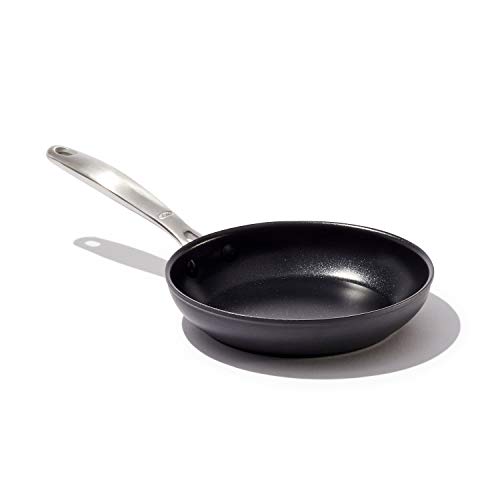
Best for: Anyone who cooks eggs most mornings and wants dependable release, even heat, and a pan that is light enough to swirl an omelet one-handed. Why it made the list: Egg cookery rewards a pan that heats evenly at low temperatures, and the hard-anodized aluminum body of this OXO does exactly that, with no hot spot in the center to brown your omelet before the edges set. The three-layer nonstick releases eggs with a dry wipe of butter, the rolled edges pour cleanly, and the stainless handle stays cool on the stovetop. Owner feedback shows the coating outlasting cheaper pans by a wide margin when kept away from high heat and metal utensils.
- Key specs: 8-inch cooking surface, hard-anodized aluminum body, three-layer PTFE nonstick coating, stainless steel handle, oven safe to 430 F.
- What we like: Even low-heat performance, genuinely comfortable handle, and a coating that keeps releasing eggs long after budget pans have started sticking.
- What we do not like: It is not induction compatible, the 8-inch size only handles two or three eggs at a time, and like all PTFE pans the coating is consumable and will wear eventually.
- Who should buy it: Daily egg cooks, omelet makers, and anyone who wants one small pan that treats delicate foods like crepes and fish fillets gently.
- Who should avoid it: Induction cooktop owners, people who cook eggs for a crowd and need a 10 or 12 inch surface, and anyone who refuses to hand-baby a nonstick coating.
- Common complaints: A few owners report the coating degrading early, which almost always traces to high heat or cooking spray residue. Some wish the handle were shorter for storage.
- Size note: An 8-inch pan is ideal for one to three eggs or a two-egg omelet. If you regularly cook for a family, add a 10-inch version rather than crowding this one.
- Cleaning note: Hand wash with a soft sponge and skip aerosol cooking sprays, which lacquer onto the coating and cause sticking. A drop of dish soap and warm water is all it needs.
- Alternative: The Lodge 8 Inch Cast Iron Skillet if you want a pan you will never replace and prefer crispy-edged fried eggs over delicate French omelets.
Egg Pan Buying Guide
Coating types for eggs
Traditional PTFE nonstick gives the most reliable release for eggs and lasts longest when used on low heat. Ceramic coatings are slick out of the box but lose their release faster, often within a year. Seasoned cast iron and carbon steel work well for fried eggs once you learn heat control, but they punish impatience and skipped preheats.
Size and weight
Eggs want a small pan. An 8-inch surface keeps a two-egg omelet thick enough to roll and lets you swirl the pan with one hand. Weight matters too, because the tilt-and-swirl motion of omelet making is miserable with a heavy pan, which is the one real argument against cast iron for daily eggs.
Heat control and stovetops
Eggs cook between low and medium heat, so a pan that heats evenly matters more than one that heats fast. Check induction compatibility if you need it, since many hard-anodized nonstick pans, including our top pick, do not work on induction. A preheat indicator like the T-fal dot is genuinely useful for beginners.
Safety Notes
- Never preheat an empty nonstick pan on high heat. PTFE coatings degrade above roughly 500 F and can release fumes.
- Keep pet birds out of the kitchen when using PTFE cookware, as they are extremely sensitive to overheated coating fumes.
- Use silicone, wood, or nylon utensils only. Metal scratches expose the base layer and ends the pan’s useful life.
- Replace any nonstick pan that is flaking or deeply scratched instead of continuing to cook on it.
What to Avoid
- Thin stamped-aluminum pans that warp on the first high-heat mistake and develop a rocking base.
- Any pan sold with no brand accountability or warranty behind the coating claims.
- So-called nonstick pans that require heavy oil after a few weeks, a sign of a low-grade single-layer coating.
- Buying a 12-inch pan for eggs. Big pans spread eggs thin and cook them unevenly at low heat.
FAQ
Why do eggs stick to my nonstick pan?
The usual culprits are heat that is too high, cooking spray residue baked into the surface, or a coating that is simply worn out. Cook eggs on low to medium with a little butter or oil, wash with a soft sponge, and expect even a good coating to be consumable over years of use.
Is ceramic or PTFE better for eggs?
PTFE releases more reliably and lasts longer with proper care, which is why it remains the standard for egg pans. Ceramic is a reasonable choice if you want to avoid PTFE, but plan on the slickness fading faster. Whichever you choose, low heat extends the life of both.
Can I cook eggs in cast iron?
Yes, and fried eggs with crispy edges are excellent in cast iron. The keys are a full preheat on medium-low, enough fat, and established seasoning. Delicate omelets and first-attempt scrambles are easier in nonstick, which is why many kitchens keep both.
Final Verdict
The OXO Good Grips Nonstick 8-Inch Frypan is the best pan for eggs, with even low heat and long-lasting release, while the T-fal Ultimate Hard Anodized Fry Pan is the smart value with its preheat indicator and the Lodge 8 Inch Cast Iron Skillet is the buy-it-once choice for crispy fried eggs without any coating.
