The Noble Home and Chef Felt-Lined Knife Guards are the best knife edge guards for most kitchens because the felt lining protects the edge from the guard itself, a detail most cheap sleeves get wrong by dragging bare plastic along the blade every time you sheath it. Edge guards matter if your knives live in a drawer or travel to potlucks, since drawer contact dulls an edge faster than cutting ever will. A full set covers every blade from paring to chef for less than the cost of a single professional sharpening.
The Noble Home and Chef Felt-Lined Knife Guards are the best pick because the soft interior lining means the guard never scrapes the edge it exists to protect. For single knives, the Victorinox BladeSafe and Wusthof blade guards are reliable brand-matched options.
- Best overall: Noble Home and Chef Felt-Lined Knife Guards
- Best value: Messermeister Edge-Guard Set
- Best budget: Victorinox BladeSafe Knife Guard
- Avoid: Hard unlined plastic sleeves that grind against the edge on every insertion
Affiliate Disclosure: As an Amazon Associate, we earn from qualifying purchases. This does not affect our product rankings or recommendations.
Quick Picks
- Best overall: Noble Home and Chef Felt-Lined Knife Guards, Felt-lined sleeves in a full size range that protect edges from drawers and from the guards themselves.. Check price on Amazon
- Best value: Messermeister Edge-Guard Set, The long-running kitchen standard with sturdy translucent sleeves in every practical length..
- Best budget: Victorinox BladeSafe Knife Guard, A simple hinged guard from a trusted knife brand, ideal for a single chef knife..
Comparison Table
| Edge guard | Sizes | Best for | Lining | Buy |
|---|---|---|---|---|
| Noble Home and Chef Guards | Multi-size set | Full knife drawers | Felt-lined interior | Check Price |
| Messermeister Edge-Guard Set | Multi-size set | Mixed knife collections | Smooth unlined polypropylene | Check Price |
| Victorinox BladeSafe | Single, fits 8 to 10 inch | One chef knife | Hinged clamshell plastic | Check Price |
| Wusthof Blade Guard | Single, multiple lengths | Brand-matched protection | Smooth unlined plastic | Check Price |
How We Chose These Knives Picks
We compared guard materials, interior linings, and size ranges across the popular edge guard brands, then weighed aggregated owner feedback on fit security, whether guards fall off in drawers, and long-term wear on both the guards and the knife edges inside them. Guards with reports of scratching blades were ranked down.
Key Takeaway: An unlined guard can dull the very edge it protects, because sliding steel against hard plastic is a slow honing in the wrong direction. Felt-lined or hinged designs remove that contact and are worth the small premium.
Best Overall: Noble Home and Chef Felt-Lined Knife Guards
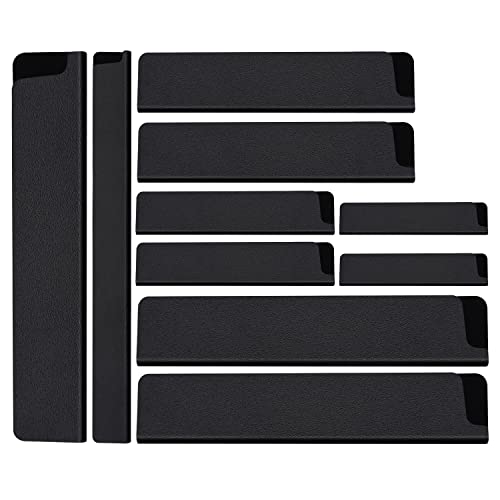
Best for: Anyone storing good knives in a drawer or transporting them, who wants every blade covered by a properly fitted sleeve. Why it made the list: The felt lining is the feature that separates these from the sea of plastic sleeves: the blade slides against soft fiber instead of hard polymer, so repeated sheathing never abrades the edge. Sets come in a range of lengths that genuinely match common knife sizes, from paring up to long chef and bread knives, and the guards grip firmly enough that they stay put in a rummaged drawer.
- Key specs: BPA-free plastic shells with felt-lined interiors, sold in multi-piece sets covering paring through chef and bread knife lengths.
- What we like: The felt lining protects edges on insertion, sizing is accurate to real knives, and the fit is snug without forcing.
- What we do not like: Felt absorbs moisture, so a knife sheathed even slightly damp can sit against wet fabric and spot or rust.
- Who should buy it: Drawer-storage households and anyone who transports knives to classes, campsites, or family kitchens.
- Who should avoid it: Cooks with a knife block or magnetic strip that already keeps edges isolated; guards would be redundant at home.
- Common complaints: Owners occasionally report the felt trapping moisture when knives are put away wet, and very wide cleavers may not fit the largest sleeve.
- Size note: Measure blade length and heel height before ordering; a guard should cover the full edge with the spine seated at the closed side.
- Cleaning note: Wipe the shells and air-dry the felt thoroughly if it gets damp; a musty guard should be washed in mild soap and dried completely before reuse.
- Alternative: The Victorinox BladeSafe uses a hinged clamshell that clicks around the blade with no sliding contact at all, a great solution for a single treasured chef knife.
Knife Edge Guard Buying Guide
Why edge guards matter
A sharpened edge is fragile at the microscopic level, and clattering against other utensils in a drawer folds and chips it faster than actual cutting. Guards also protect hands reaching into that drawer. If your knives live in a block or on a magnetic strip, you only need guards for travel.
Lining and insertion style
Slide-in guards work like a sheath, and unlined ones scrape the edge with every use, which is why felt lining matters. Hinged clamshell guards like the Victorinox BladeSafe avoid sliding entirely by closing around the blade. Either approach beats bare plastic tubes.
Fit and coverage
A guard that is too big falls off in the drawer; one too short leaves the tip exposed, which is both a dulling point and a safety hazard. Match guard length to blade length within an inch, and check the guard is deep enough to cover the full heel of wide chef knives.
Safety Notes
- Always insert knives spine-first and edge-down, sliding along the closed spine side of the guard, never against the edge channel.
- Dry blades completely before sheathing; trapped moisture inside any guard invites rust and spotting.
- Replace cracked guards immediately, since a split guard can expose the edge exactly where a hand grabs it.
- Point the blade away from your body when fitting or removing a snug guard; forced guards slip.
What to Avoid
- Hard unlined sleeves that audibly scrape as the blade slides in and out.
- Loose universal guards that drop off in a drawer, leaving the edge bare exactly where hands reach.
- Guards that trap water, or the habit of sheathing knives straight from the dish rack.
- Storing carbon steel knives long-term in any closed guard without oiling the blade first.
FAQ
Do knife edge guards actually keep knives sharp?
They do not sharpen anything, but they prevent the drawer contact that dulls edges between sharpenings. Owners who switch from loose drawer storage to guards consistently report edges holding noticeably longer. The guard protects the edge from impact; you still need to hone and sharpen normally.
Can edge guards damage a knife?
Unlined hard plastic guards can, slowly, because sliding the edge against plastic on every insertion works like a very fine abrasive. Felt-lined guards and hinged clamshell designs eliminate this contact. Also never store a wet blade in a guard, since trapped moisture causes spotting and rust.
What size knife guard do I need?
Match the guard to the blade, not the knife overall. An 8-inch chef knife needs a guard at least 8 inches long and deep enough to cover its wide heel. Paring knives need small guards or they rattle loose. Multi-size sets like Noble and Messermeister solve this by covering the whole knife roll.
Final Verdict
The Noble Home and Chef Felt-Lined Knife Guards are the best edge guards thanks to a lining that protects blades from the guard itself, with the Messermeister Edge-Guard Set as the proven value set and the Victorinox BladeSafe as the simple pick for protecting a single chef knife.