The De’Longhi Stilosa is the best affordable espresso starter machine because it pairs a real 15 bar pump and a proper portafilter with a manual steam wand, so you learn genuine espresso technique instead of pod shortcuts. A good starter kit should teach you dosing, tamping, and milk texturing on equipment that produces drinkable shots from day one, and the Stilosa does that with the fewest compromises at the entry level.
The De’Longhi Stilosa is the best affordable espresso starter machine, offering a real pump, portafilter, and steam wand for learning proper technique. The Mr. Coffee Cafe Barista is the best value for latte lovers because its automatic milk frother removes the hardest skill from the process.
- Best overall: De’Longhi Stilosa
- Best value: Mr. Coffee Cafe Barista
- Best budget: Flair NEO Manual Espresso Maker
- Avoid: Steam-driven machines marketed as espresso makers, they cannot reach true extraction pressure
Affiliate Disclosure: As an Amazon Associate, we earn from qualifying purchases. This does not affect our product rankings or recommendations.
Quick Picks
- Best overall: De’Longhi Stilosa, Real pump espresso and a manual steam wand at the friendliest entry point. Check price on Amazon
- Best value: Mr. Coffee Cafe Barista, One-touch automatic milk frothing makes lattes nearly foolproof for beginners.
- Best budget: Flair NEO Manual Espresso Maker, Lever-pressed espresso with no electronics to fail, great shots with practice.
Comparison Table
| Machine | Pump type | Best for | Milk frothing | Buy |
|---|---|---|---|---|
| De’Longhi Stilosa | 15 bar electric pump | Learning real barista technique | Manual steam wand | Check Price |
| Mr. Coffee Cafe Barista | Electric pump | Easy lattes and cappuccinos | Automatic frother | Check Price |
| Flair NEO Manual Espresso Maker | Manual lever | Espresso purists on a budget | None | Check Price |
| De’Longhi Dedica Arte | 15 bar electric pump | Slim counters and step-up quality | Manual steam wand | Check Price |
How We Chose These Affordable Espresso Starter Kit Picks
We compared pump pressure, portafilter design, milk systems, and build quality across entry-level espresso machines, then weighed aggregated owner feedback on shot quality, reliability, and how quickly beginners produced good drinks. Machines that use true pumps ranked ahead of steam-driven units that cannot properly extract espresso.
Key Takeaway: At the entry level, the grinder matters as much as the machine. Pressurized baskets forgive preground coffee, but pairing any starter machine with a burr grinder is the single biggest upgrade you can make to shot quality.
Best Overall: De’Longhi Stilosa
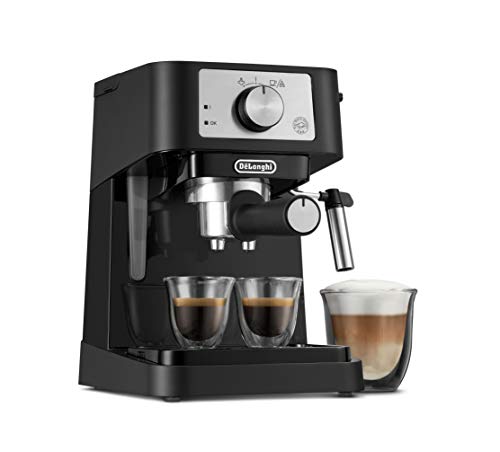
Best for: Beginners who want to learn genuine espresso skills, dosing, tamping, and steaming milk, without committing serious money to the hobby. Why it made the list: It delivers real pump-driven extraction with visible crema, its manual steam wand can produce true microfoam once you practice, and its simple mechanical design means fewer electronics to break, so it survives the learning phase.
- Key specs: 15 bar pump, stainless boiler housing in a compact plastic body, manual steam wand, pressurized single and double wall baskets, removable one liter water tank, drip tray
- What we like: Genuine espresso and crema from an entry machine, a steam wand that teaches transferable skills, compact footprint, and simple controls with almost nothing to misconfigure
- What we do not like: The body is mostly lightweight plastic, the included tamper is a flimsy plastic disc, and shot temperature drifts if you pull back-to-back doubles
- Who should buy it: First-time espresso learners who want room to grow their technique and plan to add a burr grinder
- Who should avoid it: Anyone who wants one-button drinks with zero learning curve, the Mr. Coffee Cafe Barista automates the milk step entirely
- Common complaints: Owners mention the plastic tamper, a small drip tray that needs frequent emptying, and inconsistent shots until they switched from stale preground to fresh beans
- Size note: The slim footprint fits under standard cabinets, but leave clearance to swing the steam wand and remove the tank
- Cleaning note: Flush the group head after each session, soak the pressurized basket weekly, purge and wipe the steam wand immediately after every use before milk bakes on
- Alternative: The De’Longhi Dedica Arte if you want a slimmer stainless body and a nicer steam wand as a step up
Affordable Espresso Starter Kit Buying Guide
Pump machines versus steam machines
True espresso needs roughly 9 bars of pressure at the coffee puck, which only pump-driven or lever machines deliver. Cheap steam-driven units top out far lower and produce strong drip-like coffee, not espresso. If the listing does not clearly state a pump, or brags only about steam, keep looking.
Budget for a grinder and basic tools
A starter kit is more than the machine. Fresh beans through a burr grinder improve shots more than any machine upgrade at this level, and a solid metal tamper, a small scale, and a milk pitcher round out the kit. Skipping the grinder and using stale preground coffee is the number one reason beginners think their machine is broken.
Manual milk wand or automatic frother
A manual steam wand takes a week or two of messy practice but eventually produces cafe-quality microfoam and latte art. Automatic frothers make consistent, decent foam on day one with zero skill, but you outgrow them. Choose based on whether you enjoy the craft or just want the drink.
Safety Notes
- Purge the steam wand away from your hand, the burst of steam can scald instantly
- Never remove the portafilter mid-shot, pressure behind the puck can spray scalding coffee
- Descale on schedule with the manufacturer-approved solution, scale buildup can block the boiler and cause overheating
- Keep the machine unplugged when wiping down the body and never immerse any part with wiring
What to Avoid
- Steam-driven machines with no pump, they cannot reach espresso extraction pressure
- Bundles padded with plastic tampers and gimmick scoops instead of a grinder
- Machines with no steam wand or frother at all if you drink lattes
- Ultra-cheap pump machines from unknown brands, pump and seal failures are the common owner complaint
FAQ
Do I really need a grinder with a starter espresso machine?
You can start with preground espresso-roast coffee in the pressurized basket, and it will be acceptable. But espresso goes stale within days of grinding, so a burr grinder is the upgrade that makes the biggest difference. Most owners report their shots improved dramatically after adding one.
What is the difference between pressurized and non-pressurized baskets?
Pressurized baskets create artificial crema and forgive uneven grinds, which makes them ideal for beginners using preground coffee. Non-pressurized baskets produce better-tasting shots but demand a quality grinder and consistent technique. Starting pressurized and graduating later is the normal path.
How long does an entry-level espresso machine last?
With regular backflushing where applicable, descaling, and wand cleaning, most owners get several years of daily use from entry pump machines. The common failure points are pumps and seals, and light plastic bodies tolerate less abuse than midrange stainless machines.
Final Verdict
The De’Longhi Stilosa is the best affordable espresso starter machine for learning real technique, with the Mr. Coffee Cafe Barista as the easiest path to lattes thanks to automatic frothing and the Flair NEO Manual Espresso Maker as the budget lever option for purists who do not need milk drinks.
Related Guides
- Best Espresso Machines in 2026: Home Picks for Every Level
- Espresso Machine vs Coffee Maker: What Is the Difference?
- Best Espresso Machines for Beginners in 2026: Easy Picks
- What Grind Size for Espresso? A Simple Dial-In Guide
- Manual vs Automatic Espresso Machine: Which to Buy?
- All Coffee Makers guides
