For serving espresso at home, the De’Longhi Double Walled Thermo Espresso Glasses are the best set to buy, because the double-wall borosilicate glass keeps shots hot without burning your fingers and shows off the crema in a way porcelain never can. We compared them against double-wall glasses from JoyJolt and Bodum and classic porcelain cups from Sweese on heat retention, durability, and how well each suits daily use with a home espresso machine.
The De’Longhi Double Walled Thermo Espresso Glasses are the best espresso cup set because they hold shot temperature, stay cool to the touch, and display the crema beautifully. The Sweese Porcelain Espresso Cups with Saucers are the budget pick if you prefer a traditional cafe feel and a set that serves guests.
- Best overall: De’Longhi Double Walled Thermo Espresso Glasses
- Best value: JoyJolt Savor Double Wall Espresso Glasses
- Best budget: Sweese Porcelain Espresso Cups with Saucers
- Avoid: Thin single-wall glass shot glasses for espresso, they scald fingers and dump shot temperature in seconds
Affiliate Disclosure: As an Amazon Associate, we earn from qualifying purchases. This does not affect our product rankings or recommendations.
Quick Picks
- Best overall: De’Longhi Double Walled Thermo Espresso Glasses, Double-wall borosilicate keeps shots hot, hands cool, and crema on full display. Check price on Amazon
- Best value: JoyJolt Savor Double Wall Espresso Glasses, Same double-wall effect in a larger, cheaper set that fits under most machine spouts.
- Best budget: Sweese Porcelain Espresso Cups with Saucers, Classic stackable porcelain with saucers for serving guests properly.
Comparison Table
| Cup set | Material | Best for | Capacity | Buy |
|---|---|---|---|---|
| De’Longhi Double Walled Thermo | Borosilicate glass | Showing off the shot | Standard espresso, about 2 oz | Check Price |
| JoyJolt Savor | Borosilicate glass | Value double-wall sets | Slightly larger, suits doubles | Check Price |
| Sweese Porcelain with Saucers | Porcelain | Traditional service and guests | Classic 2 to 2.5 oz | Check Price |
| Bodum Pavina | Borosilicate glass | Minimalist design fans | Small, single-shot sized | Check Price |
How We Chose These Espresso Cup Sets Picks
We researched the espresso cup market across double-wall glass and porcelain, compared capacities against real single and double shot volumes, and read owner feedback on breakage, dishwasher survival, and how quickly each material bleeds shot heat. Sets with widespread reports of cracked walls or seals failing early were dropped.
Key Takeaway: Espresso cools fast in a wide, thin cup. Double-wall glass or preheated thick porcelain keeps the shot in its best window, and the right capacity matters as much as the material.
Best Overall: De’Longhi Double Walled Thermo Espresso Glasses
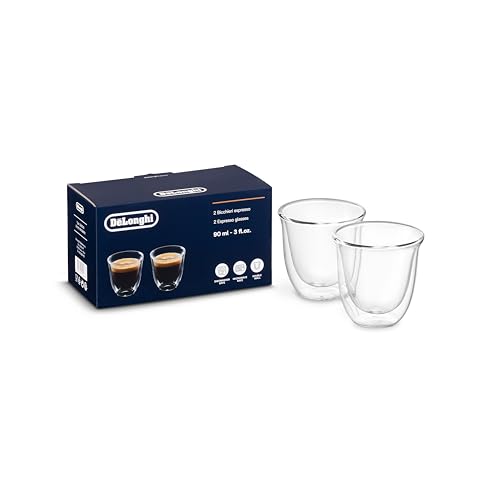
Best for: Home espresso drinkers who want their shots hot, their fingers cool, and the crema visible. Why it made the list: The De’Longhi glasses take the top spot because the double-wall construction insulates the shot while the glass stays comfortable to hold, the size is matched to real espresso volumes rather than oversized, and they come from a brand whose glassware fits neatly under its own and most other machines’ spouts.
- Key specs: Double-wall borosilicate glass, standard espresso capacity around two ounces, a floating-shot visual effect, and a shape that fits under the group head of most home machines.
- What we like: Shots stay hot noticeably longer than in unheated porcelain, the outside never burns fingers, and the suspended crema look makes home espresso feel like a proper cafe pour.
- What we do not like: Double-wall glass is fragile at the rim and the seal, sets typically come as pairs so outfitting a family gets expensive, and trapped condensation can appear between the walls as they age.
- Who should buy it: Anyone with a home espresso machine who drinks straight shots or doubles and cares about temperature and presentation.
- Who should avoid it: Households with young kids or crowded cupboards, thin double-wall glass does not survive careless stacking, and clumsy dishwasher loading kills them.
- Common complaints: Owners report rim chips from stacking, occasional moisture appearing between the walls after long dishwasher use, and wishing sets came in fours instead of pairs.
- Size note: Standard size suits singles and tight doubles. If you mostly pull long doubles or cortados, size up to a larger double-wall glass like the JoyJolt Savor.
- Cleaning note: Technically dishwasher safe, but hand washing preserves the seal between walls far longer. Never plunge a hot glass into cold water, thermal shock is the main killer.
- Alternative: The Bodum Pavina offers the same double-wall effect with a softer, minimalist shape if you prefer Scandinavian design over the De’Longhi look.
Espresso Cup Buying Guide
Double-wall glass versus porcelain
Double-wall glass insulates without preheating and shows off the crema, but it is fragile and usually sold in pairs. Thick-walled porcelain is tougher, stacks safely, and feels traditional, but it steals heat from a two-ounce shot unless you warm the cup first. Neither is wrong; they suit different habits.
Get the capacity right
A single espresso is about one ounce and a double about two, so a true espresso cup runs two to three ounces. Cups sold as espresso sets at four or five ounces are really cortado or macchiato cups, and a shot poured into one cools quickly and looks lost.
Check the fit under your machine
Measure the clearance under your machine’s spouts before buying. Tall or flared cups do not fit under some compact machines, which forces you to pull shots into one vessel and pour into another, losing crema and heat along the way.
Safety Notes
- Never pour boiling water into cold, thick porcelain or fill a hot double-wall glass with cold liquid, thermal shock cracks both.
- Inspect double-wall glasses for chips at the rim before use, a chipped borosilicate edge is razor sharp.
- Preheat porcelain with warm water, not the steam wand pointed inside a dry cup, splatter burns are common.
- Retire any double-wall glass with a cracked seal, trapped water can flash to steam if the glass is heated.
What to Avoid
- Single-wall shot glasses marketed for espresso, they scald hands and dump heat.
- Oversized 4 to 5 ounce cups sold as espresso sets, shots cool fast and look sparse in them.
- Novelty cups with unglazed interiors, they stain and hold coffee oils and odors.
- Ultra-cheap double-wall glasses with visible seams, the wall seals fail within months
FAQ
Why does espresso get served in such small cups?
A shot is only one to two ounces, and the small, thick-walled or double-wall cup exists to preserve its temperature and concentrate its aroma. A small cup also keeps the crema layer deep enough to look and taste right.
Do I need to preheat espresso cups?
For porcelain, yes, a rinse with hot water before the shot makes a real difference to serving temperature. Double-wall glass largely removes the need, which is one of its biggest practical advantages for a quick morning routine.
Are double-wall espresso glasses dishwasher safe?
Most, including the De’Longhi and JoyJolt sets, are rated dishwasher safe, but the heat cycles shorten the life of the seal between the walls and can eventually let moisture in. Hand washing is the habit that keeps them clear for years.
Final Verdict
The De’Longhi Double Walled Thermo Espresso Glasses are the best espresso cup set for most home baristas, with the JoyJolt Savor set as the value pick for larger pours and the Sweese Porcelain Espresso Cups as the budget choice for traditional service with saucers.
Related Guides
- Best Espresso Machines in 2026: Home Picks for Every Level
- Espresso Machine vs Coffee Maker: What Is the Difference?
- Best Espresso Machines for Beginners in 2026: Easy Picks
- What Grind Size for Espresso? A Simple Dial-In Guide
- Manual vs Automatic Espresso Machine: Which to Buy?
- All Coffee Makers guides