Krud Kutter Original Cleaner Degreaser is the best degreaser for kitchen cabinets because it dissolves the sticky, dust-bonded grease film that builds up above stoves while staying water-based, with no bleach or ammonia to attack most sealed cabinet finishes. Cabinet grease is a different problem from fresh stovetop grease; it is old, oxidized, and fused with dust, and it laughs at plain dish soap. For routine upkeep on wood cabinets, gentle Murphy Oil Soap is the safer companion product.
Krud Kutter Original is the best degreaser for kitchen cabinets because it cuts aged grease film without harsh solvents that damage finishes. Simple Green is the value concentrate for whole-kitchen cleaning, and Zep Citrus covers heavy buildup on a budget if you spot-test first.
- Best overall: Krud Kutter Original Cleaner Degreaser
- Best value: Simple Green All-Purpose Cleaner
- Best budget: Zep Heavy-Duty Citrus Degreaser
- Avoid: Bleach, ammonia, and abrasive powders, which strip cabinet finishes faster than they strip grease
Affiliate Disclosure: As an Amazon Associate, we earn from qualifying purchases. This does not affect our product rankings or recommendations.
Quick Picks
- Best overall: Krud Kutter Original Cleaner Degreaser, Water-based spray that dissolves aged grease film without attacking sealed finishes. Check price on Amazon
- Best value: Simple Green All-Purpose Cleaner, Dilutable concentrate that cleans the whole kitchen for pennies per bottle mixed.
- Best budget: Zep Heavy-Duty Citrus Degreaser, Aggressive citrus formula for thick, neglected buildup, with a mandatory spot test.
Comparison Table
| Cleaner | Form | Best for | Finish caution | Buy |
|---|---|---|---|---|
| Krud Kutter Original | Ready-to-use spray | Aged grease film on most cabinets | Low, still spot test | Check Price |
| Simple Green | Concentrate to dilute | Whole-kitchen routine cleaning | Low when diluted | Check Price |
| Zep Citrus Degreaser | Strong ready-to-use spray | Thick, neglected buildup | High, always spot test | Check Price |
| Murphy Oil Soap | Dilutable wood soap | Regular wood cabinet upkeep | Very low | Check Price |
How We Chose These Degreaser Picks
We researched the degreasers people use successfully on painted, laminate, and finished wood cabinets, comparing active ingredients, dilution flexibility, and manufacturer guidance on finished surfaces. Owner feedback and finish-damage reports shaped the rankings as much as raw grease-cutting power.
Key Takeaway: Match the degreaser strength to the mess and always spot-test inside a cabinet door first; the strongest formula is not the best one, because anything that cuts grease instantly can also cut through the finish protecting your cabinets.
Best Overall: Krud Kutter Original Cleaner Degreaser
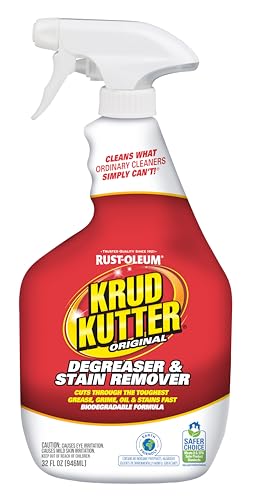
Best for: Anyone tackling the sticky yellow-brown grease film on cabinets above and beside the stove without risking the finish underneath. Why it made the list: It hits the sweet spot between power and safety: strong enough to liquefy oxidized grease that shrugs off dish soap, yet water-based with no bleach, ammonia, or petroleum solvents, so on sealed finishes a spray, a short dwell, and a soft cloth usually finish the job.
- Key specs: Water-based, biodegradable spray degreaser, free of bleach, ammonia, and petroleum distillates, usable on most sealed hard surfaces, sold ready to use in spray bottles and larger refills.
- What we like: It softens years-old grease film in a minute or two of dwell time, rinses without heavy residue, has a mild smell for a degreaser, and does not haze most sealed cabinet finishes.
- What we do not like: Thick buildup needs multiple passes and patience, it can dull flat and matte paints if left too long, and it costs more per ounce than concentrates like Simple Green once diluted.
- Who should buy it: Homeowners and renters facing sticky cabinets over the stove, plus anyone prepping greasy cabinets for painting, where residue-free degreasing is the whole battle.
- Who should avoid it: Owners of waxed, oiled, or unsealed wood cabinets, which need a dedicated wood soap like Murphy instead of any spray degreaser.
- Common complaints: The main gripes are needing repeat applications on decades-old buildup and occasional dull spots on matte painted finishes when the spray sat too long before wiping.
- Size note: One standard spray bottle handles a full kitchen’s upper cabinets with product left over; buy the large refill only after confirming your finish likes it.
- Cleaning note: Spray onto the cloth rather than the cabinet near hinges and seams, let it dwell a minute, wipe with the grain, then follow with a water-damp cloth and a dry towel so no cleaner sits on the finish.
- Alternative: Murphy Oil Soap is the pick for regular maintenance on finished wood, gentle enough for weekly use though too mild for thick, aged grease.
Cabinet Degreaser Buying Guide
Know your cabinet finish first
Sealed surfaces like laminate, thermofoil, and lacquered or polyurethaned wood tolerate proper degreasers. Waxed, oiled, or chalk-painted cabinets do not, and will blotch or strip. If water beads on the surface, it is sealed; if it soaks in and darkens, stick to gentle wood soap and skip everything stronger.
Match strength to the mess
Light film wipes away with diluted Simple Green or even warm water with a drop of dish soap. The sticky amber layer above a range needs a true degreaser like Krud Kutter with a minute of dwell time. Reserve heavy hitters like Zep Citrus for rental-turnover-grade buildup, and accept that repeated moderate passes beat one aggressive attack.
Technique beats chemistry
Spray the cloth, not the cabinet, so cleaner cannot seep into seams and hinges and swell the substrate. Work top to bottom, wipe with the wood grain, rinse with a damp cloth, and dry immediately. Microfiber grabs softened grease far better than paper towels, and a soft-bristle detail brush clears crevices in door profiles.
Safety Notes
- Ventilate the kitchen and wear nitrile gloves; even water-based degreasers strip skin oils and irritate with prolonged contact.
- Spot test every product on a hidden spot, like the inside of a door, and wait until fully dry to judge.
- Never mix degreasers with bleach or other cleaners; combined fumes can be dangerous.
- Keep degreasers off countertops used for food prep, or rinse those areas thoroughly afterward.
What to Avoid
- Bleach and ammonia products, which damage finishes and can discolor paint.
- Abrasive powders and magic-eraser-style pads on glossy doors, which leave permanent dull scratches.
- Soaking spray directly into seams, hinges, and MDF edges, where liquid causes swelling.
- Oven cleaners on cabinets; caustic formulas strip finish along with the grease.
FAQ
Will a degreaser damage my cabinet finish?
A water-based degreaser used correctly on a sealed finish rarely causes harm, but the risk is real on matte paint, wax, oil finishes, and worn spots where grease contacts bare wood. That is why the inside-the-door spot test is non-negotiable, and why you wipe promptly instead of letting product sit.
How do I remove years of sticky grease above the stove?
Apply a proper degreaser like Krud Kutter, let it dwell for one to two minutes, and wipe with microfiber; repeat rather than scrubbing harder. For truly thick buildup, lay a degreaser-dampened cloth on the spot for a few minutes to soften it, then lift the sludge in passes and finish with a rinse wipe.
Can I just use dish soap instead of a degreaser?
For light, recent film, yes; warm water with grease-cutting dish soap handles routine cleaning well. Aged, oxidized grease bonded with dust is a polymerized layer that dish soap cannot break, which is exactly the gap purpose-made degreasers fill.
Final Verdict
The Krud Kutter Original Cleaner Degreaser is the best degreaser for kitchen cabinets thanks to its finish-safe punch against aged grease, with Simple Green All-Purpose Cleaner as the dilutable value pick for whole-kitchen duty and Zep Heavy-Duty Citrus Degreaser reserved for the worst buildup on a budget.
