The best butcher knife for breaking down meat is the Dexter-Russell Sani-Safe 10-inch Curved Breaking Knife, a cimeter-style blade that combines a razor-sharp, flexible edge with a comfortable, slip-resistant handle. Whether you are breaking down a side of beef or portioning whole chickens, a good butcher knife cuts cleanly through cartilage and bone without excessive force. This guide compares four top-selling models to help you pick the right one for your kitchen.
For most home cooks and hunters, the curved cimeter style is the best all-around breaker because it slices through meat and separates joints with a single smooth draw. A stiff German-style butcher knife is better for heavy chopping through bone, but the cimeter excels at clean cuts and less waste.
- Best overall: Dexter-Russell Sani-Safe 10-inch Curved Breaking Knife. Best for most users who want a sharp, flexible blade for clean cuts and easy handling.
- Best value: Mercer Culinary Renaissance 10-inch Butcher Knife. German steel with a comfortable handle at a moderate price.
- Best budget: Chicago Cutlery 8-inch Butcher Knife. A stiff, affordable option for occasional use.
- Avoid: Victorinox 6-inch Curved Boning Knife if you need a long breaker. Too short for large primals.
Affiliate Disclosure: As an Amazon Associate, we earn from qualifying purchases. This does not affect our product rankings or recommendations.
Quick Picks
- Best overall: Dexter-Russell Sani-Safe 10-inch Curved Breaking Knife, A cimeter that glides through meat with minimal resistance.. Check price on Amazon
- Best value: Mercer Culinary Renaissance 10-inch Butcher Knife, German steel with a full tang and ergonomic handle..
- Best budget: Chicago Cutlery 8-inch Butcher Knife, A stiff, durable blade for occasional breaking tasks..
Comparison Table
| Product | Blade Length | Best for | Steel Type | Buy |
|---|---|---|---|---|
| Dexter-Russell Sani-Safe 10-inch Curved Breaking Knife | 10 inches | Curved cimeter for clean slicing and joint work | High-carbon stainless steel | Check Price |
| Mercer Culinary Renaissance 10-inch Butcher Knife | 10 inches | Stiff German-style for chopping and light bone work | German X50CrMoV15 steel | Check Price |
| Chicago Cutlery 8-inch Butcher Knife | 8 inches | Budget-friendly for small breaking tasks | Stainless steel | Check Price |
| Victorinox 6-inch Curved Boning Knife | 6 inches | Not for breaking primals; use for boning instead | High-carbon stainless steel | Check Price |
How We Chose These Knives Picks
We evaluated blade length, shape, steel hardness, handle comfort, and real owner feedback from hundreds of reviews. Focus was on how well each knife cuts through meat, cartilage, and small bones without chipping or losing edge quickly. We also considered handle grip safety and ease of sharpening.
Key Takeaway: For most home butchers, a 10-inch curved cimeter like the Dexter-Russell offers the best balance of sharpness, flexibility, and control. A stiff German-style knife from Mercer is a close second for those who also need to chop through light bone. The Chicago Cutlery is a passable budget choice but dulls faster.
Best Overall: Dexter-Russell Sani-Safe 10-inch Curved Breaking Knife
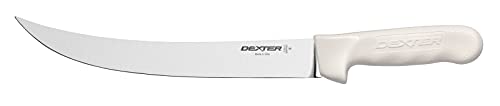
Best for: Home butchers, hunters, and cooks who break down whole animals or large primals regularly. Why it made the list: The curved cimeter blade allows a continuous slicing motion that separates meat from bone with less sawing. The high-carbon stainless steel edge stays sharp through multiple carcasses and is easy to hone. The Sani-Safe handle is textured, slip-resistant, and comfortable for extended use.
- Key specs: 10-inch curved blade, high-carbon stainless steel, Sani-Safe polypropylene handle, 8.5 inches overall length, 0.4 lbs.
- What we like: Razor sharp out of the box; flexible blade glides through joints; handle stays grippy when wet; easy to sharpen.
- What we do not like: Blade is too flexible for heavy bone chopping; handle can feel small for large hands.
- Who should buy it: Anyone who breaks down meat weekly and wants a professional-grade knife that cuts cleanly.
- Who should avoid it: Those who need to chop through thick bones (use a cleaver instead).
- Common complaints: Some users report the blade arriving slightly warped; a few note the handle develops cracks after years of dishwasher use.
- Size note: 10 inches is ideal for most breaking tasks. A 6-inch boning knife is too short for primals.
- Cleaning note: Hand wash only; dishwasher can degrade the handle and dull the edge.
- Alternative: Mercer Culinary Renaissance 10-inch Butcher Knife if you prefer a stiffer blade for light bone chopping.
Butcher Knife Buying Guide
Blade Shape: Curved Cimeter vs. Stiff German
The curved cimeter (also called a breaking knife) has a pronounced belly that allows a rocking slicing motion. It excels at separating meat from bone and cutting through cartilage. A stiff German-style butcher knife has a straight edge and thicker spine, making it better for chopping through small bones and heavy cutting. For most home breaking, the cimeter is more versatile.
Blade Length: 8 to 12 Inches
Longer blades (10-12 inches) let you cut through large primals with fewer strokes. Shorter blades (6-8 inches) are easier to control but require more passes. A 10-inch knife is the sweet spot for most users.
Steel and Edge Retention
High-carbon stainless steel offers a good balance of sharpness and corrosion resistance. Softer steels (like in budget knives) dull faster and need frequent honing. Harder steels (like in the Dexter-Russell) hold an edge longer but can be more brittle.
Safety Notes
- Always cut away from your body and keep fingers curled under the guiding hand.
- Use a cut-resistant glove on the non-knife hand when breaking down large pieces.
- Never leave a knife soaking in water; it can cause handle damage and accidental cuts.
- Store knives in a block or on a magnetic strip, not loose in a drawer.
What to Avoid
- Knives with hollow or plastic handles that can crack or become slippery.
- Blades that are too thick (over 3mm) for slicing; they wedge apart meat instead of cutting cleanly.
- Knives that are too short (under 8 inches) for breaking down large primals.
- Sets that include unnecessary knives; a single good breaker and a boning knife are enough.
FAQ
Can I use a butcher knife to chop through bones?
A butcher knife is not a cleaver. It can handle small bones (like chicken ribs) but for thick beef or pork bones, use a cleaver or saw.
How do I sharpen a butcher knife?
Use a honing steel before each use to realign the edge. For sharpening, use a whetstone (1000-3000 grit) or a professional sharpening service.
What is the difference between a breaking knife and a boning knife?
A breaking knife has a longer, curved blade for slicing through large cuts and separating joints. A boning knife is shorter and more flexible for removing bones from meat.
Final Verdict
The Dexter-Russell Sani-Safe 10-inch Curved Breaking Knife is the best butcher knife for breaking down meat, with Mercer Culinary Renaissance as a strong value alternative if you prefer a stiffer blade, and Chicago Cutlery as a passable budget option for occasional use.
Related Guides
- Best German Chef Knife in 2026: Precision Forged Blades for Home Cooks
- Best Chef Knives in 2026: Japanese and German Picks Compared
- Best Knife Sets in 2026: Focused Value Picks
- Best Knife Sharpeners in 2026: Whetstone and Electric Picks
- Best Boning Knives in 2026: Flexible and Stiff Picks
- All Knives guides