The Oster Pro 1200 is the best blender for salsa because it is one of the only mainstream blenders with a dedicated salsa program, pulsing in controlled bursts that chop tomatoes, onions, and peppers into restaurant-style texture instead of pink soup. Great salsa is about controlled chopping, not raw power, so pulse behavior and blade design matter more than wattage. We compared pulse control, jar shape, blade action, and owner feedback to choose the four blenders below.
The Oster Pro 1200 is the best salsa blender thanks to its purpose-built salsa preset and dual-direction blade system that keeps texture chunky. The Ninja Professional Plus is the best value with its strong manual pulse and stacked blades.
- Best overall: Oster Pro 1200
- Best value: Ninja Professional Plus Blender
- Best budget: Hamilton Beach Wave Crusher
- Avoid: High-speed blenders run on continuous mode, even good machines liquefy salsa in seconds without disciplined pulsing
Affiliate Disclosure: As an Amazon Associate, we earn from qualifying purchases. This does not affect our product rankings or recommendations.
Quick Picks
- Best overall: Oster Pro 1200, A dedicated salsa program that chops instead of liquefying.. Check price on Amazon
- Best value: Ninja Professional Plus Blender, Stacked blades and a crisp pulse make chunky texture easy..
- Best budget: Hamilton Beach Wave Crusher, Basic pulse control and a glass jar at an entry price..
Comparison Table
| Blender | Salsa control | Best for | Jar | Buy |
|---|---|---|---|---|
| Oster Pro 1200 | Dedicated salsa preset | Hands-off chunky salsa | 6-cup glass | Check Price |
| Ninja Professional Plus | Strong manual pulse, stacked blades | Big batches, frozen add-ins | 72 oz plastic | Check Price |
| Hamilton Beach Wave Crusher | Manual pulse | Occasional salsa on a budget | 40 oz glass | Check Price |
| Vitamix Explorian E310 | Variable dial plus pulse | Salsa plus everything else | 48 oz plastic | Check Price |
How We Chose These Blenders Picks
We compared pulse responsiveness, blade geometry, jar shape, and preset behavior across popular blenders, then weighed aggregated owner feedback specifically on texture control with tomatoes and peppers. Machines that turned chunky ingredients to puree even on their lowest settings were dropped.
Key Takeaway: For salsa, the pulse button is the whole game. Short one-second bursts with a scrape between them beat any amount of motor power run continuously.
Best Overall: Oster Pro 1200
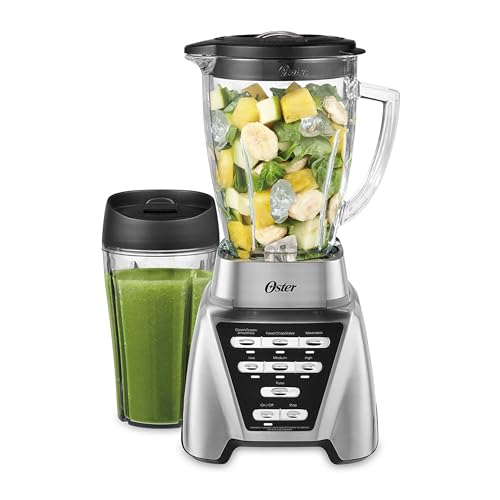
Best for: Salsa lovers who want push-button chunky texture without babysitting the pulse, plus a capable everyday blender. Why it made the list: Its dedicated salsa program automates the burst-pause rhythm that good salsa requires, and the dual-direction blade system reverses to pull chunks down into the blades instead of flinging them to the jar walls.
- Key specs: 1200 watts of power, dedicated salsa and food chop program, dual-direction blade technology, 6-cup Boroclass glass jar, manual speeds plus pulse.
- What we like: The salsa preset genuinely produces even, chunky texture with no user skill, the reversing blades stop air pockets, and the glass jar does not stain or hold onion smell.
- What we do not like: The glass jar is heavy and can crack if dropped, and for smoothie-first buyers the machine is merely decent rather than class-leading.
- Who should buy it: Anyone making salsa weekly, plus cooks who value a glass jar and preset simplicity.
- Who should avoid it: Daily green-smoothie makers who blend fibrous kale and frozen fruit hard, a Ninja or Vitamix handles that grind better.
- Common complaints: Owners occasionally report the drive coupling wearing after heavy long-term use and the jar being bulky in small dishwashers.
- Size note: The 6-cup glass jar makes party-size batches, but the assembled unit is tall, check cabinet clearance if you store it on the counter.
- Cleaning note: Jar, lid, and blade assembly are dishwasher safe, rinse immediately after salsa so tomato seeds do not dry under the blade gasket.
- Alternative: The Vitamix Explorian E310 costs more but its variable speed dial at setting 1 or 2 with quick pulses gives the most precise texture control of anything here, and it does everything else better too.
Blender Buying Guide
Pulse control is everything
Salsa is chopped, not blended. Look for a responsive pulse that stops the instant you release, presets that pulse automatically, or a variable dial that runs slow enough to chop. Continuous high speed turns tomatoes into foam in about three seconds, which is the single most common salsa mistake.
Jar shape and blade position
Wide jars with blades close to the base recirculate chunks evenly, narrow jars trap solids above the blades and force you to over-blend the bottom layer. Stacked-blade designs like Ninja chop tall batches more evenly. Whatever the jar, load soft tomatoes last, on top, so the firm onions and peppers meet the blades first.
Glass versus plastic for salsa
Tomato, onion, and chili oils stain and cling to plastic jars over time. Glass stays odor-free and clear, at the cost of weight and drop risk. If you make salsa often, glass is worth the tradeoff, if the blender mostly makes smoothies with occasional salsa, plastic is fine.
Safety Notes
- Vent the lid or use short pulses when blending roasted salsa ingredients that are still hot, steam pressure can blow the lid off.
- Wash hands and equipment after handling hot chiles, and never rub your eyes mid-prep.
- Unplug before scraping down the jar walls between pulses, a bumped pulse button with a spatula inside is an expensive mistake.
- Check the blade gasket for trapped seeds and food after each wash, buildup breeds bacteria and causes leaks.
What to Avoid
- Running the blender continuously, salsa needs one-second pulses with scrape-downs between.
- Overfilling the jar, chunks need room to fall back onto the blades, work in batches.
- Adding all the tomatoes first, put firm ingredients at the bottom and tomatoes on top.
- Blending in the liquid from canned tomatoes, drain first or the salsa turns watery.
FAQ
Can you make restaurant-style salsa in a blender?
Yes, restaurant-style salsa is actually easier in a blender than chunky pico de gallo. Pulse drained tomatoes, onion, garlic, jalapeno, cilantro, and lime in short bursts, and stop while it still looks slightly coarser than you want, it settles smoother.
Is a food processor better than a blender for salsa?
A food processor is more forgiving because its wide bowl chops rather than liquefies, but a blender with a good pulse or a salsa preset like the Oster Pro 1200 closes the gap completely. If you already own either, you can make excellent salsa with proper pulsing technique.
Why does my salsa come out foamy and pink?
Over-blending whips air into the tomatoes and emulsifies them, which lightens the color and creates foam. Use one-second pulses, drain excess tomato liquid first, and let the salsa rest for ten minutes, the foam subsides and the color deepens.
Final Verdict
The Oster Pro 1200 is the best blender for salsa with its dedicated salsa program and reversing blades, while the Ninja Professional Plus Blender is the value pick for big chunky batches and the Hamilton Beach Wave Crusher covers occasional salsa makers on a budget.