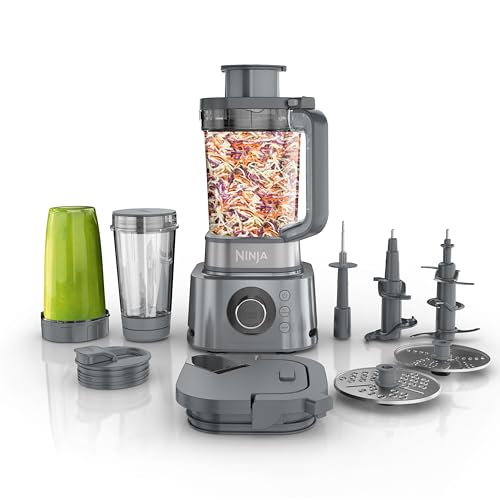
A blender is best for liquids like smoothies, soups and sauces, while a food processor is best for solid food tasks like chopping, slicing, shredding and making dough. Blenders use a tall jar and fast blades to puree, while food processors use a wide bowl and swappable discs to handle dry and chunky ingredients. Choose a blender for drinks and purees, and a food processor for prep work.
Use a blender for smoothies, soups and sauces; use a food processor for chopping, slicing, shredding and dough. Blenders puree liquids; food processors prep solids. If you make mostly drinks, get a blender; if you prep a lot, get a food processor.
Short Answer
Blenders puree liquids smoothly in a tall jar; food processors chop, slice, shred and mix solids in a wide bowl. They overlap a little but are built for different jobs: drinks versus prep.
Blender vs Food Processor: Comparison Matrix
| Task | Blender | Food processor | Best for |
|---|---|---|---|
| Smoothies | Excellent | Poor | Blender |
| Soups and sauces | Excellent | Limited | Blender |
| Chopping vegetables | Uneven | Excellent | Food processor |
| Slicing and shredding | No | Yes (discs) | Food processor |
| Dough | No | Yes | Food processor |
| Crushing ice | Yes (powerful) | Limited | Blender |
Key Takeaway: Think liquid versus solid. Blenders move food through a vortex of liquid; food processors cut and mix dry, chunky ingredients. That split decides which you need.
What a Blender Does Best
A blender excels at anything that flows: smoothies, soups, sauces, dressings, milkshakes and crushed-ice drinks. The tall jar and fast blades create a vortex that pulls food down for a smooth puree. It is the right tool if you mostly make drinks and purees; see our best blenders.
What a Food Processor Does Best
A food processor excels at solid-food prep: chopping vegetables, slicing and shredding with discs, making pastry and bread dough, grating cheese and mixing. The wide bowl and swappable blades handle dry and chunky ingredients a blender cannot. See our best food processors.
Where They Overlap
Both can make some dips, sauces and nut butters, and some blender-food-processor combos try to do both. A combo is convenient but usually compromises on each job; a dedicated blender and food processor each do their task better. See best blender food processor combos.
Which Should You Buy?
Buy a blender if you mainly make smoothies, soups and drinks. Buy a food processor if you do a lot of chopping, slicing, shredding or dough. If you do both regularly and have space, owning both is ideal; if not, a combo is a compromise.
FAQ
Can a blender do what a food processor does?
Not really. A blender can puree and make some dips, but it cannot slice, shred or evenly chop solid food or make dough the way a food processor does.
Can a food processor make smoothies?
A food processor can blend soft smoothies but does not make them as smooth as a blender, and it handles ice and frozen fruit poorly. For smoothies, a blender is better.
Do you need both a blender and a food processor?
If you make drinks and do a lot of prep, owning both is ideal since each does its job better. If you only do one, choose the tool that matches your main use.
Bottom Line
Blenders are for liquids like smoothies and soups; food processors are for solid prep like chopping, slicing and dough. Pick by what you make most, or own both if you do both. Compare picks in our best blenders and best food processors guides.
