The Shapton Kuromaku Ceramic Whetstone is our top pick for its fast cutting, minimal soaking, and consistent grit that works for both kitchen knives and tools. For most home cooks, a dual-grit stone offers the best balance of versatility and value.
We evaluated grit range, soak requirements, durability, and user feedback to find the best whetstones for sharpening. Top picks excel in cutting speed, flatness retention, and ease of use.
- Best overall: Shapton Kuromaku 1000
- Best value: King KW65 1000/6000
- Best budget: Sharp Pebble Premium 1000/6000
- Avoid: Cheap unbranded stones that wear unevenly
Affiliate Disclosure: As an Amazon Associate, we earn from qualifying purchases. This does not affect our product rankings or recommendations.
Quick Picks
- Best overall: Shapton Kuromaku 1000, Fast-cutting ceramic stone that needs minimal soaking and stays flat.. Check price on Amazon
- Best value: King KW65 1000/6000, Reliable dual-grit stone with good feedback and a polishing side..
- Best budget: Sharp Pebble Premium 1000/6000, Affordable dual-grit option with non-slip base and angle guide..
Comparison Table
| Product | Grit | Best for | Soak time | Buy |
|---|---|---|---|---|
| Shapton Kuromaku 1000 | 1000 | Overall performance | None (splash-and-go) | Check Price |
| King KW65 1000/6000 | 1000/6000 | Value and versatility | 10-15 minutes | Check Price |
| Sharp Pebble Premium 1000/6000 | 1000/6000 | Budget beginners | 5-10 minutes | Check Price |
| Naniwa Professional 3000 | 3000 | Fine finishing | None (splash-and-go) | Check Price |
How We Chose These Whetstone Picks
We analyzed grit composition, soak requirements, flattening ease, and thousands of user reviews. Only stones with consistent grit size and durable bindings made the cut.
Key Takeaway: A quality whetstone like the Shapton Kuromaku provides fast sharpening without the mess of prolonged soaking. For most, a 1000/6000 combo offers the best balance of coarse sharpening and fine polishing.
Best Overall: Shapton Kuromaku Ceramic Whetstone 1000
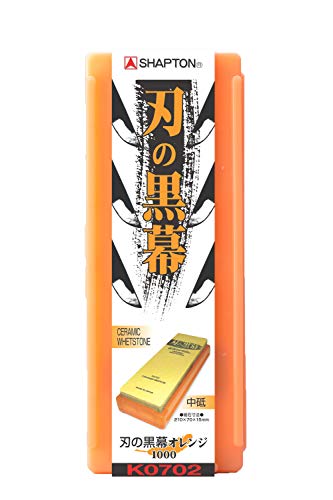
Best for: Home cooks and professionals who want a fast, durable stone that requires minimal prep. Why it made the list: The Shapton Kuromaku uses a ceramic binder that cuts quickly and resists dishing. It needs only a splash of water, so you can start sharpening in seconds. The 1000 grit is ideal for restoring dull edges and refining them to a working sharpness.
- Key specs: Grit: 1000; Dimensions: 8.3 x 2.8 x 1.2 inches; Weight: 2.2 lbs; Material: Ceramic
- What we like: Fast cutting; stays flat; no soaking required; consistent grit
- What we do not like: Some users report the stone is hard and lacks feedback; price is higher than combo stones
- Who should buy it: Anyone who sharpens frequently and wants a reliable, low-maintenance stone
- Who should avoid it: Beginners who prefer a softer stone with more tactile feedback; those on a tight budget
- Common complaints: Some stones arrive with slight surface irregularities; hard ceramic can feel slippery until broken in
- Size note: Standard size fits most sharpening stations; can be used with a stone holder
- Cleaning note: Rinse after use and let dry; flatten with a nagura or flattening stone when dished
- Alternative: Naniwa Professional 1000 for a softer feel and even faster cutting
Whetstone Buying Guide
Grit and Progression
Whetstones come in coarse (200-600), medium (800-2000), and fine (3000-8000) grits. A medium 1000 grit is ideal for most kitchen knives. For repairing chips, start with a coarse stone, then move to medium and fine. A dual-grit stone (e.g., 1000/6000) covers both sharpening and polishing.
Soak vs. Splash-and-Go
Traditional water stones require soaking for 10-15 minutes before use. Splash-and-go stones like the Shapton Kuromaku need only a few drops of water. Soaking stones are softer and offer more feedback, while splash-and-go stones are harder and last longer.
Durability and Flattening
Harder stones resist dishing (forming a groove) but cut slower. Softer stones cut fast but need frequent flattening. Choose based on how often you sharpen. A flattening stone or lapping plate is essential for maintaining a flat surface.
Safety Notes
- Always use a non-slip base or damp towel under the stone to prevent slipping.
- Keep your fingers away from the edge when sharpening.
- Use light pressure to avoid gouging the stone or damaging the blade.
- Rinse the stone after use to remove metal particles; dry thoroughly before storage.
What to Avoid
- Avoid using oil on water stones; it clogs the pores.
- Avoid sharpening very hard steels (e.g., VG-10) on soft stones; they dish quickly.
- Avoid storing stones in damp areas; mold can develop.
- Avoid using a stone that is badly dished; it will ruin your edge geometry.
FAQ
Do I need to soak a whetstone?
It depends. Soaking stones need 10-15 minutes in water. Splash-and-go stones only need a few drops. Check the manufacturer’s instructions.
What grit should I start with?
For dull knives, start with 1000 grit. For very dull or chipped edges, use a 400 or 600 grit first, then progress to 1000 and optionally 3000-6000 for a polished edge.
How often should I flatten my whetstone?
Flatten when you notice a groove or the stone no longer cuts evenly. For frequent sharpeners, flatten every 5-10 uses.
Final Verdict
The Shapton Kuromaku 1000 is the best whetstone for most users, combining fast cutting, durability, and convenience. For budget-conscious buyers, the King KW65 offers great value, while the Sharp Pebble Premium is a solid entry-level choice.
