The Brita Large 10-Cup Pitcher with the Elite filter is the best water filter for coffee brewing because it strips the chlorine and off-flavors that ruin coffee while leaving enough dissolved minerals for proper extraction, and each filter lasts about six months. Coffee is more than 98 percent water, and chlorinated tap water flattens even expensive beans, but stripping water completely, as zero-TDS filters do, hurts flavor too. We compared filtration chemistry, filter life, and owner feedback to pick the four filters below.
The Brita Large 10-Cup Pitcher with Elite filter is the best water filter for coffee because it removes chlorine and off-tastes while keeping the minerals coffee extraction needs. Skip zero-TDS filters for brewing unless your tap water is genuinely bad.
- Best overall: Brita Large 10-Cup Pitcher with Elite Filter
- Best value: Waterdrop Chubby 10-Cup Pitcher
- Best budget: PUR Plus 7-Cup Water Filter Pitcher
- Avoid: Brewing with fully demineralized zero-TDS water, which under-extracts and tastes flat
Affiliate Disclosure: As an Amazon Associate, we earn from qualifying purchases. This does not affect our product rankings or recommendations.
Quick Picks
- Best overall: Brita Large 10-Cup Pitcher with Elite Filter, Removes chlorine and off-flavors while keeping the minerals good extraction needs.. Check price on Amazon
- Best value: Waterdrop Chubby 10-Cup Pitcher, Fast-flowing filtration and clean taste at a lower cost per gallon..
- Best budget: PUR Plus 7-Cup Water Filter Pitcher, Compact pitcher that noticeably improves chlorinated city water..
Comparison Table
| Filter | Filter life | Best for | Mineral retention | Buy |
|---|---|---|---|---|
| Brita Large 10-Cup with Elite Filter | About 6 months per filter | Everyday coffee brewing on city water | Keeps healthy minerals | Check Price |
| Waterdrop Chubby 10-Cup | About 3 months per filter | High-volume households | Keeps most minerals | Check Price |
| PUR Plus 7-Cup | About 2 months per filter | Small kitchens and single brewers | Keeps most minerals | Check Price |
| ZeroWater 10-Cup Pitcher | Varies with water quality | Very poor tap water, high TDS areas | Removes nearly all minerals | Check Price |
How We Chose These Water Filter Picks
We compared filtration methods, certified contaminant reduction, filter lifespan, and cost per gallon across the major pitcher brands, then aggregated owner feedback from coffee drinkers specifically on taste improvement. We also weighed brewing guidance that coffee extracts best with moderate mineral content rather than distilled-blank water.
Key Takeaway: Great coffee water is filtered, not stripped. Remove chlorine and odors but keep moderate mineral content, since calcium and magnesium are what pull flavor out of the grounds.
Best Overall: Brita Large 10-Cup Pitcher with Elite Filter
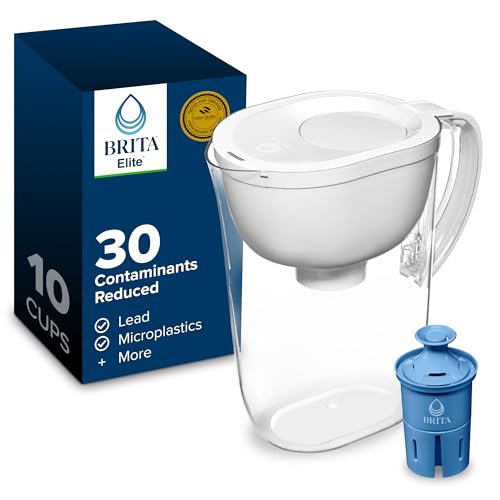
Best for: Coffee drinkers on municipal water who want cleaner-tasting brews without babysitting filter replacements every few weeks. Why it made the list: The Elite filter removes chlorine taste and odor plus lead and other contaminants for about six months per cartridge, and unlike zero-TDS systems it leaves the dissolved minerals that coffee extraction actually depends on.
- Key specs: 10-cup capacity, Elite long-life filter rated about 120 gallons or six months, certified reduction of chlorine taste and odor plus lead, no black carbon dust flush needed, BPA-free plastic
- What we like: Coffee brewed with it tastes noticeably cleaner and sweeter on chlorinated city water, the six-month filter life beats swapping cartridges monthly, and the pitcher pours without dribbling down the spout.
- What we do not like: It does not soften very hard water much, so if your kettle scales heavily this will not fix bitter, chalky brews, and the lid flexes enough that it can fall off when pouring the last cup.
- Who should buy it: Anyone brewing drip, pour over, or French press on city water with noticeable chlorine, and espresso owners who want less scale without stripping water to zero.
- Who should avoid it: People on well water with heavy iron, sulfur, or bacteria issues, which need an under-sink or whole-house system rather than any pitcher.
- Common complaints: Owners mention slow filtration when the reservoir is filled to the top, the loose-fitting lid, and that the filter change indicator is time-based rather than measuring actual water quality.
- Size note: The 10-cup pitcher fits most fridge doors on its side shelf, and one fill covers a full pot of drip plus a couple of pour overs.
- Cleaning note: Wash the pitcher and reservoir weekly with mild soap, never hot water, and store it in the fridge to keep the filtered water tasting fresh.
- Alternative: If your tap water is genuinely bad, with very high TDS or metallic taste, the ZeroWater 10-Cup strips it to near zero; just remineralize or blend with tap for brewing.
Water Filter Buying Guide for Coffee
Why chlorine is coffee enemy number one
Municipal water carries chlorine or chloramine that reacts with coffee compounds and flattens aroma. Any decent activated carbon filter removes chlorine taste, which is why even a basic pitcher noticeably improves supermarket-bean coffee. Chloramine is more stubborn and favors filters with catalytic carbon.
Minerals: keep some, not none
Coffee extraction chemistry works best with moderate hardness, roughly in the range brewing associations target near 150 ppm total dissolved solids. Distilled or zero-TDS water under-extracts and tastes hollow, while very hard water over-extracts bitterness and scales your machine. A standard carbon pitcher usually lands in the happy middle.
Filter life and real cost
Compare gallons per cartridge, not sticker price. A six-month filter like the Brita Elite costs less per gallon than monthly cartridges, while zero-TDS filters exhaust quickly in hard-water areas and become the most expensive option per brewed pot.
Safety Notes
- Replace cartridges on schedule; an exhausted carbon filter can harbor bacteria and shed what it captured.
- Wash the pitcher weekly and keep filtered water refrigerated, since dechlorinated water has no residual disinfectant.
- Flush new filters per the instructions before the first brew.
- Pitcher filters do not make unsafe water safe; use certified systems for wells or boil advisories.
What to Avoid
- Brewing with fully demineralized zero-TDS water, which tastes flat and can leach from boiler metals in espresso machines.
- Leaving the same cartridge in place for months past its rated life.
- Relying on a pitcher to fix well water with iron, sulfur, or bacterial issues.
- Softened water from sodium ion-exchange softeners for espresso, which tastes odd and still leaves deposits.
FAQ
Does filtered water really make coffee taste better?
On chlorinated city water, yes, and the difference is immediate: removing chlorine lets the coffee’s actual aroma through. If your tap water already tastes clean and neutral, the improvement will be smaller but scale reduction still helps your machine.
Is ZeroWater good for coffee?
Only as a starting point. It strips water to near zero dissolved solids, which under-extracts coffee and leaves it tasting hollow, and very pure water is harder on espresso boilers. If you use it, blend it with some tap water or add a mineral packet designed for brewing.
What water does espresso need?
Espresso machines want low-chlorine water with moderate, stable hardness so they neither scale up nor corrode. A carbon pitcher covers taste; if your water is very hard, follow the machine maker’s guidance on softening rather than improvising.
Final Verdict
The Brita Large 10-Cup Pitcher with Elite Filter is the best water filter for coffee brewing, keeping the minerals extraction needs while killing chlorine, with the Waterdrop Chubby 10-Cup as the high-volume value pick and the PUR Plus 7-Cup serving budget buyers and small kitchens.
