The APEC ROES-50 reverse osmosis system is the best water filter for baby formula because it removes the contaminants that matter most for infants, including lead, nitrates, and excess fluoride, at the tap where you mix every bottle. Formula-fed babies drink far more water per pound of body weight than adults, so filtration choices carry more weight here than anywhere else in the kitchen. We compared one under-sink system and three pitchers on exactly what they remove.
A reverse osmosis system like the APEC ROES-50 is the most complete option for formula water because it reduces lead, nitrates, and fluoride together. Among pitchers, ZeroWater is the best value for broad dissolved-solids reduction, while Brita covers lead and chlorine on a budget but does not remove fluoride.
- Best overall: APEC ROES-50 reverse osmosis, removes lead, nitrates, and fluoride at the tap
- Best value: ZeroWater 10-Cup Pitcher, five-stage filter takes dissolved solids near zero
- Best budget: Brita pitcher with Elite filter, certified lead reduction but no fluoride removal
- Avoid: Basic carbon stick or bottle filters, they polish taste but miss lead and fluoride
Affiliate Disclosure: As an Amazon Associate, we earn from qualifying purchases. This does not affect our product rankings or recommendations.
Quick Picks
- Best overall: APEC ROES-50 Reverse Osmosis System, Under-sink five-stage RO that handles lead, nitrates, and fluoride in one install. Check price on Amazon
- Best value: ZeroWater 10-Cup Pitcher, Five-stage pitcher that strips dissolved solids without any plumbing.
- Best budget: Brita Everyday Pitcher with Elite Filter, Inexpensive certified lead and chlorine reduction for low-risk city water.
Comparison Table
| Filter | Type | Best for | Reduces fluoride | Buy |
|---|---|---|---|---|
| APEC ROES-50 | Under-sink reverse osmosis | The most complete formula-water setup | Yes | Check Price |
| ZeroWater 10-Cup Pitcher | 5-stage ion-exchange pitcher | Renters who want deep filtration | Yes, substantially | Check Price |
| Clearly Filtered Pitcher | Pressurized pitcher filter | Pitcher users wanting broad certified claims | Yes, partial | Check Price |
| Brita Everyday with Elite Filter | Carbon block pitcher | Budget lead and chlorine reduction | No | Check Price |
How We Chose These Water Filter Picks
We compared published contaminant-reduction data and third-party certifications for lead, nitrate, and fluoride across the leading home filtration options, then weighed aggregated owner feedback on filter life, flow rate, and maintenance. Filters without credible reduction data for the contaminants that matter to infants were excluded.
Key Takeaway: For formula, the target contaminants are lead, nitrates, and excess fluoride. Only reverse osmosis and a few high-end pitcher filters address all three, ordinary carbon pitchers do not touch fluoride at all.
Best Overall: APEC ROES-50 Reverse Osmosis System
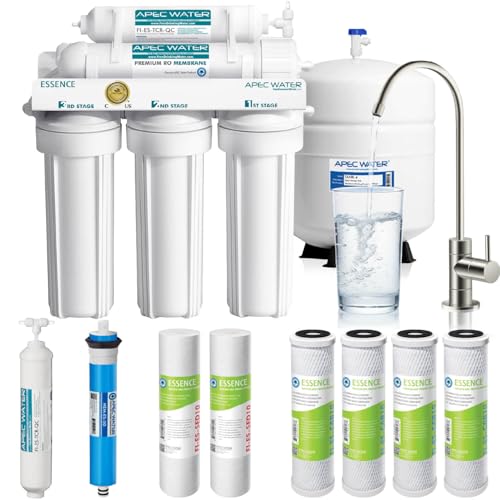
Best for: Parents who want one permanent fix that makes every bottle’s water consistent, including for well water with nitrate concerns. Why it made the list: Reverse osmosis is the only common home technology that reliably reduces lead, nitrates, and fluoride together, and the ROES-50 is a proven, WQA-certified five-stage system with inexpensive long-life filters.
- Key specs: Five-stage under-sink reverse osmosis system with sediment and carbon prefilters, RO membrane, polishing carbon stage, dedicated faucet, and a pressurized storage tank.
- What we like: It removes the full set of formula-relevant contaminants including fluoride and nitrates, water is ready at its own faucet with no pitcher refilling, and replacement filters are affordable and infrequent.
- What we do not like: Installation takes an afternoon and a hole for the faucet, it sends several gallons to the drain per gallon filtered, and the under-sink tank eats cabinet space.
- Who should buy it: Formula-feeding households on well water or older plumbing, and anyone who wants set-and-forget water quality for years of bottles and sippy cups.
- Who should avoid it: Renters who cannot modify plumbing, use the ZeroWater or Clearly Filtered pitchers instead, and households whose water report already shows no lead, nitrate, or fluoride concerns.
- Common complaints: Owners mention slow tank refill after heavy use, occasional fitting leaks if tubing is not seated fully, and the drain-water ratio.
- Size note: Confirm you have roughly a filing-box worth of clear space under the sink for the tank and manifold before buying.
- Cleaning note: Change prefilters on schedule, a clogged sediment stage is the usual cause of slow flow, and sanitize the tank annually per the manual.
- Alternative: The ZeroWater 10-Cup Pitcher gets you most of the dissolved-solids reduction with zero installation, at the cost of frequent filter changes.
Water Filter Buying Guide for Baby Formula
What actually matters for formula
Lead from older plumbing, nitrates in well water, and excess fluoride are the contaminants pediatric guidance focuses on for formula-fed infants, since babies consume so much water relative to body weight. Start by reading your utility’s water quality report or testing well water, then buy for the problems you actually have.
Reverse osmosis vs pitcher filters
RO removes the widest range including fluoride and nitrates but needs installation and wastes some water. Pitchers install nowhere and cost less upfront, but only specific models like ZeroWater and Clearly Filtered meaningfully reduce fluoride, and every pitcher requires disciplined filter changes to keep performing.
Certifications beat marketing
Look for NSF/ANSI 53 certification for lead, NSF/ANSI 58 for reverse osmosis systems, and published third-party test data for fluoride and nitrate. A filter that only advertises chlorine taste reduction is a taste product, not a safety product.
Safety Notes
- Follow your pediatrician’s guidance on formula water, and use the boil-water advisories from your utility when issued.
- If you are on a private well, test annually for nitrates and bacteria, filters are not a substitute for knowing your water.
- Change filter cartridges on schedule, an exhausted filter can release accumulated contaminants back into water.
- Wash and sanitize bottles separately, filtered water does not sterilize anything.
What to Avoid
- Assuming any pitcher removes fluoride, standard carbon filters like basic Brita and PUR do not.
- Faucet-mount filters as a complete solution for formula, most are certified for lead but not fluoride or nitrate.
- Alkaline or remineralizing filters marketed for babies, infants need standard safe water, not altered pH.
- Letting a ZeroWater filter run past exhaustion, spent ion-exchange filters can make water taste fishy and stop protecting.
FAQ
Do I need to filter tap water for baby formula?
Not always. If your city water report shows no lead or nitrate issues and your home has newer plumbing, tap water that your pediatrician approves is fine, boiled and cooled for young infants when advised. Filtration matters most with older pipes, well water, or known fluoride levels above recommended limits.
Why does fluoride matter for formula?
Formula mixed daily with fluoridated water can push total fluoride intake high enough to cause mild dental fluorosis, faint white marks on developing teeth. It is a cosmetic risk, not a dangerous one, which is why reduction rather than panic is the sensible response.
Is reverse osmosis water safe for babies?
Yes. Formula is designed to supply complete nutrition, so the minerals RO removes from water are already provided by the formula itself. Many parents specifically choose RO because it standardizes whatever comes out of the tap.
Final Verdict
The APEC ROES-50 is the best water filter for baby formula because reverse osmosis alone covers lead, nitrates, and fluoride together, while the ZeroWater 10-Cup Pitcher is the best no-install value and the Brita Everyday with Elite filter handles lead and chlorine for households where fluoride is not a concern.
