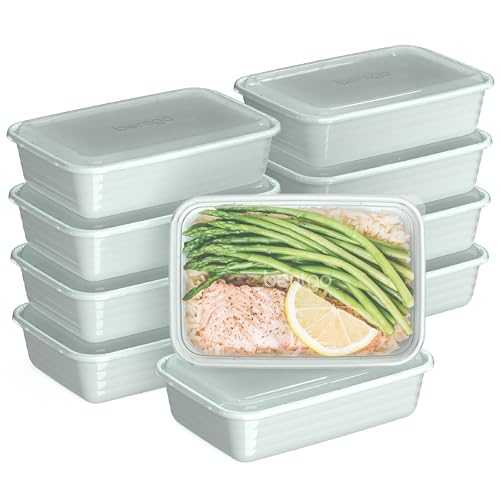
The best meal prep containers for most people are glass sets in the Pyrex or Prep Naturals class: they survive years of microwaving, never stain or hold curry smells, and their lids outlast every budget plastic set. If you carry lunches daily or count macros, compartment plastic sets earn their place too. This one guide covers every version of the question, two and five compartment layouts, portion control for weight loss, big-batch prep, and the glass or plastic decision, all of which used to be separate near-identical pages on this site and now live here.
- Best overall: glass container set with locking lids (Pyrex / Prep Naturals class)
- Best compartment set: Freshware-class 2 or 3 compartment plastic, cheap enough to lose one at the office
- Best premium plastic: Rubbermaid Brilliance, glass-clear and genuinely leakproof
- Weight loss portions: compartments beat willpower; details below
Affiliate Disclosure: As an Amazon Associate, we earn from qualifying purchases. This does not affect our product rankings or recommendations.
Quick Picks
- Best overall: Pyrex glass meal prep set with lids, decades-proven glass, oven safe without lids. Check price on Amazon
- Best compartment set: Freshware 3-compartment meal prep containers, stackable and inexpensive in bulk. Check price on Amazon
- Best premium plastic: Rubbermaid Brilliance, leakproof latches and stays clear for years. Check price on Amazon
- Best glass with compartments: Prep Naturals divided glass containers. Check price on Amazon
Comparison Table
| Set | Material | Best for | Main drawback | Buy |
|---|---|---|---|---|
| Pyrex meal prep set | Glass | Home reheating, sauces, longevity | Heavy in a work bag | Check Price |
| Freshware compartments | Plastic | Bulk weekly prep, packed lunches | Stains and clouds within months | Check Price |
| Rubbermaid Brilliance | Tritan plastic | Leakproof carry, fridge visibility | Costs glass money for plastic | Check Price |
| Prep Naturals divided glass | Glass | Compartments without plastic | Dividers do not seal from each other | Check Price |
How We Chose These Meal Prep Containers Picks
Research based, stated plainly: manufacturer specifications and aggregated long-term owner feedback, weighted on lid survival, staining, microwave behavior, and how sets look after six months of weekly prep rather than day one. No brand pays for placement.
Glass or Plastic: The Real Decision
Glass wins on everything except weight and price: no stains, no smells, no warping, oven safe without lids, and it survives years. Plastic wins the commute and the freezer stack, and loses gracefully when a lid disappears at work. Most preppers end up hybrid: glass at home, cheap compartments for transport. The full comparison is in glass vs plastic food storage.
Compartments: Two, Three or Five?
Two compartments split a main and a side; three add a snack or sauce well; five-compartment trays are bento-style portioning for people who want every macro pre-boxed. Honest note: more compartments means shallower wells that reheat unevenly and fit fewer real meals, buy the fewest compartments that match how you actually eat. Divided sets in every count come up under the searches above, and sauce should still travel in its own small sauce containers.
For Weight Loss and Portion Control
Fixed compartments are the cheapest portion-control tool there is: the box decides serving size once, at prep time, instead of hungry-you deciding at 8 p.m. Standard 3-compartment trays approximate a protein, carb and vegetable split without weighing anything. If you want strict measured portions, pair any set here with a kitchen scale at prep time.
For Big-Batch and High-Volume Prep
Bodybuilder-scale prep, ten or more identical meals, favors cheap identical plastic: uniform stacking, freezer-friendly, and no grief when two go missing. Buy one brand in one size so every lid fits every base, then stack by day in the fridge, layout in arranging containers in the fridge.
Care That Makes Sets Last
- Cool food before sealing; trapped steam is how lids warp and seals loosen. Fixes in lid not sealing.
- Top rack only for plastic, and skip the dishwasher for lids with gaskets; warping is diagnosed in containers warping in the dishwasher.
- Tomato and curry stains lift with the paste method in getting stains out of plastic; smells die with the routine in why containers smell.
- Store lids on containers or in a lid organizer; orphan lids are how sets die.
FAQ
How many containers do I need for a week of meal prep?
Lunches only: 5 to 7. Lunch and dinner: 10 to 14 in one identical size, so stacking and lids stay interchangeable.
Are meal prep containers microwave safe?
Glass, yes, and lids off. Plastic marked microwave-safe handles reheating but ages faster with every cycle; the details are in are containers microwave safe.
Can I freeze meals in these?
Plastic, freely. Glass, yes with headroom and no thermal shock, rules in freezing food in glass.
How long do meal prep containers last?
Cheap plastic: 6 to 12 months of weekly duty. Premium plastic: a few years. Glass bases: until dropped; only the lids age.
Final Verdict
Buy glass for home, cheap compartments for transit, and Brilliance when you want plastic that behaves like glass. Pick one size, buy it in multiples, and the fridge organizes itself.