The PremiumRacks Professional Dish Rack is the best two tier dish rack because its stainless steel frame, customizable shelf layout, and generous plate capacity let one rack dry a full family meal’s worth of dishes in the footprint of a single-level drainer. A two tier rack effectively doubles your drying space vertically, which is the cheapest counter upgrade available for kitchens without a dishwasher. We compared frame materials, drainage design, capacity, and owner feedback on rust to pick the four racks below.
The PremiumRacks Professional Dish Rack is the best two tier option thanks to its sturdy stainless frame, adjustable layout, and real capacity for plates, bowls, and cups on separate levels. For a lighter budget, the Kingrack and Home Basics racks cover the basics well.
- Best overall: PremiumRacks Professional Dish Rack
- Best value: Kingrack 2-Tier Dish Rack
- Best budget: Home Basics 2-Tier Dish Drainer
- Avoid: Painted carbon steel racks with no drainboard, which rust at the joints within months
Affiliate Disclosure: As an Amazon Associate, we earn from qualifying purchases. This does not affect our product rankings or recommendations.
Quick Picks
- Best overall: PremiumRacks Professional Dish Rack, Customizable stainless two tier design with serious capacity and a proper drainboard.. Check price on Amazon
- Best value: Kingrack 2-Tier Dish Rack, Solid capacity, cup hooks, and utensil holders at a midrange price..
- Best budget: Home Basics 2-Tier Dish Drainer, Simple, compact double-decker for small kitchens and light loads..
Comparison Table
| Dish rack | Material | Best for | Drainage | Buy |
|---|---|---|---|---|
| PremiumRacks Professional | Stainless steel | Big households, daily hand washing | Adjustable drainboard with spout | Check Price |
| Kingrack 2-Tier | Steel with coated finish | Everyday family loads | Removable trays | Check Price |
| Home Basics 2-Tier Dish Drainer | Coated steel | Small kitchens, light use | Drip tray | Check Price |
| mDesign 2-Tier Dish Drying Rack | Steel wire with plastic base | Tidy counters and matching decor | Plastic base tray | Check Price |
How We Chose These Two Tier Dish Rack Picks
We compared frame materials, stated capacities, and drainage designs, then weighed heavily aggregated owner feedback on the two failure points of every dish rack: rust at the welds and water pooling in the tray. Racks with chronic rust complaints in the first year were eliminated.
Key Takeaway: A two tier rack doubles drying space without taking more counter, but drainage is what separates good racks from moldy ones. Buy stainless steel and make sure the tray actually slopes toward the sink.
Best Overall: PremiumRacks Professional Dish Rack
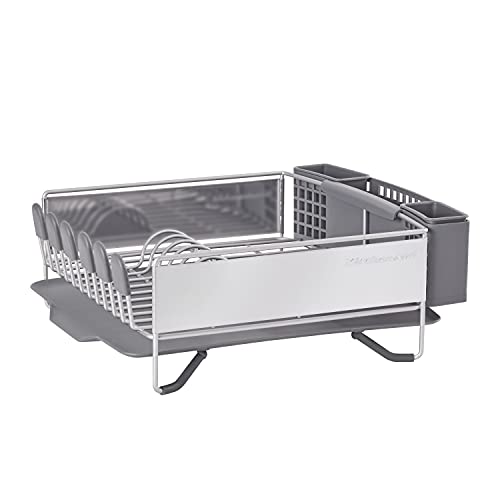
Best for: Households that hand wash daily and need a rack that swallows dinner plates, pots, cups, and cutlery all at once without rusting out in a year. Why it made the list: The 304 stainless steel frame resists rust far better than coated wire racks, and the configurable shelves, cup holders, and cutlery bins let you arrange the two levels around your actual dishes instead of the other way around.
- Key specs: 304 stainless steel frame, two adjustable tiers, plate slots, cup holders, cutlery bins, drainboard with directional spout, roughly 17 by 12 inch footprint
- What we like: It holds a genuinely large load with plates upright on the bottom and glasses up top, the pieces reconfigure to fit tall pots, and the stainless frame still looks clean after months of daily soaking.
- What we do not like: Assembly takes real time with many small parts, and the drainboard spout only drains properly if the rack sits close enough to the sink edge, otherwise water pools.
- Who should buy it: Families without a dishwasher, or anyone whose single-level rack overflows every night and who wants a rack that lasts years instead of seasons.
- Who should avoid it: Minimalists with tiny counters or people who wash two plates a day, for whom this much rack is visual clutter. A compact drainer serves them better.
- Common complaints: Owners mention fiddly assembly, occasional loose connectors that need re-tightening, and the drainboard needing weekly cleaning to prevent water spots and film.
- Size note: Measure your counter first: with the second tier loaded with glasses it stands tall, and it needs to sit adjacent to the sink for the drain spout to work.
- Cleaning note: Wipe the drainboard weekly and run the frame through a vinegar wipe monthly to prevent mineral film; the stainless tolerates it fine.
- Alternative: The mDesign 2-Tier Dish Drying Rack is smaller and better looking on open counters, though it trades capacity and its base tray must be emptied by hand.
Two Tier Dish Rack Buying Guide
Material decides lifespan
Stainless steel, especially 304 grade, is the only material that reliably shrugs off years of standing water. Powder-coated carbon steel looks similar and costs less, but chips at the welds and rusts from the inside; plastic never rusts but stains and bows under heavy plates.
Drainage design
The best racks slope water toward a spout you point into the sink, so the tray never needs emptying. If the rack you like has a flat drip tray instead, make sure it is removable and easy to pour, because standing water is how racks grow mildew.
Capacity and layout
Count your realistic post-dinner load: plates need upright slots, bowls need width, and glasses want a top tier or side hooks so they drain upside down. Adjustable shelves and movable cutlery bins matter more than raw size, since a poorly divided big rack wastes half its room.
Safety Notes
- Empty and wipe the drip tray at least weekly; standing water breeds mildew and bacteria.
- Load heavy pots on the bottom tier only, so the rack cannot tip toward the counter edge.
- Position knife tips down in covered cutlery bins, or flat on the top tier away from reaching hands.
- Check painted racks for chips and retire them once rust appears, since rust flakes end up on clean dishes.
What to Avoid
- Painted or chrome-plated carbon steel racks, which rust at the joints within months of daily use.
- Flat trays with no slope or spout, which pool water and grow mildew.
- Racks taller than your faucet clearance if they must sit in front of a window or under cabinets.
- Overloading the top tier with heavy cookware, which makes the whole rack tippy.
FAQ
Are two tier dish racks worth it?
Yes if you hand wash daily or lack a dishwasher, because they roughly double drying capacity in the same counter footprint. If you only rinse the occasional mug, a compact single-level rack or a roll-up over-sink rack is the better fit.
How do I keep a dish rack from rusting?
Buy 304 stainless steel rather than coated carbon steel, keep the tray drained so the frame is not standing in water, and dry the rack out fully once a week. Once a coated rack chips and shows rust, no amount of cleaning brings it back.
Where should a two tier dish rack sit?
Directly beside the sink, with the drain spout or tray edge pointing over the basin so water self-drains. Avoid placing it over outlets or under cabinets with less clearance than the loaded top tier needs.
Final Verdict
The PremiumRacks Professional Dish Rack is the best two tier dish rack thanks to its stainless build and configurable capacity, with the Kingrack 2-Tier Dish Rack as the well-rounded value choice and the Home Basics 2-Tier Dish Drainer covering small kitchens on a budget.
