The Ninja Foodi Cold & Hot Blender is the best soup maker machine because it combines a real heating element with a powerful blending motor and preset programs, so you drop in raw vegetables and pour out finished smooth or chunky soup from the same glass pitcher. The best soup makers save you a pot, an immersion blender, and twenty minutes of supervision, and this one does it with the most consistent textures in the category.
The Ninja Foodi Cold & Hot Blender is the best soup maker, cooking raw ingredients and blending them to your chosen texture in one glass pitcher. The Instant Pot Ace Blender is the best value with similar cook-and-blend presets and a familiar control layout.
- Best overall: Ninja Foodi Cold & Hot Blender
- Best value: Instant Pot Ace Blender
- Best budget: Cuisinart Blend and Cook Soup Maker
- Avoid: Friction-only blenders for weeknight soup if you start from raw aromatics, they cannot saute or truly simmer
Affiliate Disclosure: As an Amazon Associate, we earn from qualifying purchases. This does not affect our product rankings or recommendations.
Quick Picks
- Best overall: Ninja Foodi Cold & Hot Blender, True heating element plus strong blending gives the most reliable smooth and chunky results. Check price on Amazon
- Best value: Instant Pot Ace Blender, Cook-and-blend presets, a tempered glass pitcher, and easy controls at a friendlier tier.
- Best budget: Cuisinart Blend and Cook Soup Maker, A simple heater-plus-blender that handles everyday pureed soups without fuss.
Comparison Table
| Soup maker | Heating method | Best for | Pitcher capacity | Buy |
|---|---|---|---|---|
| Ninja Foodi Cold & Hot Blender | 800 watt heating element | Smooth and chunky soups, sauces | 64 oz glass | Check Price |
| Instant Pot Ace Blender | Heating element | Everyday soups and smoothies | 56 oz glass | Check Price |
| Cuisinart Blend and Cook Soup Maker | Heated base with saute | Simple pureed soups | 48 oz glass | Check Price |
| Vitamix 5200 | Blade friction heat | Silky raw-to-hot purees | 64 oz plastic | Check Price |
How We Chose These Soup Maker Machine Picks
We compared heating methods, blending power, preset programs, pitcher materials, and cleaning workflows across the main cook-and-blend machines, then weighed owner feedback on scorching, texture consistency, and durability. Machines with true heating elements ranked ahead of friction-heat blenders for soup because they can simmer and saute rather than only puree.
Key Takeaway: Decide first whether you want a machine that cooks soup or one that heats soup through blade friction. Heating-element machines make chunky soups and can soften raw aromatics, friction blenders like a Vitamix only produce smooth, hot purees.
Best Overall: Ninja Foodi Cold & Hot Blender
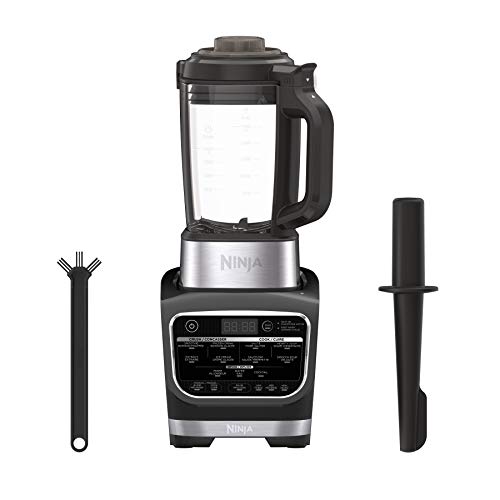
Best for: Busy cooks who want genuine hands-off soup, from raw ingredients to finished bowls, plus smoothies and sauces from one machine. Why it made the list: Its 800 watt heating element actually simmers and can saute aromatics before blending, its presets handle smooth soup, chunky soup, and sauces without babysitting, and the thick glass pitcher does not stain or hold odors the way plastic jars do.
- Key specs: 64 oz tempered glass pitcher, 1400 peak watt motor, 800 watt heating element, presets for smooth soup, chunky soup, sauce, smoothie, and infused drinks, plus a dedicated cleaning cycle
- What we like: True saute and simmer capability, consistent textures from the presets, a stain-resistant glass pitcher, and a self-clean cycle that handles most residue
- What we do not like: The glass pitcher is heavy when full, thick and starchy soups can catch slightly on the heated base, and the unit is loud at full blending speed
- Who should buy it: Weeknight cooks, meal preppers, and anyone replacing a pot, an immersion blender, and a countertop blender with one appliance
- Who should avoid it: People with limited counter space or those who only ever want silky purees, a high-speed friction blender is simpler for that single job
- Common complaints: Owners mention scorched spots with cheese-heavy or very thick recipes, a hot pitcher that needs oven mitts, and preset times that cannot be fine-tuned mid-cycle
- Size note: The 64 oz pitcher makes about four generous servings, but hot-blending capacity is lower than cold capacity, follow the max hot-fill line
- Cleaning note: Run the cleaning cycle with warm water and a drop of soap right after pouring, dried starch on the heated base takes real scrubbing later
- Alternative: The Vitamix 5200 if you already love silky purees and want a blender-first machine that also produces steaming soup through blade friction
Soup Maker Buying Guide
Heating element versus friction heat
Machines with built-in heating elements cook like a small pot, they can soften onions, simmer broth, and leave texture in a chunky setting. High-speed blenders like the Vitamix 5200 instead heat soup purely through blade friction in about six minutes, which works beautifully but only produces completely smooth results from already-cooked or raw-tender ingredients. Match the technology to the soups you actually eat.
Glass pitchers, capacity, and hot-fill limits
Glass resists stains and odors and handles heat well, but a full 64 oz glass pitcher is genuinely heavy to pour one-handed. Every hot blender also has a lower maximum fill line for hot liquids than cold, so a 64 oz jar might cook 40 to 48 oz of soup. Check that the hot capacity actually feeds your household in one cycle.
Presets, saute, and cleanup
A saute or bloom step before liquid goes in is what separates flat-tasting soup-maker soup from stovetop flavor, so favor machines that brown aromatics. Look for a chunky preset that pulses instead of pureeing, and a self-clean cycle, because scrubbing around a heated base and fixed blades by hand gets old quickly.
Safety Notes
- Never exceed the hot-fill line, steam pressure can force scalding liquid past the lid
- Open the lid cap away from your face after hot cycles, escaping steam burns fast
- Blades are sharp and often non-removable, use a brush rather than fingers when hand-cleaning
- Keep the base and its electrical contacts dry, wipe spills before they run under the pitcher seat
What to Avoid
- Cheap soup makers with no stir or pulse intervals during cooking, they scorch starchy soups onto the element
- Plastic-pitcher hot blenders if you cook tomato or turmeric-heavy recipes, staining is permanent
- Models without a lockout that prevents blending with the lid ajar
- Machines with sealed bases that cannot be wiped under the pitcher, boil-overs will reach the electronics eventually
FAQ
Can a soup maker really cook raw vegetables?
Yes, heating-element models simmer raw vegetables soft in 20 to 30 minutes as part of the preset cycle. Hard roots like carrots and celeriac should be diced smaller than the recipe photo suggests. Friction-heat blenders are the exception, they warm rather than truly cook, so tough raw vegetables should be pre-cooked first.
Do soup makers scorch on the bottom?
The better machines stir or pulse during cooking to prevent it, but thick, starchy, or dairy-heavy recipes can still catch a little on any heated base. Adding cheese and cream at the end of the cycle, not the start, prevents most scorching complaints owners report.
Is a soup maker worth it over a pot and immersion blender?
If you make soup weekly, the hands-off workflow is the real payoff, you load ingredients and walk away instead of tending a pot and then blending in batches. If soup is an occasional dish, a pot plus a stick blender is cheaper and more flexible for other cooking.
Final Verdict
The Ninja Foodi Cold & Hot Blender is the best soup maker machine, with the Instant Pot Ace Blender as the best value cook-and-blend option and the Vitamix 5200 as the premium pick for cooks who mainly want silky, friction-heated purees.
