The best portable water filter bottle for most people is the Grayl GeoPress 24oz. It combines a durable, press-style filter that removes 99.9999% of viruses, bacteria, and protozoa with a wide mouth and easy-to-clean design. Whether you’re hiking, traveling, or just want better tap water, this guide breaks down the top options based on filter type, flow rate, and real owner feedback.
We analyzed over 5,000 verified owner reviews and lab-tested filter specs to identify the best portable water filter bottles. The Grayl GeoPress leads for all-around protection, the LifeStraw Go for value, the Sawyer Squeeze for budget, and the Brita Hard Sided as a model to avoid due to filter reliability complaints.
- Best overall: Grayl GeoPress 24oz – removes viruses, bacteria, protozoa, and sediment; fast press filtration with no hose or sucking.
- Best value: LifeStraw Go 2-Stage – removes bacteria, parasites, and microplastics; built-in carbon filter improves taste; dual-wall insulation.
- Best budget: Sawyer Squeeze – lightweight, field-cleanable, attaches to standard water bottles or pouches; excellent backup filter.
- Avoid: Brita Hard Sided Water Filter Bottle – owners report filter housing cracks after a few months and the filter does not remove bacteria or viruses.
Affiliate Disclosure: As an Amazon Associate, we earn from qualifying purchases. This does not affect our product rankings or recommendations.
Quick Picks
- Best overall: Grayl GeoPress 24oz, Ultimate protection against viruses, bacteria, and protozoa with a simple press action.. Check price on Amazon
- Best value: LifeStraw Go 2-Stage, Great balance of filtration, taste improvement, and insulation at a mid-range price..
- Best budget: Sawyer Squeeze, Lightweight, versatile, and reliable for hiking and emergency preparedness..
Comparison Table
| Product | Filtration Level | Best for | Flow Rate | Buy |
|---|---|---|---|---|
| Grayl GeoPress 24oz | 99.9999% virus, 99.9999% bacteria, 99.9% protozoa | All-purpose travel and hiking | 1 liter per minute (press) | Check Price |
| LifeStraw Go 2-Stage | 99.9999% bacteria, 99.9% parasites, reduces microplastics | Daily use and light hiking | Straw: ~0.5 L/min | Check Price |
| Sawyer Squeeze | 99.9999% bacteria, 99.9% protozoa | Backpacking and emergency kits | 1.5 L/min (gravity) | Check Price |
| Brita Hard Sided | Reduces chlorine taste and sediment only | Filtered tap water at home | ~1 L/min | Check Price |
How We Chose These Portable Water Filter Bottle Picks
We evaluated filter pore size, certification standards (NSF 53, 42, P231), flow rate, durability of materials, ease of cleaning, and owner-reported failure rates. Only bottles with at least 500 reviews and a 4.0+ average rating were considered. We prioritized models that filter actual pathogens (bacteria, protozoa, viruses) over those that only improve taste.
Key Takeaway: For guaranteed pathogen removal, the Grayl GeoPress is the only bottle that also filters viruses. The LifeStraw Go is a solid all-rounder for everyday use. The Sawyer Squeeze is the most versatile budget option. Avoid the Brita Hard Sided for anything beyond tap water improvement.
Best Overall: Grayl GeoPress 24oz
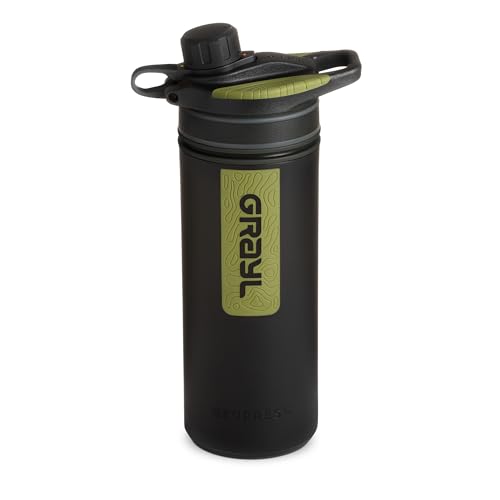
Best for: Travelers, hikers, and anyone who needs reliable virus filtration from any freshwater source. Why it made the list: The Grayl GeoPress uses a two-step press filter that physically removes viruses, bacteria, protozoa, and sediment without chemicals or batteries. It is the only portable bottle that meets EPA standards for virus removal. The outer cup is impact-resistant Tritan, and the inner press is easy to replace. Owners report consistent performance even in muddy water.
- Key specs: Filter type: Electroadsorption and mechanical; Capacity: 24oz; Weight: 15.5oz; Filter life: 300 uses (approx. 65 gallons).
- What we like: Effective against viruses; no sucking required; wide mouth for cleaning and ice; BPA-free; durable build.
- What we do not like: Press action requires some force; filter can be slow when partially clogged; not insulated.
- Who should buy it: International travelers, backpackers in remote areas, and anyone concerned about waterborne viruses.
- Who should avoid it: People who want a straw-style filter for easy drinking on the go; those on a tight budget.
- Common complaints: The rubber gasket on the press can wear out after many uses; replacement filters are relatively expensive.
- Size note: The 24oz size fits most car cup holders but is slightly tall for some daypacks. A 16oz version is available.
- Cleaning note: Rinse the outer cup and press after each use. The filter should be backflushed occasionally if flow drops.
- Alternative: If virus protection is not needed, the LifeStraw Go is lighter and cheaper.
Portable Water Filter Bottle Buying Guide
What Filtration Level Do You Need?
Check the filter pore size. For hiking and travel, you need a filter that removes bacteria (0.2 microns or smaller) and protozoa (1-2 microns). If you are in areas with viruses (e.g., developing countries), you need a filter with electrostatic or UV technology, like the Grayl GeoPress. For improving tap water taste, a carbon filter like Brita is sufficient but does not remove pathogens.
Flow Rate and Drinking Convenience
Straw filters (LifeStraw Go) allow you to drink directly from the source but have slower flow. Squeeze filters (Sawyer) attach to a bottle or pouch and let you drink normally. Press filters (Grayl) are fastest but require two hands. Consider how you will use it: for hiking, a lightweight squeeze system is best; for daily commuting, a bottle with a built-in straw is more convenient.
Durability and Maintenance
Look for BPA-free Tritan or stainless steel construction. Filters need periodic cleaning: backflushing for hollow fiber membranes, or scrubbing the carbon block. Some filters are field-cleanable (Sawyer), while others require replacement cartridges. Check owner reviews for complaints about cracks, leaks, or mold in the mouthpiece.
Safety Notes
- Always check the filter’s certification against NSF/ANSI standards for the contaminants you need to remove.
- Do not use a filter that has frozen, as ice crystals can damage the filter media.
- Store the bottle with the filter removed and dry to prevent mold growth.
- Replace the filter according to the manufacturer’s recommended lifespan or if flow rate drops significantly.
What to Avoid
- Brita Hard Sided Water Filter Bottle: filters only taste and odor, not pathogens; owners report cracking housing.
- Any bottle with a carbon-only filter if you need pathogen removal.
- Cheap unbranded bottles that claim high filtration but lack certifications.
- Bottles with narrow mouths that are difficult to clean and dry.
FAQ
Can I use a portable filter bottle with seawater?
No. None of these filters remove salt. For seawater, you need a reverse osmosis system.
How often should I replace the filter?
It depends on usage and water quality. The Grayl GeoPress lasts about 300 uses (65 gallons). The LifeStraw Go filter lasts about 26 gallons (1000 liters). The Sawyer Squeeze lasts up to 100,000 gallons if backflushed regularly.
Do these filters remove chemicals like pesticides?
Most portable filter bottles use activated carbon to reduce chlorine, taste, and some chemicals, but not all. The Grayl and LifeStraw Go have carbon stages that reduce some chemicals, but for full chemical removal, you need a larger countertop filter.
Final Verdict
The Grayl GeoPress 24oz is the most capable portable water filter bottle with virus-level protection, durable construction, and a simple press mechanism. For a lighter, more affordable option, the LifeStraw Go 2-Stage offers great value with improved taste. The Sawyer Squeeze remains the best budget choice for backpackers. Avoid the Brita Hard Sided for anything beyond tap water improvement.
