The Weber Q 1200 is the best portable gas grill for camping because it combines real grilling performance, cast iron grates, and a wind-resistant burner in a package that survives years of being tossed in a trunk. Plenty of portable grills can heat food, but far fewer can sear a steak at a breezy campsite and still light reliably on the fiftieth trip. Here are the four models worth your cooler space and how to choose between them.
The Weber Q 1200 is the best portable camping grill thanks to its porcelain-enameled cast iron grates, sturdy build, and dependable ignition. If you cook for a group, the Coleman RoadTrip 285 gives you three burners and a fold-out stand so you are not crouching at a picnic table.
- Best overall: Weber Q 1200
- Best value: Coleman RoadTrip 285
- Best budget: Cuisinart Petit Gourmet CGG-180T
- Avoid: Ultra-cheap tabletop grills with flimsy legs and no lid latch
Affiliate Disclosure: As an Amazon Associate, we earn from qualifying purchases. This does not affect our product rankings or recommendations.
Quick Picks
- Best overall: Weber Q 1200, Cast iron grates and a rugged body that grills like a full-size Weber at camp.. Check price on Amazon
- Best value: Coleman RoadTrip 285, Three burners, a big cooking area, and a wheeled stand for group camping..
- Best budget: Cuisinart Petit Gourmet CGG-180T, Briefcase-style folding grill that packs tiny and handles simple cookouts..
Comparison Table
| Grill | Cooking area | Best for | Burner output | Buy |
|---|---|---|---|---|
| Weber Q 1200 | 189 sq in | Couples and small groups | 8,500 BTU | Check Price |
| Coleman RoadTrip 285 | 285 sq in | Group camping, tailgates | About 20,000 BTU total | Check Price |
| Cuisinart Petit Gourmet CGG-180T | About 145 sq in | Solo trips, tight packing | 5,500 BTU | Check Price |
| Char-Broil Grill2Go X200 | 200 sq in | Rough travel, windy sites | About 9,500 BTU infrared | Check Price |
How We Chose These Portable Gas Grill Picks
We compared specs across the portable propane category, including cooking area, burner output, grate material, weight, and how each grill packs for transport. We then read through long-term owner feedback focused on ignition reliability, wind performance, and how the latches and legs hold up after seasons of real camping use.
Key Takeaway: For camping, durability and wind performance matter more than raw size. A smaller grill with cast iron grates and a solid lid will out-cook a bigger, flimsier one at an exposed campsite.
Best Overall: Weber Q 1200
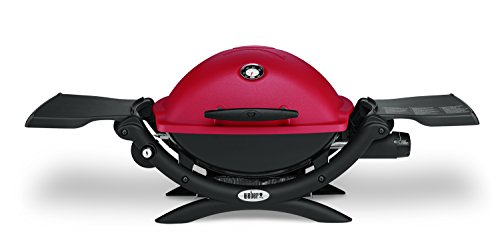
Best for: Campers who want real grill performance, not just hot dogs, and plan to keep the grill for many seasons. Why it made the list: The Q 1200 grills more like a backyard Weber than a camp stove. Porcelain-enameled cast iron grates hold and transfer heat well enough to put a proper sear on steaks and burgers, the looped burner spreads heat across the whole grate, and the cast aluminum lid and body shrug off travel abuse. It lights with a push button and runs on the small green propane canisters sold everywhere.
- Key specs: 189 square inches of porcelain-enameled cast iron grates, an 8,500 BTU stainless steel burner, electronic ignition, cast aluminum lid and body, and folding side tables.
- What we like: Even heat across the grate, genuine searing ability, and build quality that regularly lasts a decade of trips.
- What we do not like: It weighs around 30 pounds, which is a real carry from car to campsite, and there is no built-in stand, so you need a table or the separate cart.
- Who should buy it: Campers and tailgaters who cook real meals outdoors regularly and want one portable grill that lasts.
- Who should avoid it: Backpackers and anyone counting ounces. This is car-camping gear, and lighter briefcase-style grills pack much smaller.
- Common complaints: Owners note the grease tray needs frequent emptying and the small canisters run out faster than expected on long weekends.
- Size note: It fits a trunk or truck bed easily, but check that your camp table can take a hot 30-pound grill safely.
- Cleaning note: Brush the cast iron grates while warm and empty the drip tray after each trip to avoid rancid grease and flare-ups.
- Alternative: The Char-Broil Grill2Go X200 is tougher against wind thanks to its infrared plate and latching lid, though it trades away some flavor-producing open flame.
Portable Camping Grill Buying Guide
Fuel and canister basics
Nearly every portable gas grill runs on 14 or 16 ounce propane canisters, which are convenient but pricey per cook and awkward to recycle. If you camp often, buy an adapter hose so you can run the grill off a standard 20 pound tank at drive-up sites and save the canisters for remote trips.
Size and weight versus cooking area
Around 150 square inches feeds one or two people, while 200 to 300 square inches covers a family. Weight is the tradeoff: sturdy grills with cast iron grates usually weigh 20 to 45 pounds. Stand-up models like the Coleman RoadTrip roll on wheels, which matters more than total weight at a big campground.
Wind, ignition, and campsite realities
Wind is the top killer of campsite grilling. Look for a full lid that closes low over the food, a recessed or protected burner, and push-button ignition that still works when the striker gets damp. Latching lids and locking legs also decide whether the grill survives bouncing around a trunk.
Safety Notes
- Never use a gas grill inside a tent, vehicle, or enclosed shelter, because carbon monoxide can build up fast.
- Set the grill on a level, stable surface away from tent fabric, dry grass, and overhanging branches.
- Check canister connections for leaks with soapy water, and never store canisters in a hot car.
- Let the grill cool completely and empty the grease tray before packing it, both for burns and to avoid attracting wildlife.
What to Avoid
- Grills with flimsy stamped legs or lids that do not latch shut for transport.
- Very low-output burners under about 5,000 BTU, which struggle badly in wind.
- Models with thin wire grates that rust after one wet season.
- Anything without a drip tray, which turns picnic tables into grease traps.
FAQ
Can I run a portable grill off a 20 pound propane tank?
Usually yes, with the manufacturer’s adapter hose. Weber, Coleman, and Char-Broil all sell hoses that connect their portable grills to full-size tanks. It is far more economical if you grill often, just keep the tank on the ground and the hose away from the burner.
How do I clean a grill at a campsite?
Run the grill on high for a few minutes after cooking to burn residue, then brush the grates while warm. Empty the grease tray into a sealed bag and pack it out. A full soap-and-water cleanup can wait until you are home.
Is it safe to grill under a canopy or awning?
Only with generous clearance and open sides, and many manufacturers advise against it entirely. Heat rises more than people expect and can melt or ignite fabric. When in doubt, grill fully in the open and away from your shelter.
Final Verdict
The Weber Q 1200 is the best portable gas grill for camping, with the Coleman RoadTrip 285 as the smarter pick for groups who want a stand and more burners, and the Cuisinart Petit Gourmet CGG-180T covering solo campers who need something small and simple.
Related Guides
- Best Electric Grill for Camping in 2026: Portable, Powerful, and Packable
- Best Korean BBQ Grill for Table in 2026: Portable Butane Models That Sizzle
- Best Grill Basket for Vegetables in 2026: 4 Baskets Compared
- Best Small Charcoal Grill for Patio Use in 2026: 4 Grills Compared
- Best Grill for an Apartment Balcony in 2026
- All Outdoor & Indoor Grills guides
