The Unicook Heavy Duty Cordierite Pizza Stone is the best pizza stone for a grill because cordierite shrugs off the extreme, uneven heat of gas and charcoal grills that cracks cheaper ceramic stones. A grill can hit temperatures a home oven never reaches, which is exactly what great pizza crust needs, but it also punishes stones that cannot handle thermal shock. The four picks below cover a durable cordierite all-rounder, a classic baking stone, a budget option, and a cast iron pan for the highest-heat setups.
The Unicook Heavy Duty Cordierite Pizza Stone is the best overall for grills because cordierite resists thermal shock and holds heat evenly. The Lodge Cast Iron Pizza Pan is the pick if you run very hot charcoal and want something unbreakable.
- Best overall: Unicook Heavy Duty Cordierite Pizza Stone
- Best value: Old Stone Oven Rectangular Pizza Stone
- Best budget: Pizzacraft Round Cordierite Pizza Stone
- Avoid: Thin glazed ceramic stones, which crack fast under direct grill heat
Affiliate Disclosure: As an Amazon Associate, we earn from qualifying purchases. This does not affect our product rankings or recommendations.
Quick Picks
- Best overall: Unicook Heavy Duty Cordierite Pizza Stone, Thick cordierite that handles grill heat and thermal shock. Check price on Amazon
- Best value: Old Stone Oven Rectangular Pizza Stone, Classic thick stone with room for pizza plus breads.
- Best budget: Pizzacraft Round Cordierite Pizza Stone, Affordable cordierite that still crisps a crust properly.
Comparison Table
| Stone | Material | Best for | Shape | Buy |
|---|---|---|---|---|
| Unicook Heavy Duty Pizza Stone | Cordierite | All-around grill pizza | Round or rectangular | Check Price |
| Old Stone Oven Pizza Stone | Natural clay blend | Oven and grill baking | Rectangular | Check Price |
| Pizzacraft Pizza Stone | Cordierite | First-time grill pizza | Round | Check Price |
| Lodge Cast Iron Pizza Pan | Cast iron | Very high heat and durability | Round with handles | Check Price |
How We Chose These Pizza Stone Picks
We compared materials, thickness, maximum rated temperatures, and shapes across the most widely available pizza stones, then dug into aggregated owner feedback for cracking reports, heat-up times, and crust results specifically on gas and charcoal grills. Stones with repeated thermal shock failures on grills were eliminated.
Key Takeaway: On a grill, material beats everything. Cordierite and cast iron survive flame-level heat and fast temperature swings, while bargain glazed ceramic stones are the ones that split down the middle on their third cookout.
Best Overall: Unicook Heavy Duty Cordierite Pizza Stone
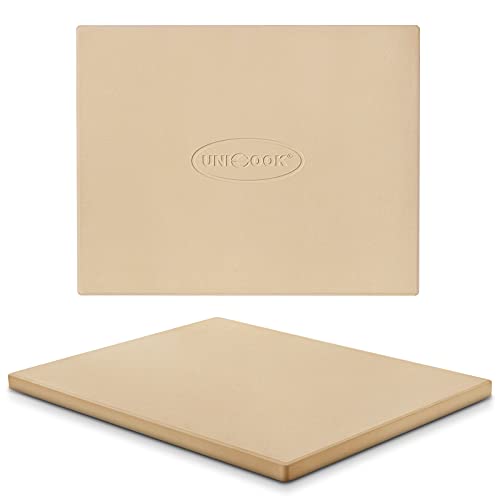
Best for: Grill owners who want crisp, blistered pizzeria-style crust from a gas or charcoal grill without babying the stone. Why it made the list: Cordierite handles the direct radiant heat and temperature swings of a grill far better than standard ceramic, and the thick slab stores enough heat to bake back-to-back pizzas with a properly crisp bottom.
- Key specs: Heavy-duty cordierite stone, roughly half an inch thick, rated for temperatures well beyond typical grill range, available in round and rectangular sizes
- What we like: Excellent heat retention for consecutive pizzas, strong resistance to cracking, and a porous surface that wicks moisture for a crisp bottom crust
- What we do not like: The stone stains permanently with use and it is heavy enough that moving it on and off the grill takes two careful hands
- Who should buy it: Anyone who makes pizza on a grill more than a couple of times a season and wants one stone that also works in the oven
- Who should avoid it: If you routinely blast a charcoal grill to its limits or drop things, the essentially indestructible Lodge cast iron pan is the safer long-term buy
- Common complaints: Owners note dark grease stains that never wash out, which is cosmetic, and occasional cracking when a cold stone is placed on an already hot grill
- Size note: Match the stone to your grate with at least an inch of clearance on all sides so heat can flow around it, and check the round size against your grill lid clearance
- Cleaning note: Scrape residue with a stone brush or spatula once cool and never use soap, since the porous stone absorbs it. Stains are normal and harmless
- Alternative: The Lodge Cast Iron Pizza Pan trades some crust texture for total durability and doubles as a giant griddle for the grill
Grill Pizza Stone Buying Guide
Cordierite vs Ceramic vs Cast Iron
Cordierite is the standard for grills because it tolerates thermal shock, meaning rapid temperature changes, without cracking. Ordinary ceramic stones bake well in an oven but fail often over live fire. Cast iron cannot crack at all, heats faster, and puts an aggressive sear on the crust, though the texture is closer to pan pizza than bakery crust.
Thickness and Heat Retention
Thicker stones take longer to preheat but hold more heat, which is what keeps the second and third pizzas as crisp as the first. Aim for around half an inch to five-eighths of an inch thick for grill use. Thin stones preheat fast but lose heat the moment cold dough hits them, which is how you end up with pale, floppy centers.
Using a Stone on a Grill
Put the stone on the grate before lighting the grill and let it preheat 20 to 30 minutes with the lid closed. On charcoal, bank coals to the sides rather than directly under the stone to avoid scorching one spot. Launch pizzas with a floured peel, rotate once halfway, and expect cook times of five to eight minutes at typical grill temperatures.
Safety Notes
- Never place a cold stone on a fully preheated grill, since sudden shock can crack the stone and send hot fragments off the grate.
- Use thick, dry grill gloves when moving a hot stone. A wet towel turns to steam instantly at grill temperatures.
- Let the stone cool completely on the grill before lifting it, ideally with the lid open and burners off.
- Keep the stone centered so it cannot tip the grate or slide off when you launch a pizza.
What to Avoid
- Washing a stone with soap or soaking it, which soaks into the pores and flavors your next crust.
- Cutting pizza directly on the stone, which dulls knives and scores the surface.
- Using a stone over roaring direct flame with no lid time, which burns bottoms before toppings cook.
- Buying a stone bigger than your grate airflow allows. Heat needs to circulate around the edges.
FAQ
Can any pizza stone go on a grill?
No. Many ceramic stones are rated for oven use only and can crack or even break apart over direct flame. Check that the stone is cordierite or explicitly grill-rated, and cast iron is always safe at any grill temperature.
Is a pizza stone better on gas or charcoal?
Both work well. Gas gives steadier, more repeatable temperatures, which is easier for beginners. Charcoal runs hotter and adds a light smoky note, but you should bank coals to the sides so the stone heats evenly instead of scorching in the middle.
Why did my pizza stone crack on the grill?
Almost always thermal shock. A cold or damp stone hit high heat too fast, or one section heated far quicker than the rest over direct flame. Preheat the stone gradually with the grill, keep it dry, and use indirect heat under it on charcoal.
Final Verdict
The Unicook Heavy Duty Cordierite Pizza Stone is the best pizza stone for the grill, with the Old Stone Oven Rectangular Pizza Stone as the versatile value pick and the Lodge Cast Iron Pizza Pan for cooks who run maximum heat and never want to worry about cracks.
Related Guides
- Best Grill Basket for Vegetables in 2026: 4 Baskets Compared
- Best Small Charcoal Grill for Patio Use in 2026: 4 Grills Compared
- Best Grill for an Apartment Balcony in 2026
- Best Grill Cleaning Brush Without Bristles in 2026
- Best Indoor Smokeless Grill for Steak in 2026: Real Sear, No Smoke Alarm
- All Outdoor & Indoor Grills guides