The Emile Henry Modern Classics Pie Dish is the best ceramic pie dish because its Burgundy clay heats evenly and holds that heat, which is exactly what a soggy-prone bottom crust needs, and it moves from freezer to hot oven to table without complaint. Ceramic is the pie baker’s material, it browns more gently and evenly than metal and looks good enough to serve from. We compared the ceramic and stoneware dishes bakers actually use every holiday season to find the ones that deliver crisp bottoms and survive years of service.
The Emile Henry Modern Classics Pie Dish is the best ceramic pie dish, with even-heating Burgundy clay, a true deep-dish capacity, and freezer-to-oven durability. The Sweese Porcelain Pie Pan is the budget pick for occasional bakers.
- Best overall: Emile Henry Modern Classics Pie Dish
- Best value: CorningWare French White Pie Plate
- Best budget: Sweese Porcelain Pie Pan
- Avoid: Unmarked decorative dishes with no oven rating, they crack at baking temperatures
Affiliate Disclosure: As an Amazon Associate, we earn from qualifying purchases. This does not affect our product rankings or recommendations.
Quick Picks
- Best overall: Emile Henry Modern Classics Pie Dish, Burgundy clay that heats evenly, browns bottoms, and survives freezer-to-oven moves.. Check price on Amazon
- Best value: CorningWare French White Pie Plate, A durable classic that bakes evenly and transitions straight to the table..
- Best budget: Sweese Porcelain Pie Pan, Sturdy porcelain with a ruffled rim at an entry-level outlay..
Comparison Table
| Pie dish | Size and depth | Best for | Material | Buy |
|---|---|---|---|---|
| Emile Henry Modern Classics | 9 inch, deep | Serious and frequent pie bakers | Burgundy clay ceramic | Check Price |
| CorningWare French White | 9 inch, standard depth | Everyday pies and quiches | Stoneware | Check Price |
| Sweese Porcelain Pie Pan | About 9 to 10 inch | Occasional bakers on a budget | Porcelain | Check Price |
| Le Creuset Heritage Pie Dish | 9 inch, deep | Gift-grade color and durability | Enameled stoneware | Check Price |
How We Chose These Ceramic Pie Dish Picks
We compared heat evenness, depth and true capacity, thermal shock tolerance, and glaze durability across the most popular ceramic pie dishes, then reviewed aggregated baker feedback across multiple holiday seasons for cracking, crazing, and pale-bottom complaints. Dishes with vague oven ratings or decorative-only glazes were excluded.
Key Takeaway: Ceramic bakes the most even, forgiving pie of any material, just start the dish on a preheated baking steel or low oven rack to guarantee the bottom crust crisps.
Best Overall: Emile Henry Modern Classics Pie Dish
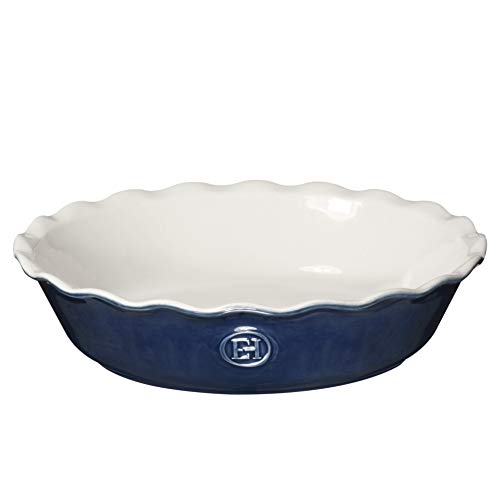
Best for: Bakers who make pie regularly and want one dish that handles blind baking, deep-dish fruit pies, and freezer staging. Why it made the list: The high-fired Burgundy clay distributes heat evenly and holds it, so bottom crusts brown instead of steaming, and the dish is rated for the freezer, the oven at full baking temperatures, and the broiler.
- Key specs: 9 inch deep ceramic dish of high-fired Burgundy clay, generous capacity for tall fruit pies, oven safe well past standard baking temperatures, broiler, microwave, freezer, and dishwasher safe, ten year manufacturer guarantee.
- What we like: Even browning edge to center, real depth that holds a full deep-dish filling without overflow, a glaze that releases slices cleanly, and it is pretty enough to skip the serving transfer.
- What we do not like: It costs several times what basic porcelain does, it is heavy when loaded, and the fluted rim, while lovely, makes some crimping styles awkward.
- Who should buy it: Frequent pie bakers, anyone who preps and freezes pies ahead of holidays, and cooks who value a dish that doubles as serveware.
- Who should avoid it: Once-a-year bakers, the budget Sweese pan bakes a perfectly respectable pie, and anyone who wants the fast, hard browning of metal for slab pies.
- Common complaints: Owners cite the price, weight when full, and occasional glaze crazing after years of heavy use, though the guarantee covers genuine defects.
- Size note: Its deep 9 inch well holds noticeably more filling than a standard plate, recipes written for shallow metal pans will look scant in it, scale fillings up by about a quarter.
- Cleaning note: Fully dishwasher safe, and baked-on fruit syrup lifts after a short soak, avoid metal scouring pads that dull the glaze.
- Alternative: The Le Creuset Heritage Pie Dish offers similar performance with signature enamel colors, choose it if aesthetics and gifting weigh as heavily as baking.
Ceramic Pie Dish Buying Guide
Why ceramic for pie
Ceramic and stoneware heat gradually and evenly, which sets custards gently, browns fruit pie bottoms without scorching sugar at the edges, and forgives a few extra minutes in the oven. Metal browns faster and glass lets you inspect the crust, but ceramic’s steadiness plus its table-ready looks make it the best all-around pie material for home ovens.
Depth, capacity, and your recipes
Standard plates are about an inch and a quarter deep, deep-dish runs closer to two inches and holds half again as much filling. Match the dish to your recipes, a deep dish makes standard recipes look skimpy, and a shallow dish overflows a deep-dish filling into your oven. If you bake both styles, depth of the dish is the spec to check first, not the diameter.
Durability and thermal shock
Look for explicit ratings, oven temperature, freezer, broiler, and dishwasher. High-fired ceramics like Emile Henry’s Burgundy clay tolerate freezer-to-hot-oven transitions, but bargain ceramics can crack from that same move. Whatever you buy, never set any hot ceramic dish on a cold wet counter, that is how most pie dishes actually die.
Safety Notes
- Never move a ceramic dish from freezer to a preheated oven unless the maker explicitly rates it for that transition.
- Set hot dishes on a dry trivet or towel, contact with a cold or wet counter can crack the base.
- Use dry oven mitts, a loaded deep-dish ceramic pie is heavy and the glaze is slick.
- Retire dishes with visible cracks or deep crazing from oven duty, they can fail mid-bake.
What to Avoid
- Decorative dishes with no printed oven-safe rating.
- Very shallow dishes if your recipes are deep-dish, overflow burns are miserable to clean.
- Unglazed bargain ceramics that absorb fruit juices and stain permanently.
- Sudden temperature swings, including hot dish onto wet granite.
FAQ
Is ceramic or glass better for pie?
Ceramic heats more evenly and looks better at the table, while glass lets you see exactly how brown the bottom crust is, which is genuinely useful for beginners. Performance differences are modest, bake on a low rack with either, and choose ceramic when you want serveware quality.
Do I need to grease a ceramic pie dish?
For standard pastry crusts, no, the butter in the dough releases cleanly from a glazed dish. For crumb crusts and sticky fillings, a light greasing or baking spray cheapens nothing and guarantees clean slices. Sugar spills are the real sticking hazard, wipe drips before they bake on.
Why is my bottom crust soggy in a ceramic dish?
Ceramic heats slowly, so the filling can outpace the base. Bake on the lowest rack, ideally on a preheated steel or sheet pan, chill the assembled pie before baking, and blind bake single-crust pies. Those three habits fix nearly every soggy-bottom complaint.
Final Verdict
The Emile Henry Modern Classics Pie Dish is the best ceramic pie dish, with even-heating Burgundy clay and freezer-to-oven durability that serious bakers will use for decades, while the CorningWare French White Pie Plate delivers dependable everyday baking at a friendly price and the Sweese Porcelain Pie Pan gets occasional bakers a proper ceramic bake for the least outlay.
