The Fox Run Marble Pastry Board is the best marble pastry board for most home bakers because it pairs a generously sized polished surface with non-slip feet that keep the heavy slab planted while you roll. Marble runs a few degrees cooler than room temperature, which keeps butter firm in laminated doughs and makes it a natural surface for chocolate work. Below are four researched picks, plus what actually matters when you buy a stone board.
The Fox Run Marble Pastry Board is the best choice for most bakers thanks to its roomy polished surface and stable non-slip feet. If you want a smaller, lighter slab for chocolate work or a tight kitchen, the Home Basics Marble Cutting Board is the budget pick.
- Best overall: Fox Run Marble Pastry Board
- Best value: Creative Home Marble Pastry Board
- Best budget: Home Basics Marble Cutting Board
- Avoid: Thin marble slabs without feet, which slide around and crack easily
Affiliate Disclosure: As an Amazon Associate, we earn from qualifying purchases. This does not affect our product rankings or recommendations.
Quick Picks
- Best overall: Fox Run Marble Pastry Board, Roomy polished slab with non-slip feet that stays cool for pastry and chocolate.. Check price on Amazon
- Best value: Creative Home Marble Pastry Board, A comparable working surface and finish for less, offered in several sizes..
- Best budget: Home Basics Marble Cutting Board, Compact, affordable slab that works well for chocolate and smaller doughs..
Comparison Table
| Board | Approx. surface | Best for | Footing | Buy |
|---|---|---|---|---|
| Fox Run Marble Pastry Board | About 16 x 20 inches | All-around pastry work | Non-slip feet | Check Price |
| Creative Home Marble Pastry Board | About 16 x 20 inches | Bigger rolling jobs for less | Rubber feet | Check Price |
| Home Basics Marble Cutting Board | About 12 x 16 inches | Small kitchens, chocolate | Low profile base | Check Price |
| RSVP International Marble Pastry Board | About 16 x 20 inches | Frequent bakers | Non-slip feet | Check Price |
How We Chose These Marble Pastry Board Picks
We researched the marble boards home bakers actually buy and compared surface size, thickness, feet, and finish quality across current listings. We then weighed hundreds of owner reviews for recurring complaints like cracking in shipping, wobble, and staining. Boards earned spots for stable footing, usable rolling area, and consistent quality control.
Key Takeaway: A marble board is worth owning if you make laminated dough, pie crust, or chocolate regularly, because the cool, dead-flat surface genuinely helps. For everyday chopping, wood or plastic remains the better choice.
Best Overall: Fox Run Marble Pastry Board
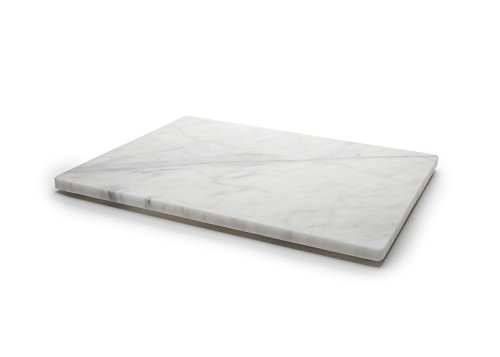
Best for: Bakers who roll pie crust, croissant, or cookie dough often and want a cool, flat surface that stays put. Why it made the list: Fox Run has sold marble kitchenware for decades, and this board gets the fundamentals right: a smooth polished face, enough real estate to roll a full pie crust with margin, and feet that stop the slab from skating across the counter. The stone’s natural thermal mass pulls heat out of dough, so butter stays in distinct layers instead of smearing.
- Key specs: Natural marble slab around 16 x 20 inches, polished food-safe working face, non-slip feet, and unique veining on every board.
- What we like: It stays noticeably cool under dough, wipes clean in seconds, and is heavy enough that it never shifts mid-roll.
- What we do not like: It is genuinely heavy to move and store, and the stone can crack if it ships poorly packed or gets dropped. Marble also etches if you leave lemon juice or vinegar sitting on it.
- Who should buy it: Regular bakers, chocolate hobbyists, and anyone whose kitchen runs warm in the summer months.
- Who should avoid it: Anyone who mainly needs a cutting surface. Marble dulls knife edges quickly and can chip under hard chopping.
- Common complaints: A small share of boards arrive chipped or cracked, so inspect yours on delivery. Some owners note the feet can loosen over time.
- Size note: About 16 x 20 inches suits most counters, but measure your workspace first because a stone slab should not overhang the edge.
- Cleaning note: Wash by hand with mild soap, dry immediately, and never soak it. Marble is porous and can absorb stains and odors.
- Alternative: The Creative Home Marble Pastry Board offers a very similar surface and is worth cross-shopping based on which is better stocked.
Marble Pastry Board Buying Guide
Why marble helps with pastry
Marble sits a few degrees below room temperature and absorbs heat from whatever touches it. That keeps butter firm in pie crust and croissant dough, which is what produces flaky layers. The polished face is also dead flat, so dough releases cleanly with a light dusting of flour.
Size, thickness, and weight
A 16 x 20 inch board handles most rolling jobs, while smaller 12 x 16 slabs suit chocolate work and tight kitchens. Look for stone around three quarters of an inch thick. Thinner slabs crack more easily, and thicker ones become genuinely hard to lift. Non-slip feet are essential, not optional.
Care and what marble cannot do
Hand wash, dry right away, and keep acids like citrus and vinegar off the surface because they etch the polish. Do not chop on it, since marble scars easily and wrecks knife edges. For extra chill, refrigerate the slab for thirty minutes before rolling delicate doughs.
Safety Notes
- Lift the board with two hands and keep fingers clear when setting it down, because marble slabs are heavier than they look.
- Keep the board away from counter edges, since a falling stone slab can break toes or shatter on tile.
- Do not move a marble board straight from the refrigerator onto a hot surface, as rapid temperature swings can crack stone.
- Inspect the edges after shipping, because chipped marble can leave sharp points that cut hands during cleanup.
What to Avoid
- Slabs sold without feet or a non-slip base, which slide while you roll.
- Very thin marble under about half an inch, which cracks under normal rolling pressure.
- Sellers with repeated reviews mentioning cracked-in-transit boards and flimsy packaging.
- Buying a board smaller than your usual rolled-out dough, which defeats the purpose.
FAQ
Does marble really keep dough cooler?
Yes, within reason. Marble’s density lets it pull heat out of dough and butter faster than wood or plastic, so laminated and short doughs stay workable longer. You can boost the effect by chilling the slab in the refrigerator before you start.
Can I cut on a marble pastry board?
You can occasionally, but you should not make a habit of it. Marble dulls knife edges rapidly, and the polished surface will scratch and etch. Use it for rolling, shaping, and chocolate, and keep a wood or plastic board for chopping.
How do I clean and care for a marble board?
Wash by hand with warm water and mild dish soap, then dry immediately. Skip soaking, abrasive scrubbers, and acidic cleaners like vinegar, which etch the stone. A food-safe stone sealer applied once or twice a year helps it resist staining.
Final Verdict
The Fox Run Marble Pastry Board is the best marble pastry board for most bakers, with the Creative Home Marble Pastry Board delivering nearly the same slab for less and the Home Basics Marble Cutting Board covering small kitchens and chocolate work on a budget.
