The Craft Wok Traditional Hand Hammered Carbon Steel Wok is the best pan for stir fry because thin, responsive carbon steel heats fast, sears hard, and builds a natural nonstick patina the more you cook. It is the same style of pan used in restaurant kitchens, and it outperforms coated pans at the high heat stir frying actually requires. If you cook on a flat electric or glass cooktop, the flat-bottom Joyce Chen Classic Series wok is the smarter fit.
Carbon steel woks beat nonstick stir fry pans because they tolerate the very high heat stir frying demands and get slicker with use. The Craft Wok hand hammered wok is the best choice for gas stoves, while the Joyce Chen Classic Series works better on flat cooktops.
- Best overall: Craft Wok Traditional Hand Hammered Carbon Steel Wok
- Best value: Joyce Chen Classic Series Carbon Steel Wok
- Best budget: T-fal Specialty Nonstick Jumbo Wok
- Avoid: Lightweight nonstick woks with low heat ratings, since stir fry temperatures break the coating down quickly
Affiliate Disclosure: As an Amazon Associate, we earn from qualifying purchases. This does not affect our product rankings or recommendations.
Quick Picks
- Best overall: Craft Wok Traditional Hand Hammered Carbon Steel Wok, Restaurant-style carbon steel that sears hard and improves with every use. Check price on Amazon
- Best value: Joyce Chen Classic Series Carbon Steel Wok, Flat-bottom carbon steel that works on standard home cooktops.
- Best budget: T-fal Specialty Nonstick Jumbo Wok, Easy, low-maintenance stir fries for weeknight cooking.
Comparison Table
| Wok | Material | Best for | Bottom shape | Buy |
|---|---|---|---|---|
| Craft Wok Hand Hammered | Carbon steel | Gas stoves and high heat | Round | Check Price |
| Joyce Chen Classic Series | Carbon steel | Electric and flat cooktops | Flat | Check Price |
| T-fal Specialty Jumbo Wok | Nonstick aluminum | Low-fuss weeknight meals | Flat | Check Price |
| Lodge Cast Iron Wok | Cast iron | Searing and heat retention | Flat | Check Price |
How We Chose These Pan Picks
We compared wall thickness, materials, handle design, and stove compatibility across the most popular woks and stir fry pans, then weighed those specs against thousands of owner reviews. We prioritized pans that handle genuine high heat, since that is what separates stir frying from sauteing.
Key Takeaway: A stir fry pan lives or dies by heat tolerance. Carbon steel takes restaurant-level heat and becomes more nonstick with use, while coated pans slowly degrade under the same conditions.
Best Overall: Craft Wok Traditional Hand Hammered Carbon Steel Wok
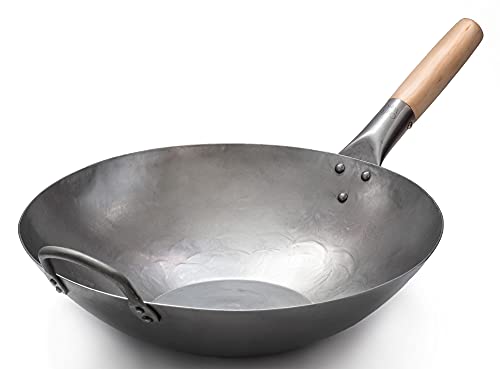
Best for: Cooks with a gas stove who want real wok sear, fast heat response, and a pan that improves the more it gets used. Why it made the list: It is 15 gauge carbon steel, hand hammered in Guangzhou, with a wooden main handle and a steel helper handle, and it heats up and responds to flame changes faster than any coated or cast iron alternative.
- Key specs: 14 inch round bottom wok, 15 gauge carbon steel around 1.8 mm thick, wooden main handle plus steel helper handle, must be seasoned before first use.
- What we like: Fast, even heat response, huge capacity for family portions, and a cooking surface that becomes naturally slick once a patina builds up.
- What we do not like: The round bottom will not sit flat on an electric or glass cooktop without a wok ring, and bare steel rusts if it is left wet. Seasoning has a real learning curve.
- Who should buy it: Home cooks with gas burners who stir fry at least weekly and want the pan style restaurants actually use.
- Who should avoid it: Anyone on a glass-top electric or induction stove, and anyone unwilling to hand-dry and oil a pan after every wash.
- Common complaints: Owners most often mention rust spots from air drying, smoke during the first seasoning, and the factory oil coating that must be scrubbed off before use.
- Size note: At 14 inches it needs a large burner and real cabinet space, and the long wooden handle adds to its footprint.
- Cleaning note: Hot water and a soft brush only, then dry it on the burner and wipe on a thin film of oil. Never put it in the dishwasher.
- Alternative: The Joyce Chen Classic Series wok gives you similar carbon steel performance with a flat bottom for standard cooktops.
Stir Fry Pan Buying Guide
Carbon steel vs nonstick vs cast iron
Carbon steel is the traditional choice because it is thin, light, and handles extreme heat, which is why nearly every restaurant wok is carbon steel. Nonstick woks are easier to live with but their coatings degrade fast above medium-high heat, so they never produce a true sear. Cast iron holds heat well but is heavy and slow to respond, which makes tossing food harder.
Flat bottom or round bottom
Round-bottom woks concentrate heat at the base and make tossing effortless, but they only work over a gas flame, usually with a wok ring. Flat-bottom woks sit securely on electric, glass, and induction cooktops and are the practical pick for most American kitchens. If you have a strong gas burner, go round; otherwise buy flat.
Size and handle design
A 12 to 14 inch wok is the sweet spot for family cooking, since food needs room to spread out and make contact with hot metal. Look for a long stick handle for tossing plus a helper handle on the far side, because a loaded wok gets heavy. Wooden or stay-cool handles matter when the pan spends time over high flame.
Safety Notes
- Ventilate well when stir frying, since high heat cooking produces more smoke than most range hoods see day to day.
- Use a wok ring with round-bottom woks so the pan cannot tip when loaded with hot oil.
- Grab helper handles with a dry towel or mitt, since bare metal handles get dangerously hot over a big flame.
- Heat empty carbon steel gradually the first few times to avoid warping and to keep seasoning smoke manageable.
What to Avoid
- Thin nonstick woks that are not rated for high heat, since stir fry temperatures ruin the coating within months.
- Round-bottom woks if you cook on electric or induction, because they will never sit stable or heat properly.
- Woks smaller than 12 inches for family cooking, since crowded food steams instead of searing.
- Heavily coated decorative woks with rivetless glued handles that loosen under repeated high heat.
FAQ
Do I really need a wok for stir fry?
No, a large stainless or carbon steel skillet can produce a decent stir fry if you cook in small batches. A wok just makes it easier, since the sloped walls give you a hot base for searing and cooler sides for staging food. If you stir fry more than occasionally, the wok is worth it.
How do I season a carbon steel wok?
Scrub off the factory oil, dry the wok, then heat it until it turns blue-black while wiping thin layers of high smoke point oil across the surface. Repeat two or three times and the surface starts building its nonstick patina. Every stir fry afterward deepens the seasoning.
Can I use a carbon steel wok on induction?
Only if it has a flat bottom, since induction needs full contact with the cooktop. A flat-bottom carbon steel wok like the Joyce Chen Classic Series works on most induction ranges. Round-bottom woks will not activate the burner reliably even with a ring.
Final Verdict
The Craft Wok Traditional Hand Hammered Carbon Steel Wok is the best pan for stir fry on a gas stove, with the Joyce Chen Classic Series the right call for flat cooktops and the T-fal Specialty Jumbo Wok covering easy weeknight cooking with zero maintenance.
