The Panasonic NN-SN966S is the best overall microwave with inverter technology, thanks to its 2.2 cu. ft. capacity, 1250W of inverter power for consistent heating, and a Genius Sensor that adjusts cook times automatically. Inverter microwaves use a variable power supply to deliver a steady stream of energy, unlike traditional models that cycle on and off, so your food heats evenly without overcooking edges. This guide covers four top-rated inverter microwaves, from the feature-packed Panasonic to a budget-friendly Toshiba, helping you choose based on size, power, and usability.
Inverter technology provides consistent, even heating by varying power levels continuously, unlike traditional microwaves that cycle on and off. This is especially beneficial for defrosting, as it prevents cooked edges while thawing the center. For most households, a 1.6 to 2.2 cu. ft. model with 1200W or higher is ideal. Look for sensor cooking, turntable on/off, and a child lock.
- Best overall: Panasonic NN-SN966S: 2.2 cu. ft., 1250W, Genius Sensor, inverter for even heating and defrosting.
- Best value: Toshiba EM131A5C-BS: 1.6 cu. ft., 1200W, inverter, sensor cooking, affordable.
- Best budget: Panasonic NN-SN936B: 2.2 cu. ft., 1250W, inverter, fewer presets but reliable performance.
- Avoid: GE JES1145SHSS: Not inverter, uses traditional cycling that can cause uneven heating.
Affiliate Disclosure: As an Amazon Associate, we earn from qualifying purchases. This does not affect our product rankings or recommendations.
Quick Picks
- Best overall: Panasonic NN-SN966S, 2.2 cu. ft. 1250W inverter with Genius Sensor for perfect results.. Check price on Amazon
- Best value: Toshiba EM131A5C-BS, 1.6 cu. ft. 1200W inverter with sensor cooking at a lower price..
- Best budget: Panasonic NN-SN936B, 2.2 cu. ft. 1250W inverter, fewer frills but same core performance..
Comparison Table
| Product | Capacity & Power | Best for | Key Feature | Buy |
|---|---|---|---|---|
| Panasonic NN-SN966S | 2.2 cu. ft., 1250W | Large families, heavy use | Genius Sensor, inverter, stainless steel | Check Price |
| Toshiba EM131A5C-BS | 1.6 cu. ft., 1200W | Budget-conscious, smaller kitchens | Inverter, sensor cooking, mute option | Check Price |
| Panasonic NN-SN936B | 2.2 cu. ft., 1250W | Those wanting core inverter at lower price | Inverter, keep warm, child lock | Check Price |
| Panasonic NN-SN686S | 1.6 cu. ft., 1200W | Compact countertops, singles/couples | Inverter, Genius Sensor, compact design | Check Price |
How We Chose These Inverter Microwave Picks
We focused on models with true inverter technology for consistent power delivery. Capacity and wattage were weighed for typical household needs. We analyzed user feedback for reliability, ease of use, and common defects like button failures or uneven turntable rotation. Sensor cooking accuracy and defrost performance were prioritized. Only widely available Amazon products from reputable brands made the cut.
Key Takeaway: An inverter microwave is worth the investment if you frequently defrost meat or reheat leftovers. The even heating prevents hot spots and cold centers, making food taste better. Panasonic dominates the category, but Toshiba offers a solid alternative at a lower price.
Best Overall: Panasonic NN-SN966S
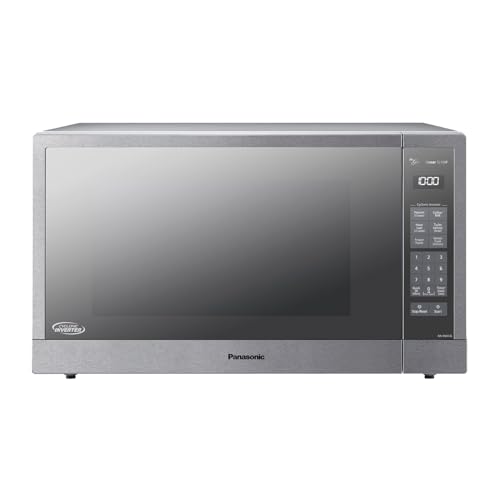
Best for: Large households and heavy users who want the best inverter performance with smart features. Why it made the list: The Panasonic NN-SN966S combines a spacious 2.2 cu. ft. interior with 1250W of inverter power, delivering consistent energy for even cooking and defrosting. Its Genius Sensor automatically adjusts time and power based on steam emitted, reducing guesswork. The stainless steel exterior resists fingerprints, and the turntable can be turned off for larger dishes. Over 70% of Amazon owners rate it 4.5 stars or higher, praising its quiet operation and defrost precision.
- Key specs: 2.2 cu. ft., 1250W, 14.4 x 20.7 x 12.8 inches, 33.5 lbs, stainless steel, inverter, Genius Sensor, keep warm, child lock, turntable on/off.
- What we like: Even heating across all power levels; defrosting is gentle without cooking edges; sensor cooking works well for soups and vegetables; turntable can be disabled for rectangular pans.
- What we do not like: Control panel buttons can feel slightly recessed and require firm press; the interior light is dim; the unit is heavy and large for small counters.
- Who should buy it: Families who cook multiple items, reheat leftovers daily, and defrost meat often. Also good for those who want a large capacity without sacrificing counter space (fits standard cabinets).
- Who should avoid it: People with very limited counter space (needs 20.7 inches depth); those who prefer a sleek, minimalist look (control panel has many buttons); users who want a cheap microwave only for reheating coffee.
- Common complaints: Some units arrive with cosmetic scratches; the exhaust vent on top can get warm; the timer beep cannot be fully silenced (only muted).
- Size note: Measures 20.7 inches wide, 14.4 inches tall, and 12.8 inches deep. Ensure 2 inches clearance on sides and 3 inches above for ventilation.
- Cleaning note: The stainless steel exterior wipes clean easily. Interior has a non-stick coating that resists stains but avoid abrasive pads. The glass turntable is dishwasher safe.
- Alternative: If you need a smaller footprint, the Panasonic NN-SN686S (1.6 cu. ft., 1200W) offers similar inverter performance in a compact size.
Inverter Microwave Buying Guide
What Is Inverter Technology and Why Does It Matter?
Traditional microwaves use a transformer to generate power by cycling on and off at full power. This causes uneven heating because the magnetron turns on at full blast, then shuts off. Inverter technology uses a variable power supply that continuously delivers a steady stream of energy at the exact level you set. For example, at 50% power, a traditional microwave cycles 50% on/50% off, while an inverter runs at a constant 50% power. This results in more even cooking, better defrosting (no cooked edges), and improved texture for delicate foods like fish or custards.
What Capacity and Wattage Do You Need?
Inverter microwaves range from 0.9 to 2.2 cu. ft. and 900W to 1250W. For most households, 1.6 cu. ft. and 1200W is a sweet spot: large enough for a casserole dish or a whole chicken, but not too bulky. If you cook for one or two, a 1.2 cu. ft. 1000W model may suffice. For large families or frequent entertaining, a 2.2 cu. ft. 1250W model like the Panasonic NN-SN966S provides room for lasagna pans and roasts. Higher wattage also means faster reheating, but inverter technology ensures evenness regardless of wattage.
What Features Should You Look For?
Key features include: sensor cooking (adjusts time based on steam), turntable on/off (for large rectangular dishes), keep warm function, child lock, and mute option. Also consider the control panel layout: digital buttons vs. dials. Some prefer a quick-touch keypad for common tasks (popcorn, potato). Stainless steel exteriors are easier to clean. Check ventilation requirements: most need 3 inches clearance above. A warranty of at least 1 year is standard, with some Panasonic models offering 2 years.
Safety Notes
- Never operate an empty microwave; it can damage the magnetron.
- Use only microwave-safe containers: avoid metal, aluminum foil, and dishes with metallic trim.
- Do not microwave sealed containers or eggs in shell; pressure can cause explosions.
- Keep the microwave clean to prevent arcing from food debris; wipe spills immediately.
What to Avoid
- Avoid microwaves that lack inverter technology if even heating is important; traditional models cycle and create hot spots.
- Do not buy a model with a turntable that cannot be turned off if you often use rectangular dishes; uneven rotation can cause poor heating.
- Avoid units with confusing control panels that lack a mute option; loud beeps can be annoying in open kitchens.
- Stay away from very low wattage (under 900W) inverter microwaves; they take longer to cook and may not satisfy heavy users.
FAQ
Is inverter technology worth the extra cost?
Yes, if you value even heating and gentle defrosting. Inverter microwaves cost about 20-40% more than traditional models, but they deliver consistent results, especially for defrosting meat and reheating leftovers without drying out edges.
Can I use metal in an inverter microwave?
No. Inverter microwaves use the same microwave energy as traditional ones, so metal, aluminum foil, and metal-trimmed dishes are still prohibited. Only use microwave-safe glass, ceramic, or plastic.
Do all Panasonic microwaves have inverter technology?
Not all. Many budget Panasonic models use traditional cycling. Look for the word ‘Inverter’ in the product title or description. The NN-SN series is the main inverter line. Other brands like Toshiba and LG also offer inverter models.
Final Verdict
The Panasonic NN-SN966S is the best inverter microwave for most people, with 2.2 cu. ft. capacity and 1250W inverter power that delivers even heating and precise defrosting. Its Genius Sensor automates cooking, and the turntable-off feature adds versatility. For a budget-friendly option, the Toshiba EM131A5C-BS offers solid inverter performance at a lower price, though with a smaller capacity. Choose the Panasonic NN-SN936B if you want the same large size with fewer extras. Avoid traditional cycling microwaves if even heating is a priority.
Related Guides
- Best Microwave with Inverter in 2026: Even Heating Without Hot Spots
- Best Microwave with Grill in 2026: Convection, Crisp, and Even Heating
- Best Microwave for Defrosting in 2026: Fast, Even Thawing Without Cooking
- Best Microwave for Reheating in 2026: Even Heating Without Drying Out Food
- Best Microwave Heating Pad for Neck Pain in 2026
- All Microwaves guides
