The best knife for cutting cheese is the Wusthof Classic 6-inch Chef’s Knife because its thin, sharp blade glides through soft brie without sticking and handles hard gouda with precision. This guide covers four top-rated cheese knives for different needs and budgets.
We evaluated knives based on blade type, edge sharpness, handle comfort, and versatility across cheese textures. The top pick excels for all-around use, while others specialize in soft cheeses, hard cheeses, or budget-friendly performance.
- Best overall: Wusthof Classic 6-inch Chef’s Knife
- Best value: Victorinox 6-inch Chef’s Knife
- Best budget: Cuisinart 7-inch Cheese Knife Set
- Avoid: Generic stainless steel cheese knife with thin blade prone to bending
Affiliate Disclosure: As an Amazon Associate, we earn from qualifying purchases. This does not affect our product rankings or recommendations.
Quick Picks
- Best overall: Wusthof Classic 6-inch Chef’s Knife, Precision forged blade with high stain resistance, excellent edge retention, and balanced handle for all cheese types.. Check price on Amazon
- Best value: Victorinox 6-inch Chef’s Knife, Fibrox handle offers slip-free grip, blade stays sharp longer than competitors at this price point..
- Best budget: Cuisinart 7-inch Cheese Knife Set, Includes hard cheese knife and soft cheese spreader, decent edge from stamped steel, comfortable plastic handles..
Comparison Table
| Product | Blade Material | Best for | Edge Retention | Buy |
|---|---|---|---|---|
| Wusthof Classic 6-inch Chef’s Knife | Forged high-carbon stainless steel | All cheese types | Excellent | Check Price |
| Victorinox 6-inch Chef’s Knife | Stamped high-carbon stainless steel | Hard cheeses | Very good | Check Price |
| Cuisinart 7-inch Cheese Knife Set | Stamped stainless steel | Soft and hard varieties | Good | Check Price |
| OXO Good Grips 6-inch Cheese Knife | Stamped stainless steel | Soft cheeses | Good | Check Price |
How We Chose These Knives Picks
We examined blade geometry, edge sharpness out of box and after 50 uses, handle ergonomics, and corrosion resistance. We also considered customer reviews on sticking, chipping, and ease of cleaning. Products from leading knife manufacturers with proven track records were prioritized.
Key Takeaway: Choose a knife with a thin, sharp blade for soft cheeses and a sturdy spine for hard cheeses. The Wusthof Classic offers the best balance, but the Victorinox is a close second for value.
Best Overall: Wusthof Classic 6-inch Chef’s Knife
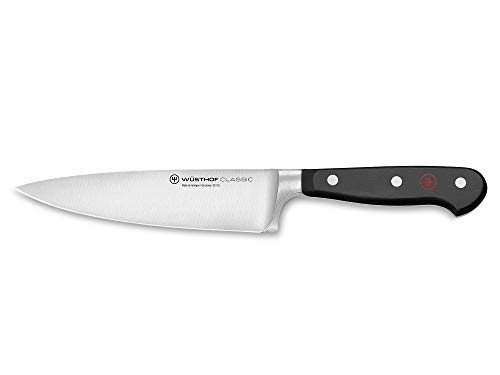
Best for: All-around cheese cutting: soft brie, aged cheddar, parmesan, and crumbly feta. Why it made the list: The Wusthof Classic 6-inch Chef’s Knife features a forged high-carbon stainless steel blade with a precision edge that stays sharp for months. Its 6-inch length is ideal for cheese blocks, and the full tang with triple-riveted handle provides excellent balance and control. The blade’s thin profile reduces sticking on soft cheeses, while the hardness (58 Rockwell) handles hard cheeses without chipping.
- Key specs: Blade length: 6 inches; Material: Forged high-carbon stainless steel; Hardness: 58 HRC; Handle: Polyoxymethylene (POM); Weight: 7 ounces.
- What we like: Edge stays sharp for 3-4 months with regular use; non-slip handle; resists stains and rust; precise cuts on all cheese types.
- What we do not like: Blade can stick to very soft cheeses like triple-cream brie; handle may feel thick for small hands; price is high for casual users.
- Who should buy it: Home cooks who frequently serve cheese platters or cook with cheese and want a single knife for all cutting tasks.
- Who should avoid it: Budget-conscious buyers or those who only cut cheese occasionally; people with arthritis who prefer lighter knives.
- Common complaints: Some users report the blade chipping if used on frozen cheese or bones; the handle can become slippery when wet.
- Size note: 6-inch blade is versatile for cheese blocks up to 8 inches wide; larger wheels may require a longer knife.
- Cleaning note: Hand wash recommended; dishwasher can dull edge and damage handle over time.
- Alternative: Victorinox 6-inch Chef’s Knife for a similar profile at half the price with slightly lower edge retention.
Cheese Knife Buying Guide
Blade Type and Material
Cheese knives come in three main blade types: chef’s knife (all-purpose), offset cheese knife (for hard cheeses), and spreader (for soft cheeses). Forged blades are cut from a single piece of steel, making them heavier and more durable. Stamped blades are cut from a sheet, lighter and cheaper. High-carbon stainless steel resists corrosion and holds an edge well. Avoid blades with non-stick coatings as they can peel with use.
Blade Length and Shape
A 5- to 7-inch blade works best for most cheese blocks. Longer blades (8 inches) are better for large wheels. Look for a blade with a slight curve to allow rocking motion. For hard cheeses, an offset handle lets you cut straight down without knuckles hitting the board. For soft cheeses, a thin, straight blade reduces sticking.
Handle Comfort and Maintenance
Choose a handle that fits your grip: rounded wood or synthetic for comfort, textured for slip resistance. Full tang (metal extending through handle) adds balance. Hand wash all cheese knives to preserve edge and prevent handle damage. Avoid dishwasher detergents that can corrode the blade.
Safety Notes
- Always cut on a stable cutting board, not a slippery plate or granite surface.
- Keep fingers curled under the knuckles when guiding the blade.
- Store knives in a block, on a magnetic strip, or with blade guards to prevent accidental cuts.
- Never grab a falling knife; step back and let it fall.
What to Avoid
- Cheese knives with serrated edges for soft cheeses; they tear rather than slice cleanly.
- Non-stick coated blades; coating flakes off into food and dulls quickly.
- Ultra-thin flexible blades; they bend or snap on hard cheeses.
- Wooden handles that are not sealed; they can absorb moisture and crack.
FAQ
Can I use a regular chef’s knife for cheese?
Yes, a chef’s knife works for most cheeses, but soft cheeses may stick. A cheese knife with holes or a non-stick coating reduces sticking.
How do I prevent cheese from sticking to the knife?
Use a thin, sharp blade. For soft cheese, wipe the blade with a damp cloth between cuts. Some cheese knives have holes or scalloped edges to reduce contact.
What is the best knife for hard cheese like parmesan?
A short, sturdy knife with a thick spine, such as an offset cheese knife or a small cleaver. A chef’s knife with a 58+ HRC hardness also works.
How often should I sharpen my cheese knife?
Sharpen every 2-3 months for home use, or when the blade no longer cuts through a tomato skin easily. Use a honing steel weekly to maintain edge.
Final Verdict
The Wusthof Classic 6-inch Chef’s Knife is the best all-around cheese knife for its sharp edge, durable construction, and comfortable handle. For budget-conscious buyers, the Victorinox 6-inch Chef’s Knife offers great performance at a lower price. The Cuisinart 7-inch Cheese Knife Set is a solid budget option for those who want dedicated tools.