If your sauces scorch and your rice sticks on the lowest burner setting, the Ilsa Cast Iron Heat Diffuser is the best flame tamer for simmering, because its thick cast iron plate absorbs and spreads the flame into gentle, even heat that a thin pan bottom cannot manage on its own. We compared it against steel and copper diffusers from Norpro, SimmerMat, and Bella Copper on heat evenness, stovetop fit, and how well each holds up to daily use over a gas flame.
The Ilsa Cast Iron Heat Diffuser is the best flame tamer because its heavy cast iron plate evens out hot spots better than any thin steel disc. The SimmerMat is the pick if you want something light and cheap that still tames a too-hot gas burner.
- Best overall: Ilsa Cast Iron Heat Diffuser
- Best value: Norpro Heat Diffuser
- Best budget: SimmerMat Heat Diffuser
- Avoid: Unbranded thin aluminum discs that warp after a few uses and rock under the pot
Affiliate Disclosure: As an Amazon Associate, we earn from qualifying purchases. This does not affect our product rankings or recommendations.
Quick Picks
- Best overall: Ilsa Cast Iron Heat Diffuser, Thick Italian cast iron plate that turns a harsh gas flame into slow, even simmer heat. Check price on Amazon
- Best value: Norpro Heat Diffuser, Plated steel disc with a removable handle that works on gas and electric coil burners.
- Best budget: SimmerMat Heat Diffuser, Thin ridged plate that drops a gas burner to a true bare simmer for pennies.
Comparison Table
| Flame tamer | Material | Best for | Handle | Buy |
|---|---|---|---|---|
| Ilsa Cast Iron | Solid cast iron | Long braises and sauces | Fixed loop handle | Check Price |
| Norpro Heat Diffuser | Plated steel | Everyday gas and coil stoves | Removable wood handle | Check Price |
| SimmerMat | Thin ridged steel | Rice and delicate low simmers | Folding wire handles | Check Price |
| Bella Copper | Solid copper | Fast, responsive heat spreading | No handle | Check Price |
How We Chose These Flame Tamer Picks
We researched the flame tamer category, compared plate thickness, materials, and burner compatibility, and read through owner feedback on warping, evenness, and how well each one actually holds a bare simmer. Discs that warped, rocked under a pot, or shed their plating were cut.
Key Takeaway: Mass is what tames a flame. A thick cast iron or copper plate stores and spreads heat so the pot above it sees a steady, gentle temperature, while paper-thin discs mostly just block the flame without evening anything out.
Best Overall: Ilsa Cast Iron Heat Diffuser
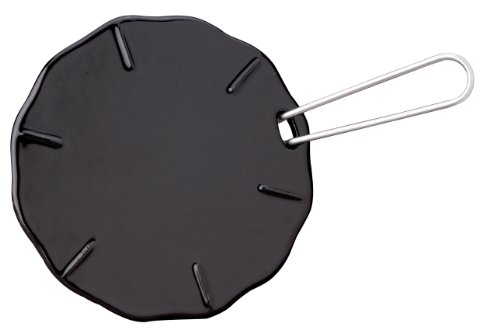
Best for: Anyone who cooks long braises, tomato sauce, beans, or rice on a gas stove whose lowest setting still runs too hot. Why it made the list: The Ilsa earns the top spot because its solid cast iron plate has enough mass to absorb the flame and re-radiate it evenly across the whole pot bottom, which is exactly what stops the scorched ring that forms over a direct burner.
- Key specs: Solid cast iron plate made in Italy, available in multiple diameters, fixed loop handle, works on gas and electric coil burners.
- What we like: It genuinely eliminates hot spots under thin stainless and enameled pots, it holds a steady simmer for hours, and there is nothing on it that can break or wear out.
- What we do not like: It is heavy, it takes several minutes to come up to temperature, and bare cast iron will surface rust if you put it away damp.
- Who should buy it: Cooks who make sauces, beans, stocks, or rice on gas stoves with aggressive burners, and anyone using thin or vintage cookware that scorches easily.
- Who should avoid it: Anyone with a glass-top or induction stove. Cast iron diffusers can scratch glass surfaces and induction cooktops generally should not be used with a diffuser at all.
- Common complaints: Owners note the slow warm-up and the surface rust that appears if it is washed and not dried immediately. A quick wipe with oil after drying prevents it.
- Size note: Match the diameter to your burner grate, not your pot. A plate that overhangs a small burner wastes heat, and a small plate under a wide Dutch oven leaves the edges cool.
- Cleaning note: Wipe it down rather than soaking it. If food drips onto it, scrub with a brush, dry it on the still-warm burner, and rub in a drop of oil like any cast iron.
- Alternative: The Bella Copper heat diffuser spreads heat faster and more responsively than cast iron, and it doubles as a defrosting plate, but it costs considerably more and dents more easily.
Flame Tamer Buying Guide
Material determines how well it works
Cast iron and copper plates have real thermal mass, so they absorb the flame and release smooth, even heat. Thin plated-steel discs cost less and heat up faster, but they mostly interrupt the flame rather than evening it out, which is fine for taming a burner that will not go low but less effective at fixing hot spots.
Match the size to your burner and pot
A diffuser should cover the burner grate fully and sit stable under your most-used pot. If you mostly simmer in a large Dutch oven, buy the larger diameter. If it rocks or overhangs the grate on a small burner, heat escapes around the edges and the benefit disappears.
Know your stove type
Flame tamers shine on gas, work acceptably on electric coil, and are a poor match for glass-top and induction stoves. Glass tops can scratch or overheat under a trapped plate, and induction cooktops need the pan itself on the surface, so a diffuser confuses the sensor or blocks the field.
Safety Notes
- The diffuser itself gets extremely hot. Always use a dry pot holder or mitt on the handle, and treat a handleless plate like a live burner.
- Let the plate cool completely on the stove before moving it. A hot cast iron disc will scorch countertops and trivets.
- Do not use a flame tamer on a glass-top stove unless the manufacturer explicitly rates it for glass, since trapped heat can crack the surface.
- Make sure the plate sits flat and the pot sits stable on top. A rocking setup with a full stockpot is a tip-over hazard.
What to Avoid
- Unbranded thin aluminum discs that warp into a dome after a few uses and never sit flat again.
- Plated discs with peeling chrome, since flakes can end up on the burner and the exposed steel rusts quickly.
- Any diffuser used over the maximum flame. They are for simmering, and a roaring flame around the edges just heats the handle and the kitchen.
- Using a diffuser on induction cooktops, where it blocks the magnetic field the stove needs to see the pan.
FAQ
What does a flame tamer actually do?
It sits between the burner and the pot and spreads the concentrated heat of the flame across a wider, more even surface. That lets you hold a true bare simmer for stocks, sauces, and rice, and it protects thin-bottomed pots from the scorched ring that forms directly over a gas flame.
Do flame tamers work on electric stoves?
On coil burners, yes, a diffuser evens out the hot coil pattern reasonably well. On smooth glass tops they are risky because trapped heat can damage the surface, and on induction they should not be used at all since the cooktop needs direct contact with a magnetic pan.
Can I leave a flame tamer on the burner for a long braise?
Yes, that is exactly what they are for, and cast iron models are happiest during long, low cooks. Just keep the flame low so it stays under the plate, check liquid levels occasionally, and remember the plate stays dangerously hot for a long time after you turn the burner off.
Final Verdict
The Ilsa Cast Iron Heat Diffuser is the best flame tamer for simmering thanks to the real thermal mass that evens out any burner, with the Norpro Heat Diffuser as the practical value pick for everyday stoves and the SimmerMat covering anyone who just needs their lowest gas setting to run lower.
