The Cuisinart 14-Cup Food Processor is the best tool for making falafel and kibbeh at home because both dishes start with the same hard problem, grinding soaked chickpeas, bulgur, herbs, and meat to a precise coarse-fine texture, and its large bowl and strong motor handle full batches without turning them to paste. No single gadget makes both dishes end to end, so this guide covers the honest toolkit: a processor for the base, a grinder with a kubbe attachment for shaping shells, and a scoop for portioning. We compared each on texture control, capacity, and cleanup.
The Cuisinart 14-Cup Food Processor is the core tool, pulsing falafel mix and kibbeh paste to the right texture in full-family batches. The Hamilton Beach 10-Cup Food Processor covers the same job on a budget, and the STX Turboforce 3000 grinder adds a kubbe attachment for shaping hollow kibbeh shells the traditional way.
- Best overall: Cuisinart 14-Cup Food Processor, batch capacity and precise pulse control
- Best value: Hamilton Beach 10-Cup Food Processor, the same pulsing job for much less
- Best budget: OXO Good Grips Medium Cookie Scoop, uniform falafel portions for pocket change
- Avoid: Blenders for falafel mix, which need added liquid and turn the base to hummus
Affiliate Disclosure: As an Amazon Associate, we earn from qualifying purchases. This does not affect our product rankings or recommendations.
Quick Picks
- Best overall: Cuisinart 14-Cup Food Processor, Full-batch capacity and a responsive pulse make it the one machine both dishes depend on.. Check price on Amazon
- Best value: Hamilton Beach 10-Cup Food Processor, Handles soaked chickpeas and kibbeh paste at a price that leaves room for the extras..
- Best budget: OXO Good Grips Medium Cookie Scoop, Portions dozens of identical falafel balls fast, with a spring release that beats wet hands..
Comparison Table
| Tool | Type | Best for | Role in the kitchen | Buy |
|---|---|---|---|---|
| Cuisinart 14-Cup Food Processor | Full-size food processor | Falafel mix and kibbeh paste | Grinds the base for both dishes | Check Price |
| Hamilton Beach 10-Cup Food Processor | Budget food processor | Smaller batches | Same job at entry price | Check Price |
| OXO Good Grips Medium Cookie Scoop | Portioning scoop | Uniform falafel balls | Fast, even shaping | Check Price |
| STX Turboforce 3000 | Electric meat grinder | Traditional kibbeh shells | Kubbe attachment shapes hollow shells | Check Price |
How We Chose These Food Processors Picks
We mapped the actual workflow of falafel and kibbeh, from grinding soaked chickpeas and fine bulgur-meat paste to portioning and shaping, then compared the tools owners of Middle Eastern home kitchens consistently rely on for each step, favoring machines with strong pulse control and real parts availability.
Key Takeaway: Falafel and kibbeh are texture dishes. The right toolkit gives you a coarse, cohesive grind and uniform shapes, and the food processor’s pulse button does more for your results than any single-purpose gadget.
Best Overall: Cuisinart 14-Cup Food Processor
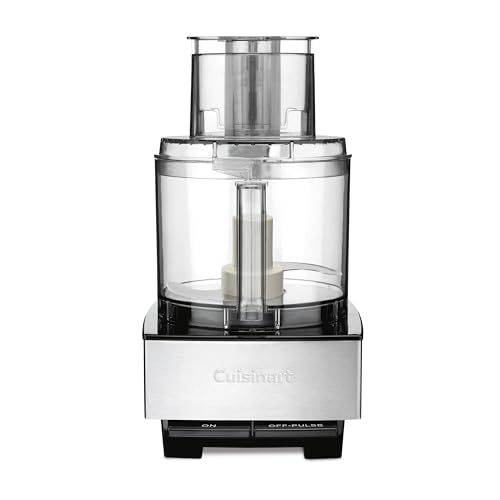
Best for: Cooks who make falafel or kibbeh for a family or a gathering and need one machine that grinds soaked chickpeas, herbs, onions, and meat pastes without stalling or liquefying them. Why it made the list: The wide 14-cup bowl keeps a full batch in contact with the blade so texture stays even, and the motor has enough torque to pulse dense soaked chickpeas cleanly, which is exactly where smaller processors smear and stall.
- Key specs: 14-cup work bowl, high-torque induction-style motor, stainless chopping blade plus slicing and shredding discs, large feed tube, dishwasher-safe bowl and blades, backed by Cuisinart’s long warranty coverage.
- What we like: A double batch of falafel mix pulses to an even couscous-like grind in under a minute, the bowl handles kibbeh’s bulgur and meat paste without overflow, and cleanup is three dishwasher-safe parts.
- What we do not like: It is heavy and takes real cabinet space, and the pulse action is strong enough that inattentive processing turns falafel mix to paste in a few extra seconds.
- Who should buy it: Anyone cooking Levantine food regularly, since the same machine covers hummus, muhammara, tabbouleh prep, and dough work between falafel nights.
- Who should avoid it: Single cooks making six falafel at a time, who will find a smaller processor easier to justify, store, and wash.
- Common complaints: Owners note the bulk and the loud pulse, and some find the sealed lid grooves tedious to hand wash if they skip the dishwasher.
- Size note: The 14-cup bowl needs about 16 inches of counter clearance under cabinets. Batches under two cups process unevenly, so scale recipes up rather than down.
- Cleaning note: Rinse the bowl and blade immediately after chickpea work, since dried falafel mix sets like plaster in the blade hub.
- Alternative: For traditional hollow kibbeh shells, add the STX Turboforce 3000 grinder, whose kubbe attachment extrudes the shell shape that hand-forming takes years to master.
Falafel and Kibbeh Tools Buying Guide
The food processor does the real work
Authentic falafel starts with dried chickpeas soaked overnight, never canned, pulsed to a coarse, cohesive grind. That demands a processor with a sharp blade, a strong motor, and a true pulse button. Kibbeh paste is even denser, so capacity and torque are worth paying for.
Shaping tools: scoops, molds, and kubbe attachments
A spring-release scoop portions uniform falafel in seconds and beats bare hands for consistency. For kibbeh, a kubbe attachment on a meat grinder extrudes hollow shells mechanically, while handheld kibbeh molds are cheaper but slower and often poorly made, so buy from brands you can verify.
Texture is the whole game
Falafel mix should hold together when squeezed but still look granular, and kibbeh shells need a fine, almost dough-like paste. Pulse in short bursts, scrape the bowl between rounds, and stop early, because you can always pulse again but you cannot un-paste a batch.
Safety Notes
- Handle food processor blades by the hub, never the edge, and store them out of the utensil drawer.
- Never push food into a grinder with fingers, only the included pusher.
- Chill meat and bulgur paste properly and keep it refrigerated between shaping batches.
- Unplug processors and grinders before clearing jams or changing attachments.
What to Avoid
- Canned chickpeas for falafel, which fall apart when fried.
- Blenders for the base mix, since they need liquid and over-refine it.
- Over-processing, the number one cause of dense, pasty falafel.
- Cheap unbranded kibbeh molds with rough seams that tear the shells.
FAQ
Can I make falafel in a food processor instead of a meat grinder?
Yes, a food processor is the standard home tool for falafel and does the job perfectly with short pulses. The grinder earns its place for kibbeh, where a kubbe attachment shapes the hollow shells that are difficult to form by hand.
What is a kubbe attachment?
It is an extrusion cone included with many electric meat grinders, including the STX Turboforce 3000, that presses the bulgur and meat paste into a hollow tube. You cut the tube into segments, pinch the ends, and get uniform kibbeh shells ready for stuffing.
Why does my falafel fall apart when frying?
The usual culprits are canned instead of soaked dried chickpeas, an over-processed paste, or a mix that needed a rest in the fridge. Aim for a coarse grind that just holds a squeeze, chill it for an hour, and fry at a steady moderate-high heat.
Final Verdict
The Cuisinart 14-Cup Food Processor is the best foundation for falafel and kibbeh thanks to its capacity and pulse control, with the Hamilton Beach 10-Cup Food Processor covering the same job on a budget and the OXO Good Grips Medium Cookie Scoop plus the STX Turboforce 3000 handling portioning and traditional shell shaping.