The best espresso machine descaler for most home baristas is the Urnex Dezcal because it uses a non-corrosive sulfamic acid that dissolves limescale quickly without harming internal seals or coatings. It’s the top pick in our research-backed guide.
For quick decisions: Urnex Dezcal is the best overall for its safe, effective formula. Urnex Cleancaf is the best value for a dual-purpose cleaner and descaler. Durgol Swiss Espresso is the best budget option with a strong citric acid blend. Avoid generic white vinegar as it can damage rubber seals and leave a lingering odor.
- Best overall: Urnex Dezcal
- Best value: Urnex Cleancaf
- Best budget: Durgol Swiss Espresso
- Avoid: White vinegar
Affiliate Disclosure: As an Amazon Associate, we earn from qualifying purchases. This does not affect our product rankings or recommendations.
Quick Picks
- Best overall: Urnex Dezcal, Non-corrosive sulfamic acid formula safe for all machines.. Check price on Amazon
- Best value: Urnex Cleancaf, Cleans and descales in one step, great for regular use..
- Best budget: Durgol Swiss Espresso, Fast-acting citric acid blend at a low price..
Comparison Table
| Product | Type | Best for | Bottle size | Buy |
|---|---|---|---|---|
| Urnex Dezcal | Sulfamic acid powder | All machines, frequent use | 12 oz (makes 5 gal) | Check Price |
| Urnex Cleancaf | Citric acid liquid | Cleaning + descaling combo | 16 oz (makes 2 gal) | Check Price |
| Durgol Swiss Espresso | Citric acid liquid | Budget, occasional use | 16.9 oz (makes 2 gal) | Check Price |
| White vinegar | Acetic acid | Avoid | N/A | Check Price |
How We Chose These Coffee Makers Picks
We evaluated descalers based on acid type, safety for espresso machine materials (brass, aluminum, rubber seals), effectiveness at removing calcium carbonate, user reviews for ease of use and no aftertaste, and value per use. We prioritized products with proven track records on major brands like Breville, De’Longhi, and Gaggia.
Key Takeaway: For most espresso machines, a dedicated descaler like Urnex Dezcal is worth the investment to avoid damage and maintain performance. Use a descaler that matches your machine’s material compatibility.
Best Overall: Urnex Dezcal
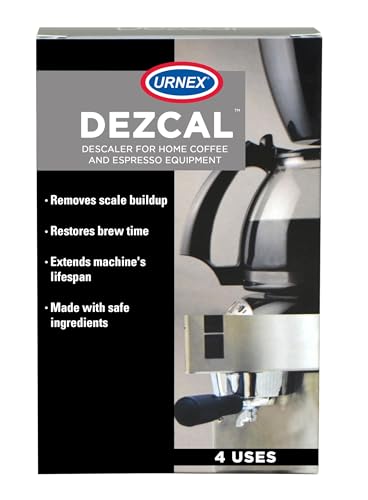
Best for: Home baristas who want a safe, effective descaler for regular use on any espresso machine. Why it made the list: Dezcal uses sulfamic acid, which is less aggressive than citric or acetic acid, making it safe for all internal parts including aluminum boilers and rubber seals. It dissolves limescale quickly and rinses clean without residue. Users report restored flow and better tasting espresso after descaling.
- Key specs: Sulfamic acid powder; 12 oz bottle makes 5 gallons; NSF certified
- What we like: Safe for all machines; no odor; fast descaling; leaves no aftertaste
- What we do not like: Must mix with water; powder can clump if stored in humidity
- Who should buy it: Anyone with a high-end or aluminum boiler espresso machine
- Who should avoid it: Those who prefer a ready-to-use liquid; very infrequent users
- Common complaints: Powder clumping in humid climates; measuring scoop can be inaccurate
- Size note: 12 oz lasts about 6-8 descaling cycles for a typical home machine
- Cleaning note: Flush with water after descaling; follow machine manufacturer instructions
- Alternative: Urnex Cleancaf if you want a cleaner+descaler combo
Espresso Machine Descaler Buying Guide
What to Look for in a Descaler
The key is the active acid type. Citric acid is common and effective but can be harsh on aluminum parts. Sulfamic acid (like in Dezcal) is gentler and NSF certified safe for food equipment. Acetic acid (vinegar) is cheap but can damage seals and leave a smell. Always check your machine’s manual for recommended descaling agents.
How Often to Descale
Frequency depends on water hardness and usage. With hard water, descale every 1-3 months. Soft water may allow 3-6 months. Signs you need to descale: slow shot pull, louder pump, bitter taste, or steam wand sputtering. Most machines have a descale indicator light.
Liquid vs. Powder Descalers
Liquids are convenient and pre-mixed, but powders are more concentrated and cost-effective per use. Powders require measuring and dissolving, which can lead to errors. Liquids are easier for beginners. Both work well if used correctly.
Safety Notes
- Always follow the manufacturer’s descaling instructions for your specific machine.
- Use only descalers recommended for espresso machines; avoid generic descalers for kettles or coffee makers.
- Wear gloves when handling concentrated descaler to avoid skin irritation.
- Flush the machine thoroughly with fresh water after descaling to remove all residues.
What to Avoid
- White vinegar: can damage rubber seals and gaskets over time, leaves a lingering odor.
- Descaling tablets not designed for espresso machines: may not dissolve properly or be too abrasive.
- Using too much descaler: can cause foaming and overflow; always measure correctly.
- Mixing different descalers: chemical reactions can produce harmful gases or damage the machine.
FAQ
Can I use vinegar to descale my espresso machine?
It’s not recommended. Vinegar is acetic acid, which can deteriorate rubber seals and gaskets, and leaves a lingering odor that affects coffee taste. Use a dedicated espresso machine descaler instead.
How often should I descale my espresso machine?
Every 1-3 months for hard water, or every 3-6 months for soft water. If you notice slower extraction or bitter taste, descale sooner.
Can I use the same descaler for a super-automatic and a semi-automatic machine?
Yes, as long as the descaler is compatible with your machine’s materials. Sulfamic acid descalers like Urnex Dezcal are safe for all types.
Final Verdict
The Urnex Dezcal is the best overall espresso machine descaler with a safe, effective sulfamic acid formula that works on all machines, with Urnex Cleancaf offering great value as a dual cleaner-descaler, and Durgol Swiss Espresso as a budget-friendly citric acid option.
Related Guides
- Best Handheld Milk Frother in 2026: Cafe Foam Without the Espresso Machine
- Espresso Machine vs Coffee Maker: What Is the Difference?
- Manual vs Automatic Espresso Machine: Which to Buy?
- Best Super Automatic Espresso Machine in 2026
- Best Semi Automatic Espresso Machine in 2026
- All Coffee Makers guides