The Brita UltraMax 27-Cup Dispenser is the best countertop water filter dispenser for most households because it pairs a big fill-once-a-day tank with cheap, long-lasting filters and a spigot the whole family can use. Dispensers beat pitchers once you are filtering water for more than two people, since you stop refilling constantly and the unit lives in the fridge or on the counter. Your choice comes down to how aggressive you need the filtration to be versus how much you want to spend on replacement filters.
The Brita UltraMax 27-Cup Dispenser is the best countertop dispenser for typical municipal tap water, balancing capacity, filter cost, and taste improvement. If you want maximum contaminant reduction, step up to the ZeroWater 32-Cup Ready-Pour or the LifeStraw Home Dispenser.
- Best overall: Brita UltraMax 27-Cup Dispenser
- Best value: PUR PLUS 30-Cup Dispenser
- Best budget: ZeroWater 32-Cup Ready-Pour Dispenser
- Avoid: No-name dispensers with unverified filtration claims and no NSF-style certifications
Affiliate Disclosure: As an Amazon Associate, we earn from qualifying purchases. This does not affect our product rankings or recommendations.
Quick Picks
- Best overall: Brita UltraMax 27-Cup Dispenser, Big capacity, inexpensive long-life Elite filters, and reliably better-tasting water.. Check price on Amazon
- Best value: PUR PLUS 30-Cup Dispenser, Stronger lead and contaminant reduction than basic carbon filters at a similar cost per gallon..
- Best budget: ZeroWater 32-Cup Ready-Pour Dispenser, Cheap up front with the most aggressive dissolved-solids removal, though filters need frequent replacement..
Comparison Table
| Dispenser | Capacity | Best for | Filtration focus | Buy |
|---|---|---|---|---|
| Brita UltraMax 27-Cup | 27 cups | Everyday taste and chlorine | Carbon, long-life Elite filter | Check Price |
| PUR PLUS 30-Cup | 30 cups | Lead-conscious households | Carbon plus lead reduction | Check Price |
| ZeroWater 32-Cup Ready-Pour | 32 cups | Maximum dissolved solids removal | 5-stage ion exchange | Check Price |
| LifeStraw Home Dispenser | 18 cups | Bacteria and microplastics concern | Membrane microfilter plus carbon | Check Price |
How We Chose These Countertop Water Filter Dispenser Picks
We compared tank capacity, certified contaminant reduction claims, filter lifespan, and cost per gallon across the major dispenser brands, then weighed aggregated owner feedback on flow rate, lid durability, and spigot leaks. Models with chronic leak complaints or vague filtration claims were dropped.
Key Takeaway: Match the filter to your actual water problem. Chlorine taste needs only a carbon filter, but lead, dissolved solids, or bacteria each require a specific technology, and paying for filtration you do not need just raises your cost per gallon.
Best Overall: Brita UltraMax 27-Cup Dispenser
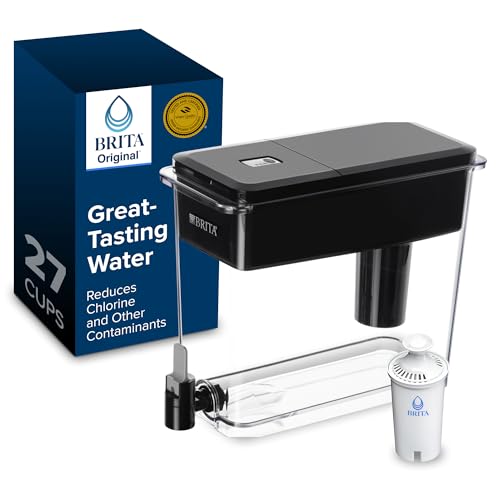
Best for: Families on municipal tap water who want better-tasting water with the least refilling and the lowest filter cost. Why it made the list: The UltraMax holds enough water that one fill covers a family for the day, and the press-lever spigot is easy enough for kids to use. Paired with Brita Elite filters, which last roughly six months, it delivers the lowest maintenance routine of any dispenser here. It slides onto a fridge shelf or sits on the counter without looking like lab equipment.
- Key specs: 27-cup tank, press-to-pour spigot, compatible with standard and long-life Brita Elite filters, BPA-free plastic.
- What we like: Huge capacity, six-month filter life with the Elite cartridge, and a low cost per gallon that beats bottled water many times over.
- What we do not like: The basic carbon filtration is aimed at taste, chlorine, and a limited contaminant list, not heavy metals across the board or biological threats.
- Who should buy it: Households of three or more on decent municipal water who mainly want chlorine taste and odor gone without constant refilling.
- Who should avoid it: Anyone dealing with known lead issues, well water, or high dissolved solids; PUR, LifeStraw, or ZeroWater target those problems better.
- Common complaints: Owners note the fill lid can feel flimsy and the spigot drips if debris lodges in it, though reports of outright failure are uncommon.
- Size note: It fits most fridge shelves but measure the height first; on the counter it takes about the footprint of a large toaster.
- Cleaning note: Wash the tank with mild soap monthly and never hot water, and flush new filters per the instructions to clear loose carbon dust.
- Alternative: The PUR PLUS 30-Cup Dispenser is the pick if lead reduction matters in your area, with a similar form factor and slightly larger tank.
Water Filter Dispenser Buying Guide
Know your water first
Read your utility’s annual water quality report or use a cheap test kit before buying. City water with chlorine taste needs only carbon. Older homes with lead service lines need a filter certified for lead. Well water or biological concerns push you toward membrane filtration like LifeStraw.
Capacity and refill rhythm
A dispenser only saves effort if one fill lasts your household most of a day. Count roughly eight cups per person per day for drinking. Remember that the listed capacity includes the unfiltered reservoir, so usable filtered volume at any moment is smaller than the headline number.
Filter cost per gallon
The dispenser is cheap; the filters are the real price. Long-life carbon filters like Brita Elite are the cheapest per gallon, PUR and LifeStraw sit in the middle, and ZeroWater costs the most because its ion-exchange filters exhaust quickly, especially on water with high dissolved solids.
Safety Notes
- Replace filters on schedule, because an exhausted carbon filter can shed trapped contaminants and grow bacteria.
- Wash the reservoir and spigot monthly; the filter cleans incoming water, not the container it sits in.
- Use cold water only, since hot water damages filter media and releases what the filter has captured.
- Do not run well water or microbiologically unsafe water through taste-focused carbon dispensers; they are not purifiers.
What to Avoid
- Dispensers with no independent certification behind their contaminant-reduction claims.
- Buying ZeroWater for very hard, high-TDS water unless you accept replacing filters as often as monthly.
- Leaving any dispenser in a warm spot for days, which encourages algae and bacterial growth in the tank.
- Ignoring the filter-change indicator because the water still tastes fine; taste returns before protection fails.
FAQ
Are countertop water filter dispensers better than pitchers?
For more than two people, yes. Dispensers hold two to three times as much water, so you refill once a day instead of after every meal, and the spigot means no lifting a heavy pitcher. Pitchers still win for solo households and small fridges.
How often do you need to change dispenser filters?
It depends on the technology. Brita Elite filters last about six months, standard carbon filters about two months, and ZeroWater filters vary wildly with your water, from a few weeks to a couple of months. Change on schedule even if the taste seems fine.
Do these dispensers remove bacteria?
Most do not. Brita, PUR, and ZeroWater are designed for treated municipal water and target taste, chlorine, metals, and dissolved solids. The LifeStraw Home Dispenser is the exception here, using a membrane microfilter rated for bacteria and parasites alongside its carbon stage.
Final Verdict
The Brita UltraMax 27-Cup Dispenser is the best countertop water filter dispenser for most homes with its big tank and cheap long-life filters, with the PUR PLUS 30-Cup Dispenser stepping up lead reduction and the ZeroWater 32-Cup Ready-Pour delivering the deepest dissolved-solids removal for the lowest upfront cost.
Related Guides
- Under-Sink vs Countertop Water Filter: Which to Buy?
- Best Gravity Fed Water Filter in 2026: Countertop Convenience Without Plumbing
- Best Instant Hot and Cold Water Dispenser in 2026: Countertop Convenience for Fast Water at Any Temperature
- Best Water Filter Pitchers in 2026: Taste and Contaminant Reduction
- Best Countertop Water Filters in 2026
- All Water Filters guides
