The best cookware for Indian cooking is the All-Clad D3 Tri-Ply Stainless Steel Set. It delivers even heating for perfectly browned onions, handles the high temperatures needed for tadka, and won’t react with tamarind or tomatoes. Stainless steel is also easy to clean and lasts a lifetime.
In this guide, we answer the most common questions about choosing cookware for Indian cuisine, covering material, size, and maintenance.
- Best overall: All-Clad D3 Stainless Steel
- Best value: Tramontina Tri-Ply Clad
- Best budget: Cuisinart MultiClad Pro
- Avoid: Nonstick sets with PTFE coatings, as they can’t handle high heat and may peel
Affiliate Disclosure: As an Amazon Associate, we earn from qualifying purchases. This does not affect our product rankings or recommendations.
Quick Picks
- Best overall: All-Clad D3 Stainless Steel, Tri-ply construction for even heat, no hotspots, and lifetime durability.. Check price on Amazon
- Best value: Tramontina Tri-Ply Clad, Excellent heat distribution at a lower price, with rolled rims for drip-free pouring..
- Best budget: Cuisinart MultiClad Pro, Solid tri-ply performance with a polished finish that resists staining..
Comparison Table
| Product | Material | Best for | Pieces | Buy |
|---|---|---|---|---|
| All-Clad D3 | Tri-ply stainless | Serious home cooks who want the best | 10 | Check Price |
| Tramontina Tri-Ply Clad | Tri-ply stainless | Value seekers needing even heat | 12 | Check Price |
| Cuisinart MultiClad Pro | Tri-ply stainless | Budget-conscious cooks | 8 | Check Price |
| T-fal Ultimate Hard Anodized | Hard-anodized aluminum nonstick | Those who prefer nonstick for delicate dishes | 10 | Check Price |
How We Chose These Cookware Picks
We evaluated cookware based on material (stainless steel is ideal for high-heat Indian cooking), construction (fully clad tri-ply for even heating), weight, handle design, and user reviews from thousands of owners. We prioritized sets that include essential pieces: a 10-12 inch skillet, 2-3 quart saucepan, and 8 quart stockpot.
Key Takeaway: For Indian cooking, avoid nonstick with PTFE. Invest in tri-ply stainless steel for heat control, durability, and non-reactivity. The All-Clad D3 is the gold standard, but Tramontina offers 90% of the performance at half the price.
Best Overall: All-Clad D3 Tri-Ply Stainless Steel Cookware Set
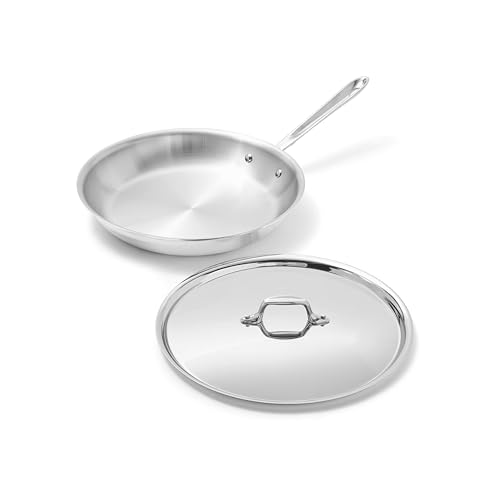
Best for: Home cooks who make dal, curries, and tadka regularly and want cookware that lasts decades. Why it made the list: The All-Clad D3’s tri-ply aluminum core heats evenly across the pan, preventing hotspots that burn garlic or mustard seeds. Its stainless steel surface is non-reactive, so you can deglaze with lemon juice or vinegar without worry. The riveted handles stay cool on the stovetop and the pans are oven safe to 600°F, perfect for finishing dishes under the broiler.
- Key specs: 10-piece set: 10-in fry pan, 8-in fry pan, 3-qt saucepan with lid, 8-qt stockpot with lid, and more. Induction compatible.
- What we like: Unmatched heat distribution; no warping after years of use; polished interior resists staining from turmeric; dishwasher safe.
- What we do not like: Handles can get hot during long simmering; heavy for some users; food may stick if not preheated properly.
- Who should buy it: Cooks who make Indian food multiple times a week and want the best performance.
- Who should avoid it: Those with arthritis or wrist issues who prefer lighter cookware; budget-conscious shoppers.
- Common complaints: Price is high; pans require learning curve to prevent sticking; lids fit tightly but can be hard to lift when hot.
- Size note: The 8-qt stockpot is ideal for large batches of dal or biryani. The 10-in fry pan works for tadka and shallow frying.
- Cleaning note: Use Bar Keepers Friend or baking soda to remove stubborn stains from turmeric. Dishwasher safe but hand washing preserves shine.
- Alternative: Tramontina Tri-Ply Clad 12-Piece Set for similar performance at a lower cost.
Cookware Buying Guide for Indian Cooking
Material Matters
Stainless steel is the top choice for Indian cooking because it can handle high heat without warping or releasing toxins. Cast iron is excellent for dosa and paratha but is heavy and reacts with acidic ingredients. Hard-anodized aluminum nonstick is good for eggs and delicate foods but cannot be used on high heat (max 400°F) and coatings wear out. Avoid pure aluminum or copper unless lined with stainless steel.
Key Features to Look For
Fully clad tri-ply or multi-ply construction ensures even heating across the pan, preventing hotspots that burn spices. A thick, heavy bottom helps retain heat for searing. Riveted, stay-cool handles provide a secure grip. Induction compatibility is a plus for future-proofing. Oven-safe lids and pans allow for finishing dishes under the broiler.
Essential Pieces for Indian Cooking
A 10-12 inch skillet for tadka and shallow frying. A 2-3 quart saucepan for dal and small curries. An 8-12 quart stockpot for large batches of sambar or biryani. A 1.5-2 quart saucepan for rice or tempering. Optional: a wok-style pan for stir-frying vegetables and making chai.
Safety Notes
- Always use oven mitts when handling hot pans, as stainless steel handles can get hot.
- Avoid using nonstick cookware on high heat; PTFE coatings can degrade and release fumes.
- Do not pour cold water into a hot stainless steel pan; it may warp the metal.
- Keep pot handles turned inward on the stove to prevent accidental spills.
What to Avoid
- Nonstick cookware with PTFE (Teflon) for high-heat Indian cooking; coatings fail quickly.
- Thin-gauge stainless steel that warps and causes uneven heating.
- Cookware with plastic handles or knobs that melt in the oven.
- Sets that lack a stockpot or large pot for dal and biryani.
FAQ
Can I use nonstick cookware for Indian cooking?
Yes, but only for low-heat dishes like omelets or dosa. For high-heat tadka and browning, use stainless steel or cast iron.
Is cast iron good for Indian cooking?
Cast iron is excellent for dosa, paratha, and deep frying, but it reacts with acidic ingredients like tomatoes and tamarind, so season well and avoid long simmering of acidic curries.
How do I clean turmeric stains from stainless steel?
Make a paste of baking soda and water, or use Bar Keepers Friend. Scrub gently with a non-abrasive sponge.
What size cookware do I need for Indian cooking?
A 10-12 inch skillet, 3-4 quart saucepan, and 8-12 quart stockpot cover most needs. A 1.5-2 quart saucepan is useful for tempering.
Final Verdict
The All-Clad D3 Tri-Ply Stainless Steel Set is the best cookware for Indian cooking due to its even heating, durability, and non-reactive surface. For a more affordable option, the Tramontina Tri-Ply Clad Set offers similar performance, while the Cuisinart MultiClad Pro is a solid budget pick.
Related Guides
- Best Cookware for High Heat Cooking: Materials That Can Take the Heat
- Best Oven Safe Cookware in 2026: Durable Sets for High Heat Cooking
- Best Cookware Set for Induction Stove in 2026: Tri-Ply Stainless Steel That Won't Warp
- Best Cookware Set for Asian Cooking in 2026: High Heat, Nonstick, and Wok Included
- Best Cookware Sets in 2026: Stainless, Nonstick and Cast Iron Compared
- All Cookware guides
