The Cuisipro Surface Glide 4-Sided Box Grater is the best stainless box grater because its etched blades stay sharp for years and its patented glide channels genuinely reduce the effort of grating hard cheese and vegetables. A box grater is one of those tools where blade quality decides everything, sharp etched teeth shred cleanly while cheap stamped blades mash food and skate over parmesan.
The Cuisipro Surface Glide 4-Sided Box Grater is the best stainless box grater thanks to its long-lasting etched blades and low-effort glide surface. The OXO Good Grips Box Grater is the value pick, with a comfortable handle and a snap-on container that catches what you grate.
- Best overall: Cuisipro Surface Glide 4-Sided Box Grater
- Best value: OXO Good Grips Box Grater
- Best budget: Spring Chef Professional Box Grater
- Avoid: Bargain graters with dull stamped teeth that mash cheese instead of shredding it
Affiliate Disclosure: As an Amazon Associate, we earn from qualifying purchases. This does not affect our product rankings or recommendations.
Quick Picks
- Best overall: Cuisipro Surface Glide 4-Sided Box Grater, Etched blades and glide channels make hard cheese feel easy. Check price on Amazon
- Best value: OXO Good Grips Box Grater, Comfortable grip plus a snap-on container that catches every shred.
- Best budget: Spring Chef Professional Box Grater, Solid four-sided basics with a grippy non-slip base.
Comparison Table
| Box grater | Blade style | Best for | Extras | Buy |
|---|---|---|---|---|
| Cuisipro Surface Glide | Etched with glide channels | Frequent cooks, hard cheeses | Ultra-durable edge | Check Price |
| OXO Good Grips | Stamped, sharp | Everyday family use | Snap-on catch container | Check Price |
| Spring Chef Professional | Stamped | Budget kitchens | Non-slip rubber base | Check Price |
| Microplane 4-Sided | Photo-etched | Zesting and fine grating | Razor-sharp fine faces | Check Price |
How We Chose These Stainless Steel Box Grater Picks
We compared blade manufacturing, frame rigidity, handle comfort, and base stability across the major stainless grater brands, and reviewed aggregated owner feedback on the two things that kill graters, edges dulling within a year and frames flexing under pressure. Etched-blade models earned extra weight because their sharpness measurably outlasts stamped teeth.
Key Takeaway: Etched blades are the single biggest upgrade in a box grater. They start sharper than stamped teeth and hold that edge for years, which matters more than any accessory in the box.
Best Overall: Cuisipro Surface Glide 4-Sided Box Grater
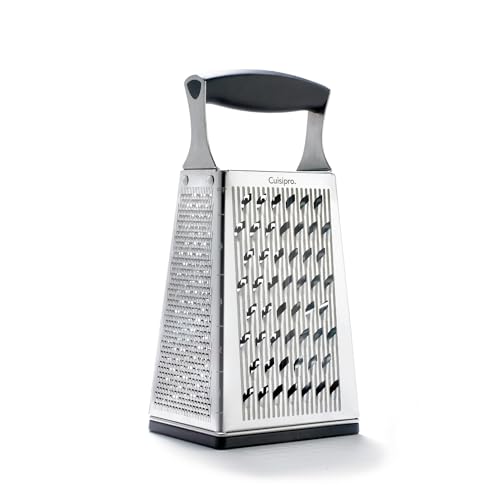
Best for: Cooks who grate cheese, vegetables, or chocolate weekly and want blades that stay sharp for years instead of months. Why it made the list: Cuisipro etches its blades rather than stamping them, so the teeth start scalpel-sharp and stay that way, and the Surface Glide channels between the teeth reduce friction enough that dense parmesan and raw sweet potato take noticeably less force than on ordinary graters.
- Key specs: Four grating faces, coarse, fine, ultra-fine, and slicing, etched stainless blades with Surface Glide friction channels, rigid stainless frame, non-slip base and soft-grip handle.
- What we like: The edge retention is exceptional, hard cheeses shred with light pressure, and the rigid frame does not flex or drum when you bear down on a block of cheddar.
- What we do not like: It costs several times what a basic grater does, the ultra-sharp teeth punish careless knuckles, and there is no catch container included at this price.
- Who should buy it: Anyone who grates often enough to resent a dull grater, fans of fresh parmesan, slaw makers, and cooks who hate replacing tools.
- Who should avoid it: Occasional graters who shred cheese a few times a year, the OXO or Spring Chef deliver most of the experience for far less.
- Common complaints: Owners mostly warn about how sharp it is, knuckle grazes are common until you adjust your technique. A few wish it nested with a storage container.
- Size note: It is a full-height box grater, so confirm your gadget drawer or cabinet can take a tool over ten inches tall, or plan to store it on end like a pitcher.
- Cleaning note: Rinse immediately after grating cheese before residue hardens, brush along the direction of the teeth, and the open frame runs fine through the dishwasher.
- Alternative: The OXO Good Grips Box Grater trades some edge longevity for a snap-on measuring container that catches shreds as you work.
Box Grater Buying Guide
Stamped versus etched blades
Most graters punch teeth out of sheet steel, which leaves a rougher edge that dulls within a year or two of regular use. Etched blades, used by Cuisipro and Microplane, are chemically cut to a finer edge that shreds cleanly and lasts many times longer. If a grater will see weekly use, etched blades are the one feature worth paying up for.
Stability and grip
Grating is a force-heavy job, so the grater must not skate or flex. Look for a broad non-slip base, a comfortable full-size handle, and a frame that does not oil-can when squeezed. A grater that slips is a knuckle injury waiting to happen, and a flexing frame telegraphs thin steel that will not survive dense vegetables.
Faces, sizes, and storage
Four faces is the useful standard, coarse for cheddar and slaw, fine for parmesan and garlic, ultra-fine for zest and nutmeg, and a slicer for cucumbers. Bigger boxes are more stable and hold more inside, but check your storage space, and consider models with snap-on containers if you usually grate directly for recipes measured in cups.
Safety Notes
- Keep knuckles curled and grate slowly as the food gets small, the last inch causes nearly every grater injury.
- Use a cut-resistant glove or the flat of your palm to hold shrinking pieces, or stop and save the stub for another use.
- Wash graters with a brush, not a sponge, sharp teeth shred sponges and fingertips alike.
- Store the grater where reaching into a drawer will not land fingers on the blade faces.
What to Avoid
- Bargain graters with dull stamped teeth that mash instead of shredding.
- Flimsy frames that flex under pressure, thin steel means wandering cuts and short life.
- Grating the last inch of anything hard without a glove or guard.
- Letting cheese residue dry on the blades, it cements into the teeth and dulls your cleanup enthusiasm fast.
FAQ
What is the difference between etched and stamped grater blades?
Stamped blades are punched from sheet metal, leaving a serviceable but rougher edge that dulls with regular use. Etched blades are chemically cut to a much finer, sharper edge that shreds food cleanly with less pressure and holds sharpness for years. Cuisipro and Microplane use etching, which is why they cost more and last longer.
Can box graters go in the dishwasher?
Most all-stainless models, including the Cuisipro and Spring Chef, are dishwasher-safe, though hand rinsing right after use prevents cheese from hardening into the teeth. Graters with plastic containers or soft-grip parts usually want those pieces on the top rack. A quick brush along the teeth beats any machine for stuck residue.
Which grater face should I use for parmesan?
Use the fine face for fluffy piles that melt into pasta, or the ultra-fine face for a powdery dusting. The coarse face suits softer cheeses like cheddar and mozzarella. Hard aged cheeses take real pressure on a dull grater, which is exactly where sharp etched blades pay for themselves.
Final Verdict
The Cuisipro Surface Glide 4-Sided Box Grater is the best stainless box grater with blades that outlast everything else in the category, with the OXO Good Grips Box Grater as the practical value pick with its catch container and the Spring Chef Professional covering budget kitchens with sturdy basics.
