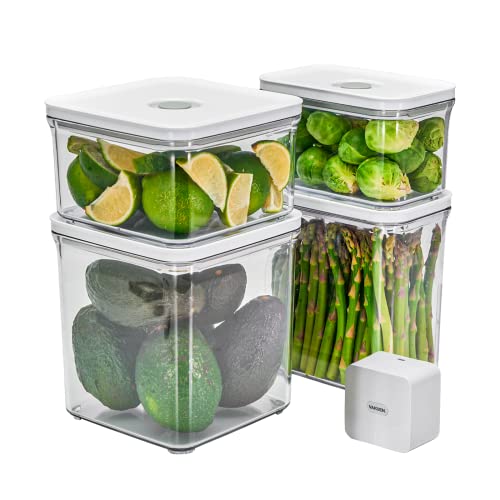
Airtight and vacuum-seal containers both keep food fresher, but they work differently. Airtight containers simply seal out new air with a tight lid, keeping dry goods crisp and leftovers fresh for days, while vacuum-seal containers actively pump the air out, extending freshness for longer and slowing oxidation. Airtight is simpler and cheaper for everyday use; vacuum-seal is best for maximum shelf life and storing food longer. This guide compares airtight vs vacuum-seal containers.
Airtight containers seal out new air with a tight lid, ideal for everyday dry goods and leftovers; vacuum-seal containers pump the air out for longer freshness and slower oxidation. Airtight is simpler and cheaper; vacuum-seal extends shelf life most.
Short Answer
Airtight is the simple, everyday choice that keeps food fresh for days; vacuum-seal removes air actively for longer storage. Choose airtight for daily use and vacuum-seal for maximum shelf life.
Airtight vs Vacuum-Seal: Comparison Matrix
| Feature | Airtight | Vacuum-seal | Best for |
|---|---|---|---|
| How it works | Tight lid seals out air | Pumps air out | Depends |
| Freshness extension | Days | Longer (weeks+) | Vacuum-seal |
| Ease of use | Just close the lid | Needs a pump | Airtight |
| Cost | Lower | Higher (pump/system) | Airtight |
| Everyday leftovers | Excellent | Overkill | Airtight |
| Long-term storage | Limited | Excellent | Vacuum-seal |
Key Takeaway: Both keep air away from food; the difference is how much. Airtight is enough for food you will eat within days, while vacuum-seal removes the air already inside for food you want to keep for weeks. Match the effort to how long you are storing.
What Airtight Containers Do Best
Airtight containers are simple and cheap, keeping dry goods crisp and leftovers fresh for days with just a tight lid. They suit everyday use. See best airtight containers.
What Vacuum-Seal Containers Do Best
Vacuum-seal containers and bags pump the air out, slowing oxidation and extending freshness for weeks, ideal for storing food longer, bulk buying and sous vide. They need a pump or system.
Everyday vs Long-Term
For food you will eat within a few days, airtight is enough. For longer storage, vacuum-seal preserves better. See how to keep food fresh longer.
Which Should You Buy?
Choose airtight containers for everyday leftovers and dry goods, which suits most kitchens. Add vacuum-seal if you store food long-term, buy in bulk or want maximum shelf life. Many use airtight daily and vacuum-seal occasionally.
FAQ
Are airtight or vacuum-seal containers better?
Airtight is simpler and cheaper for everyday dry goods and leftovers; vacuum-seal removes air for longer freshness. Choose airtight for daily use and vacuum-seal for long-term storage.
Do vacuum-seal containers keep food fresher?
Yes, longer than airtight, because they remove the air already inside, slowing oxidation. They are best for storing food for weeks rather than days.
Is vacuum-sealing worth it?
For bulk buying, long-term storage and sous vide, yes. For everyday leftovers eaten within days, airtight containers are simpler and enough.
Bottom Line
Airtight containers seal out new air for everyday freshness; vacuum-seal containers pump air out for longer storage. Use airtight daily and vacuum-seal for long-term needs. See our best airtight containers and how to keep food fresh longer guides.
Related Guides
- Best Airtight Food Storage Containers in 2026
- Best Pantry Storage Containers in 2026: Airtight Picks
- Best Pantry Organization Containers in 2026: Clear Airtight Sets That Actually Fit Your Shelves
- Best Food Storage Containers in 2026: Glass and Plastic Compared
- Best Glass Food Storage Containers in 2026
- All Kitchen Storage guides
