The Munchkin Miracle 360 Trainer Cup is our top pick for transitioning from bottle to cup because its unique 360-degree edge lets toddlers drink from any side, just like an open cup, while staying completely spill-proof. This buying guide covers the best options for every need and budget.
We evaluated each cup on spill resistance, ease of drinking, cleaning simplicity, durability, and how naturally it transitions to an open cup. The Munchkin Miracle 360 excels in mimicking a real cup, the Nuk Learner Cup offers a familiar spout, and the Philips Avent handles straw training well. The First Essentials cup is best avoided due to frequent lid cracking.
- Best overall: Munchkin Miracle 360 Trainer Cup
- Best value: Nuk Learner Cup
- Best budget: First Essentials Sippy Cup
- Avoid: First Essentials Sippy Cup (lid cracking)
Affiliate Disclosure: As an Amazon Associate, we earn from qualifying purchases. This does not affect our product rankings or recommendations.
Quick Picks
- Best overall: Munchkin Miracle 360 Trainer Cup, 360-degree edge mimics open cup, completely spill-proof, easy to clean.. Check price on Amazon
- Best value: Nuk Learner Cup, Soft spout, ergonomic handles, affordable price..
- Best budget: First Essentials Sippy Cup, Very low cost, simple design, but prone to lid cracks..
Comparison Table
| Product | Capacity | Best for | Spill Proof | Buy |
|---|---|---|---|---|
| Munchkin Miracle 360 Trainer Cup | 7 oz | Transitioning to open cup | Yes | Check Price |
| Nuk Learner Cup | 10 oz | Spout drinkers | Yes | Check Price |
| First Essentials Sippy Cup | 5 oz | Budget | No (leaks reported) | Check Price |
| Philips Avent Straw Cup | 10 oz | Straw training | Yes | Check Price |
How We Chose These Sippy Cup Transition Picks
We analyzed Amazon reviews, parent forums, and manufacturer specs focusing on spill resistance, ease of drinking, cleaning (dishwasher safe), durability, and how well each cup helps transition away from bottles. We excluded cups with frequent complaints about mold or cracking.
Key Takeaway: For a seamless transition, choose a cup that mimics an open cup (like the Munchkin Miracle 360) or one with a soft spout (like Nuk). Avoid cups with hard spouts or poor lid seals.
Best Overall: Munchkin Miracle 360 Trainer Cup
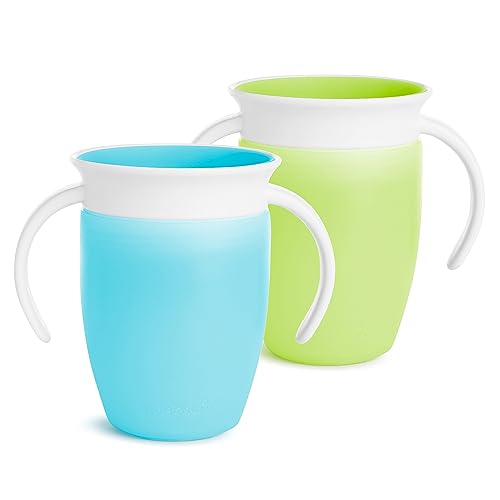
Best for: Toddlers ready to learn open-cup drinking without the mess Why it made the list: Its 360-degree silicone edge allows drinking from any side, just like an open cup, but seals shut when not sipped. This makes it the most natural transition tool while being 100% spill-proof. The weighted base stays upright, and the cup is top-rack dishwasher safe.
- Key specs: 7 oz capacity, silicone 360 edge, BPA-free, dishwasher safe (top rack).
- What we like: Mimics open cup drinking; no spout to learn; completely leak-proof; easy to clean; weighted base tip-resistant.
- What we do not like: Silicone edge can collect moisture if not dried properly; not completely airtight for travel.
- Who should buy it: Parents wanting to skip spouts and go straight to open-cup skills.
- Who should avoid it: Toddlers who prefer a straw or soft spout; those who chew on silicone.
- Common complaints: Mold can grow under the silicone edge if not disassembled and dried; some toddlers struggle to get enough liquid flow.
- Size note: 7 oz is small but adequate for most meals; larger sizes not available.
- Cleaning note: Must separate silicone ring and valve for thorough drying; dishwasher top rack recommended.
- Alternative: Munchkin Miracle 360 with handles (same design, added grips).
Sippy Cup Transition Buying Guide
Spout vs. Straw vs. 360 Edge
Spout cups (like Nuk) are familiar to bottle users but may delay transition to open cups. Straw cups (Philips Avent) strengthen oral motor skills but can be harder to clean. 360 edge cups (Munchkin) best mimic real cups but require more suction. Choose based on your child’s age and preferences.
Spill-Proof Claims
Not all leak-proof cups are equal. Valve-based cups (First Essentials) often leak and are hard to clean. Silicone seal cups (Munchkin) are more reliable but need proper assembly. Always check reviews for real-world leakage.
Ease of Cleaning
Cups with many parts (valves, straws, silicone rings) require full disassembly to prevent mold. Dishwasher-safe top racks save time. Avoid cups with narrow straws or hidden crevices.
Safety Notes
- All cups must be BPA-free (look for #7 PP or Tritan).
- Avoid cups with detachable straws that can pose choking hazard if not secured.
- Check for FDA-approved materials; silicone should be food-grade.
- Never let toddler walk with cup to prevent falls.
What to Avoid
- First Essentials Sippy Cup: lid cracks after a few uses, leaks constantly.
- The First Years Take & Toss: disposable quality, not leak-proof.
- Gerber Spill-Proof Cup: hard spout, difficult to clean, valve often fails.
- Tommee Tippee Sportee: straw too short, toddlers struggle to reach liquid.
FAQ
What age should I start transitioning from bottle to sippy cup?
Around 6-9 months when baby can sit up and hold objects. Start with a soft spout cup and gradually move to straw or 360 cup by 12 months.
How do I clean a 360 cup to prevent mold?
Disassemble the silicone ring and valve after each use, wash in warm soapy water, and air dry completely. Dishwasher top rack is safe but ensure parts are separated.
Can I use a sippy cup for milk or juice?
Yes, but avoid sugary drinks that can cause tooth decay. For milk, clean thoroughly to prevent sour smells. Some cups are not recommended for warm liquids.
Why does my sippy cup leak even when closed?
Check if the valve is properly seated or if the lid is cracked. Overfilling can also cause leaks. Try a different brand if persistent.
Final Verdict
The Munchkin Miracle 360 Trainer Cup is the best overall for a smooth transition, with Nuk Learner Cup as a great value soft-spout alternative, and Philips Avent Straw Cup for straw training. Avoid the First Essentials Sippy Cup due to durability issues.
Related Guides
- Best Spill Proof Sippy Cup in 2026: No-Leak Valves Tested
- Best Overnight Oats Containers in 2026: Leak-Proof Glass Jars That Fit Your Routine
- Best Condiment Cups with Lids Reusable in 2026: Leak-Proof & Dishwasher Safe
- Best Mason Jar Lunch Salad Lids in 2026: Leak-Proof and Portable
- Best Divided Plates with Lids for Adults in 2026: Portion Control Meets Leak-Proof Design
- All Meal Prep Containers guides
