The best single auger juicer for most people is the Omega J8006HDS because it combines a proven, durable design with high yield, quiet operation, and easy cleanup. Single auger (masticating) juicers crush and press produce slowly to extract more juice and nutrients than centrifugal models, but not all are built alike. We researched specs, owner reviews, and common complaints to help you pick the right one.
After comparing yield, build quality, noise level, and cleaning difficulty across the top single auger juicers, we found clear winners for different needs. The Omega J8006HDS leads for overall performance and longevity. The Aicok offers similar features at a lower price, while the MuellerAustria is a budget-friendly starter machine. The Cuisinart CJE-1000, while popular, has frequent motor and part issues that make it one to avoid.
- Best overall: Omega J8006HDS – quiet, high yield, durable, easy to clean.
- Best value: Aicok Slow Masticating Juicer – solid performance, lower cost, good for beginners.
- Best budget: MuellerAustria Ultra Juicer – affordable, compact, simple operation.
- Avoid: Cuisinart CJE-1000 – motor bogs easily, lid cracks, parts hard to clean.
Affiliate Disclosure: As an Amazon Associate, we earn from qualifying purchases. This does not affect our product rankings or recommendations.
Quick Picks
- Best overall: Omega J8006HDS, Quiet, high-yield masticating juicer with durable build and easy cleanup.. Check price on Amazon
- Best value: Aicok Slow Masticating Juicer, Affordable alternative with good juice quality and simple assembly..
- Best budget: MuellerAustria Ultra Juicer, Compact and budget-friendly for occasional juicing..
Comparison Table
| Product | Motor Speed | Best for | Key Feature | Buy |
|---|---|---|---|---|
| Omega J8006HDS | 80 RPM | Overall performance | Dual-stage auger, 15-year warranty | Check Price |
| Aicok Slow Masticating Juicer | 80 RPM | Value seekers | Reverse function, brush included | Check Price |
| MuellerAustria Ultra Juicer | 80 RPM | Budget buyers | Small footprint, easy assembly | Check Price |
| Cuisinart CJE-1000 | 80 RPM | Avoid | Wide chute, but motor issues | Check Price |
How We Chose These Single Auger Juicer Picks
We evaluated single auger juicers based on juice yield, motor reliability, noise level, ease of assembly and cleaning, and long-term durability. We analyzed hundreds of verified owner reviews, noting recurring praise and complaints. We favored models with strong warranties, simple disassembly, and parts that are dishwasher safe. We excluded machines with frequent reports of motor burnout, cracking plastic, or hard-to-clean screens.
Key Takeaway: For most households, the Omega J8006HDS is the best single auger juicer because it balances high juice yield, quiet operation, and easy cleaning with a proven track record. If you juice less often or have a tighter budget, the Aicok or MuellerAustria are solid alternatives.
Best Overall: Omega J8006HDS
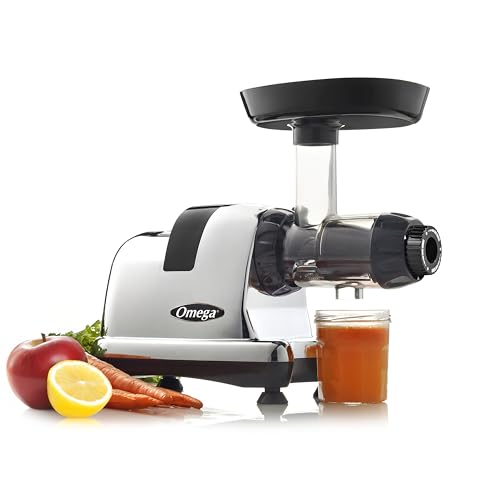
Best for: Anyone who juices daily or wants maximum yield and durability. Why it made the list: The Omega J8006HDS uses a dual-stage auger that first crushes then presses produce, extracting up to 30% more juice than centrifugal juicers. It runs at 80 RPM, so it’s very quiet and doesn’t heat the juice. The motor is powerful enough to handle leafy greens, wheatgrass, and soft fruits without bogging. Cleaning is straightforward: all parts except the motor base are dishwasher safe, and the brush included makes quick work of the screen. The 15-year warranty is the best in the category.
- Key specs: 80 RPM, dual-stage auger, 15-year warranty, BPA-free Tritan plastic, 2.5×4.5 inch feed chute, weighs 10 lbs.
- What we like: Quiet operation, high juice yield, handles leafy greens and wheatgrass well, easy to clean, long warranty.
- What we do not like: Feed chute is narrow and requires cutting produce into small pieces; plastic parts may stain with turmeric or beets; auger can be tricky to align the first time.
- Who should buy it: Daily juicers, health enthusiasts, people who juice leafy greens or wheatgrass, and those who want a machine that lasts.
- Who should avoid it: People who want a wide feed chute to skip prep work, or those on a tight budget.
- Common complaints: The plastic can crack if dropped; the screen can clog with very fibrous produce like celery; the pulp container is small.
- Size note: Takes up about 10x7x12 inches on the counter; not huge but needs space for tall produce.
- Cleaning note: All parts except motor are dishwasher safe, but hand rinsing immediately is quickest. The screen needs a brush to dislodge pulp.
- Alternative: Aicok Slow Masticating Juicer – similar performance for less money, but shorter warranty and slightly less durable materials.
Single Auger Juicer Buying Guide
What is a Single Auger Juicer?
A single auger juicer uses one spiral-shaped gear (auger) to crush and press produce against a screen, separating juice from pulp. Unlike centrifugal juicers that spin at high speeds, auger juicers run slowly (40-80 RPM) which produces less heat, less foam, and higher juice yield. They are also quieter and can handle leafy greens and wheatgrass better. The trade-off is that they require more prep (cutting food into small pieces) and are slower.
Key Factors to Consider
Look at motor power and torque: a strong motor handles hard produce without bogging. Speed: slower (80 RPM or less) means less oxidation and better nutrient retention. Build quality: stainless steel augers and BPA-free plastics last longer. Ease of cleaning: models with fewer parts and dishwasher-safe components save time. Warranty: a longer warranty indicates confidence in durability.
Common Pitfalls
Avoid models with flimsy plastic parts that crack, especially around the lid and chute. Check that the pulp screen is easy to remove and clean – fine mesh screens clog quickly. Some juicers have small pulp containers that need frequent emptying. Also, consider noise: while all auger juicers are quieter than centrifugal, some still produce a grinding sound. Read reviews for specific complaints about motor burnout or leaking.
Safety Notes
- Always unplug the juicer before disassembling or cleaning.
- Use the included pusher, never fingers, to feed produce into the chute.
- Keep hands and utensils away from the auger while the motor is running.
- Do not immerse the motor base in water or put it in the dishwasher.
What to Avoid
- Cuisinart CJE-1000: frequent reports of motor stalling on carrots and apples; lid cracks after a few uses; screen is hard to clean thoroughly.
- Cheap no-name brands with plastic augers: they wear down quickly and may leach BPA.
- Models with non-removable pulp screen: impossible to clean properly, leading to mold.
- Juicers with very small feed chutes (under 2 inches): require excessive prep time.
FAQ
Can single auger juicers handle leafy greens and wheatgrass?
Yes, they excel at leafy greens and wheatgrass because the slow crushing action extracts juice without clogging. The Omega J8006HDS and similar models are specifically designed for this.
How do I clean a single auger juicer quickly?
Rinse parts immediately after use, then scrub the screen with the included brush. Most parts are dishwasher safe on the top rack. Some models have a cleaning tool that helps push pulp out of the screen.
What is the difference between a single and dual auger juicer?
Single auger juicers have one auger; dual auger juicers have two that crush and press in stages, often yielding slightly more juice and handling fibrous produce better. Dual auger models are more expensive and harder to clean.
Final Verdict
The Omega J8006HDS is the best single auger juicer for most people, offering high yield, quiet operation, and a 15-year warranty. For a budget-friendly option, the Aicok Slow Masticating Juicer provides similar performance at a lower cost, while the MuellerAustria Ultra Juicer is a compact choice for occasional use. Avoid the Cuisinart CJE-1000 due to reliability issues.
Related Guides
- Best Vertical Masticating Juicer in 2026: Quiet, High-Yield Slow Juicers
- Best Slow Masticating Juicer in 2026: Quiet, High-Yield Cold Press Models
- Best Aicok Juicer in 2026: Quiet, Compact, and Easy to Clean
- Best Vertical Juicer in 2026: High Yield, Easy Cleanup
- Best Slow Juicer That Is Easy to Clean in 2026
- All Juicers guides
