The Watts Premier IL-10 Inline Water Filter is the best inline filter for ice maker water, because its carbon block strips the chlorine taste and sediment that make ice cloudy and off-tasting, and it installs in the quarter-inch supply line behind a fridge or under-counter ice maker in minutes. Bad-tasting ice is almost always a water problem, not a machine problem, and an inline filter is the cheapest fix. If you would rather not track replacement dates, the EcoPure EPINL30 runs up to five years per cartridge.
The Watts Premier IL-10 is the best inline filter for ice maker water, removing the chlorine taste and sediment that ruin ice for very little money. The EcoPure EPINL30 is the value pick, with a rated life of up to five years per filter.
- Best overall: Watts Premier IL-10 Inline Water Filter
- Best value: EcoPure EPINL30 5-Year Inline Filter
- Best budget: Culligan EZ-Change Inline Filter
- Avoid: No-name inline filters without NSF-standard testing, which can shed carbon fines into your ice machine
Affiliate Disclosure: As an Amazon Associate, we earn from qualifying purchases. This does not affect our product rankings or recommendations.
Quick Picks
- Best overall: Watts Premier IL-10, Proven carbon filtration and easy quarter-inch installation. Check price on Amazon
- Best value: EcoPure EPINL30, Up to five years per cartridge means set-and-forget ice.
- Best budget: Culligan EZ-Change Inline Filter, Twist-off replacements from a trusted water brand.
Comparison Table
| Inline filter | Rated life | Best for | Fitting size | Buy |
|---|---|---|---|---|
| Watts Premier IL-10 | About 1 year | Most fridges and ice makers | 1/4 inch | Check Price |
| EcoPure EPINL30 | Up to 5 years | Low-maintenance households | 1/4 inch | Check Price |
| Culligan EZ-Change | About 6-12 months | Easy cartridge swaps | 1/4 inch | Check Price |
| GE GXRTQR Inline Filter | About 6 months | Quarter-turn tool-free swaps | 1/4 inch | Check Price |
How We Chose These Inline Filter Picks
We compared filtration media, rated capacity and lifespan, fitting types, and certification claims across the most widely installed inline filters, then read owner feedback about flow rate, leaks, and how ice taste actually changed after installation. Filters with established brand testing and standard quarter-inch connections ranked highest, since a leaking bargain fitting behind a fridge is an expensive lesson.
Key Takeaway: Cloudy, bad-tasting ice is usually chlorine and dissolved solids, not a dirty machine. A carbon inline filter in the supply line fixes taste at the source and helps protect the ice maker’s small valves from sediment.
Best Overall: Watts Premier IL-10 Inline Water Filter
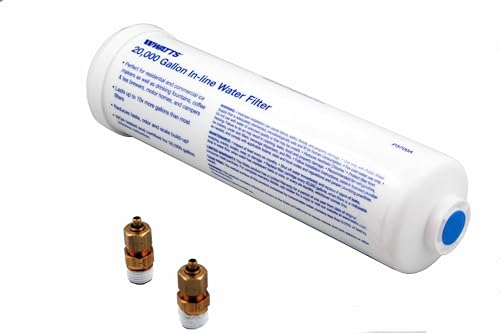
Best for: Anyone whose refrigerator ice or countertop-plumbed ice maker tastes like chlorine or looks cloudy, and who wants a proven, cheap, ten-minute fix. Why it made the list: Its granular activated carbon handles chlorine taste and odor along with fine sediment, the quarter-inch connections match nearly every fridge and ice maker supply line, and it comes from an established water products brand with a long track record in this exact category.
- Key specs: Inline granular activated carbon filter, quarter-inch connections, roughly one year or 2,500 gallons of rated service in typical fridge use, fits refrigerators, ice makers, and coffee brewers.
- What we like: A genuine, noticeable improvement in ice taste and clarity, near-universal fitting compatibility, and a price that makes annual replacement painless.
- What we do not like: It is taste-and-odor filtration only, so it will not soften hard water or remove dissolved minerals that cause white scale in ice makers, and the inline body needs somewhere to sit behind the appliance.
- Who should buy it: Households on chlorinated city water whose ice tastes or smells like a swimming pool.
- Who should avoid it: Homes on very hard water or private wells with mineral or bacterial issues, which need softening or reverse osmosis rather than a carbon inline filter.
- Common complaints: Owners occasionally report drips at the fittings when installed without flushing or proper seating, a plasticky taste for the first few gallons, and forgetting the annual replacement until taste returns.
- Size note: The filter body is about the size of a small flashlight and needs a gentle loop of tubing behind the fridge, so leave a little slack when pushing the appliance back.
- Cleaning note: There is no cleaning, just replacement about once a year; flush a few gallons through after each new install to clear loose carbon fines before making ice.
- Alternative: The EcoPure EPINL30 costs more upfront but its five-year rated life makes it the better fit for people who will never remember an annual filter swap.
Ice Maker Water Filter Buying Guide
What an inline carbon filter can and cannot fix
Activated carbon removes chlorine taste and odor, many organic off-flavors, and fine sediment, which covers the vast majority of bad-ice complaints on city water. It does not remove dissolved minerals, so hard-water scale in the ice maker continues unless you add a scale-inhibiting or reverse osmosis stage. Match the filter to your actual water problem.
Fittings and installation
Nearly all fridge and ice maker supply lines are quarter-inch tubing, and modern filters use push-to-connect or compression fittings that need no tools beyond a tubing cutter. Shut off the supply valve, cut in the filter with the flow arrow pointing toward the appliance, and flush several gallons before making ice. Mount the body with its included clips so it never hangs by the tubing.
Lifespan and replacement discipline
Standard inline filters last six months to a year, while extended-life models like the EcoPure claim up to five. A spent carbon filter gradually stops helping and, far past its life, can harbor bacteria, so set a phone reminder or buy the long-life cartridge honestly matched to how you maintain things. Flow slowing noticeably is a signal the filter is clogging with sediment.
Safety Notes
- Only use filters tested to NSF/ANSI standards for taste and odor claims, especially on a line that feeds ice you serve to guests.
- Turn off the water supply and relieve line pressure before cutting in a filter.
- Flush the recommended volume through a new filter before making ice, since fresh carbon sheds harmless but unappetizing black fines.
- Replace filters on schedule; carbon well past its service life can become a bacteria host rather than a barrier.
What to Avoid
- Unbranded marketplace filters with no standard testing, whose media and plastics are unknown.
- Installing the filter backward against the flow arrow, which shortens its life and can shed media.
- Kinking the quarter-inch tubing when pushing the fridge back, which starves the ice maker.
- Expecting a carbon filter to fix hard-water scale, well water bacteria, or high dissolved solids.
FAQ
Will an inline filter make my ice clear?
It will make ice clearer and better tasting by removing chlorine and sediment, but perfectly clear ice also depends on how the machine freezes. Ice frozen from the outside in traps dissolved air in the center, so some cloudiness is physics, not dirt. Filtration fixes taste first and appearance second.
How often should I replace an inline ice maker filter?
Standard carbon inline filters are rated for about six months to a year of typical household use. Extended-life models like the EcoPure EPINL30 stretch that to several years. Replace sooner if ice flavor returns or flow to the ice maker slows noticeably.
Do I need a filter if my fridge already has one?
If your fridge has a built-in cartridge, an inline filter is optional, though some owners add one upstream to extend the pricey internal filter’s life. For fridges and standalone ice makers without built-in filtration, an inline filter is the only thing standing between city chlorine and your ice. It is the cheapest upgrade with the most noticeable result.
Final Verdict
The Watts Premier IL-10 is the best inline filter for ice maker water, with the EcoPure EPINL30 the set-and-forget value choice at up to five years per cartridge and the Culligan EZ-Change making cartridge swaps as easy as a twist.
