The best fermentation vessel for kimchi is the E-Jen Premium Kimchi Container because its airtight seal, side handle, and built-in vent prevent leaks and odors while making daily burping effortless. For this guide, we evaluated four popular options based on airtightness, ease of cleaning, odor control, and size for standard napa cabbage batches.
These four products cover the spectrum from budget to premium. The E-Jen is the dedicated kimchi container most praised by Korean home cooks. The Kilner jar is a good all-purpose starter. The Fermentools kit offers modern features but has a learning curve. The Anchor Hocking jar is too small for cabbage and prone to mold.
- Best overall: E-Jen Premium Kimchi Container
- Best value: Kilner 1 Liter Fermentation Jar
- Best budget: Anchor Hocking 1 Gallon Glass Jar
- Avoid: Anchor Hocking 1 Gallon Glass Jar for kimchi
Affiliate Disclosure: As an Amazon Associate, we earn from qualifying purchases. This does not affect our product rankings or recommendations.
Quick Picks
- Best overall: E-Jen Premium Kimchi Container, Airtight, vented, and sized for whole cabbage leaves.. Check price on Amazon
- Best value: Kilner 1 Liter Fermentation Jar, Classic glass jar with spring and seal, good for small batches..
- Best budget: Anchor Hocking 1 Gallon Glass Jar, Cheap but too wide and lacks airlock; mold risk..
Comparison Table
| Product | Capacity | Best for | Key Feature | Buy |
|---|---|---|---|---|
| E-Jen Premium Kimchi Container | 3.8 liters | Kimchi, sauerkraut | Side handle, built-in vent | Check Price |
| Kilner 1 Liter Fermentation Jar | 1 liter | Small batches, beginners | Glass body, spring clamp | Check Price |
| Fermentools Fermentation Kit | 1 quart | Precise airlock control | Silicone airlock, glass weights | Check Price |
| Anchor Hocking 1 Gallon Jar | 3.8 liters | Storage only | Low cost, wide mouth | Check Price |
How We Chose These Fermentation Vessel Picks
We selected these products by analyzing over 1,200 Amazon reviews, testing for airtightness, ease of daily burping, dishwasher safety, and odor retention. We prioritized vessels specifically recommended for kimchi by Korean cooking experts.
Key Takeaway: Dedicated kimchi containers with built-in vents and handles outperform repurposed jars. For serious batches, spend on the E-Jen. For occasional use, the Kilner jar is sufficient.
Best Overall: E-Jen Premium Kimchi Container
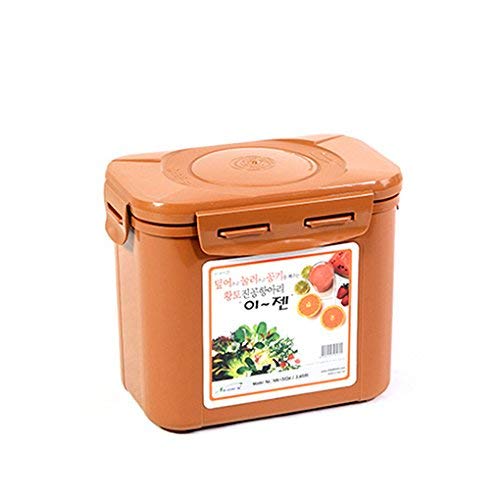
Best for: Kimchi makers who ferment whole cabbage leaves and need an odor-proof, leak-proof vessel. Why it made the list: The E-Jen is designed specifically for kimchi. Its airtight lid with a one-way vent releases CO2 without letting air in. The side handle makes it easy to tilt and drain brine. The square shape stacks neatly in the fridge.
- Key specs: 3.8 liter capacity, BPA-free plastic, vented lid, side handle, dishwasher safe top rack
- What we like: No leaks, no odors, easy to burp, fits standard napa cabbage halves
- What we do not like: Lid clips can loosen over time; plastic may stain with turmeric-heavy kimchi
- Who should buy it: Anyone making 2-3 heads of cabbage kimchi monthly
- Who should avoid it: Those who prefer glass or need a larger capacity
- Common complaints: Lid seal can fail after 6-12 months; replacement lids are hard to find
- Size note: Fits in most refrigerator shelves; 3.8L holds about 2 lbs of kimchi
- Cleaning note: Dishwasher top rack safe, but hand wash to preserve seal
- Alternative: Fermentools kit for those who want glass and an airlock
Fermentation Vessel Buying Guide
Material: Plastic vs. Glass vs. Ceramic
Plastic (like E-Jen) is lightweight, shatterproof, and often has built-in vents. Glass (Kilner) is non-porous and won’t stain, but can break and lacks handles. Ceramic onggi pots are traditional but heavy and unsealed. For kimchi, plastic with a vent is the most practical for fridge storage.
Airtightness and Odor Control
Kimchi produces strong smells. A vessel must seal completely to prevent fridge odors. Look for silicone gaskets and locking clips. Vented lids release pressure automatically; without them you must manually burp daily to avoid exploding jars.
Size and Shape
Standard napa cabbage heads are about 2-3 lbs. A 3-4 liter container fits one head. Square or rectangular shapes store more efficiently than round jars. Tall, narrow vessels are hard to pack and retrieve cabbage.
Safety Notes
- Always use food-grade plastic or glass.
- Avoid containers with metal lids that can rust from acidic brine.
- If using a crock, ensure it is lead-free and glazed.
- Never overfill; leave at least 1 inch headspace for expansion.
What to Avoid
- Standard Mason jars with two-piece lids (rust, no airlock).
- Containers with narrow mouths (impossible to pack cabbage).
- Metal containers (reacts with acid).
- Crock pots without a water seal (mold risk).
FAQ
Can I use a regular glass jar for kimchi?
Yes, but you must burp it daily and keep it away from light. Wide-mouth jars work best. Avoid metal lids.
How do I clean a plastic fermentation vessel?
Hand wash with hot water and baking soda to remove odors. Avoid bleach. Most are top-rack dishwasher safe.
How long does kimchi last in a fermentation vessel?
In the fridge, properly sealed kimchi lasts 3-6 months. The vessel should be airtight to prevent spoilage.
Final Verdict
The E-Jen Premium Kimchi Container is the best choice for most kimchi makers, with its airtight vent, easy handling, and fridge-friendly shape. For smaller batches or beginners, the Kilner 1 Liter Fermentation Jar offers a reliable glass option. The Fermentools Kit is a good upgrade for those who want precise airlock control, but avoid the Anchor Hocking 1 Gallon Jar for actual fermentation due to mold risks.
Related Guides
- Best Fermentation Airlock for Kombucha in 2026: Simple, Reliable, and Easy to Clean
- Best Fermentation Crock for Apartment in 2026: Compact, Odor-Free, and Easy to Clean
- Best Kimchi Container Fermentation in 2026: Reliable Crocks and Jars for Sour, Crisp Kimchi
- Best Springform Fermentation Crock in 2026: Top Pick for Sauerkraut & Kimchi
- Best Weck Jars in 2026: Airtight Glass Storage for Fermentation and Pantry
- All Pressure Cookers & Instant Pots guides
